Sealing a paver drive without turning it into plastic
Half the sealing calls we take in Coral Gables are from people who want the color back. The other half had it sealed once, hated the shine, and want to know if they are stuck with it.
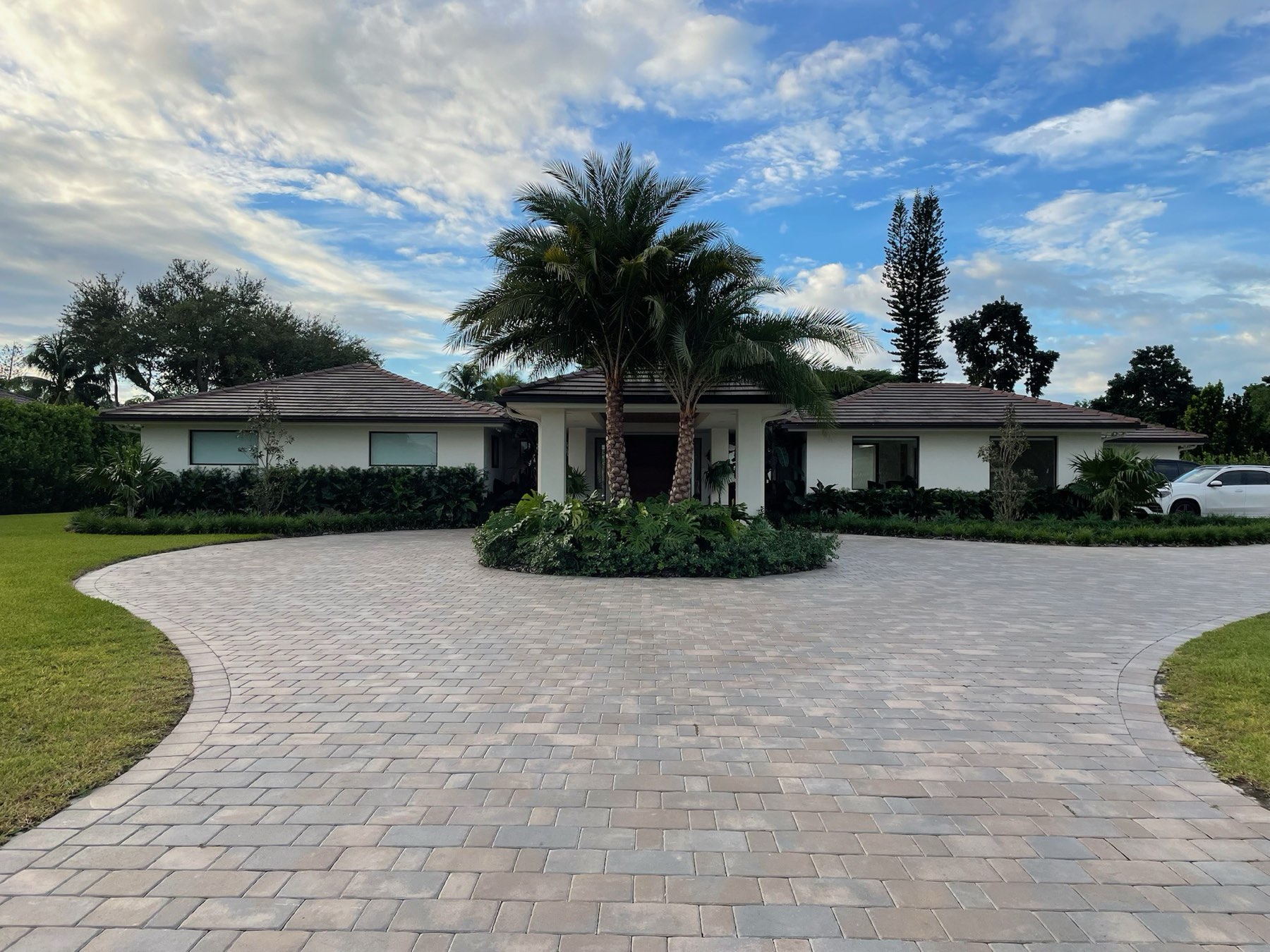
A sealer is doing two different things at once
Ask three contractors what sealing does and you get three answers, mostly because the product is doing two unrelated jobs and people talk about the one they care about.
The first is joint stabilization. A sealer that wets into the joints binds the top layer of sand into something firm. Sand stops blowing out under a pressure washer, weeds root harder, ants stop excavating little cones onto the surface every spring.
The second is surface protection. A film on the paver face gives oil, tire marks, and rust from a patio chair somewhere to sit besides the concrete pore. Spills lift instead of soaking in.
Those are separate benefits. A surface losing joint sand every rainy season needs the first. A surface under a car that leaks needs the second. Which problem you actually have decides the product, and nobody decides that from a phone call.
What a sealing day looks like
We read the surface before quoting anything
Age of the pavers, whether they have been sealed before, how much joint sand is left, where the oil is, and whether a white bloom is sitting on the face. That decides the product and whether the job should happen at all this season.
Cleaning, which is most of the work
Whatever is on the surface when the sealer goes down stays there. The drive gets cleaned, treated for organic growth where it needs it, and rinsed clear. Rushing this is how you get sealed-in tire tracks.
Full dry, no shortcuts
Pavers hold water in the pore long after the surface looks ready. In July that sometimes means cleaning one day and sealing two days later.
Joints refilled and set
Sand goes back into the joints and gets worked down to depth first. Sealing over hollow joints wastes the stabilizing half of what you are paying for.
Sealer applied in controlled coats
Even coverage, no pooling in the low spots, no puddle curing glossy in a joint while the field around it cures matte. Then the drive stays closed for the cure window.
Whatever is on the surface when the sealer goes down is on it for years.
People think of sealing as the fast job on the list. The applying part is fast. The cleaning and drying around it are what make it worth doing.
Wet look or natural, and how permanent that call is
The finish decision gets made in about four seconds by most homeowners and then lives on the property for years, so we slow it down. A wet-look or high-gloss sealer saturates the color the way rain does and keeps it there. On a rich charcoal or a multicolor tumbled paver that can look genuinely good. On a pale beige unit in Florida sun it reads shiny rather than rich, and shine is what people mean when they say a driveway looks fake.
A natural-finish sealer does most of the protection work without the mirror. Color comes up a shade and the surface still reads as masonry rather than a coating. This is what we put down most often in the Gables, because it suits the older housing stock and does not fight a tile roof.
Here is the part contractors skip: reversing that call is difficult and expensive. Stripping a solvent-based gloss film off a paver field means chemical strippers, a lot of labor, and a surface that never comes back completely uniform. Nobody enjoys that job and nobody prices it cheaply.
So the honest sequence is to look at a sealed sample of your actual paver, outdoors in sun, before anything touches the whole drive. Not a photo, not a chip under showroom light.
Traction is the other consideration. A glossy film on a sloped drive gets slick when wet, and a Gables drive running down toward the street is exactly where that matters. Gloss on a sloped apron needs a grip additive worked into it.
Joint side
Binds the top layer of sand so it stops washing, and makes weeds and ants work much harder.
Surface side
Gives oil and rust somewhere to sit besides the pore, and takes some ultraviolet load off the pigment.
Finish
Matte or wet-look. Decided on a sealed sample of your own paver, in sun, because reversing gloss is a miserable job.
The white haze, and why waiting is the whole answer
Efflorescence is the chalky white film that shows up on new concrete pavers, sometimes weeks after installation, often in blotches that make a homeowner think the units are defective. They are not. Free lime inside the unit dissolves in moisture, reaches the surface, and deposits as a salt.
It works itself out. Rain and time carry most of it off over the first year and the right cleaner takes the rest. The trap is sealing while that is still running: the lime keeps arriving and now deposits under the film, where no cleaner reaches it. You have laminated a white cloud onto your driveway.
That is why we will not seal a brand new drive on request. If your pavers went down last month, the right answer is to wait rather than sell you a service.
Rain timing matters as much as cure timing. Sealing ahead of an afternoon storm before the product sets gives you a blotchy, milky finish, so we move the date rather than gamble on it.
Seal too early and you trap the haze under the film for good.
How often this comes back around here
Ultraviolet exposure is the clock, and ours runs year round. A fully exposed drive comes due sooner than one under a canopy of old oaks, and the square where cars turn every day wears its film first. Resealing is the lighter job, as long as the chemistry matches what is already down.
When we tell people to leave it alone
Sealing is a preference, not a requirement. A properly built paver drive that never sees a drop of sealer will outlast most of us, so there are drives we look at and tell the owner to save the money.
Clay brick is the clearest case. The color is fired through, so there is no pigment to protect from fading, and clay tends to look better as it weathers. Unless you are fighting a specific stain, sealing clay mostly buys a maintenance obligation.
A failing drive is the other. If the surface is settling or joints are opening because the restraint has gone, a sealer papers over it for a season and you pay twice. That is repair work first, or when it is past that, a rebuild covered on our driveway installation page.
Travertine wants a different conversation again. A breathable penetrating product is usually right and a film-forming gloss usually is not, and near a pool the traction question moves to the front of the line.
And if you like how your drive looks right now, that is a legitimate reason to leave it. Sealer changes the appearance of a surface whichever finish you pick. Tell us what you are looking at and you will get a straight read, including the one where the answer is that it can wait.
Other work we do on Coral Gables properties
Everything we do in Coral Gables · See the work · How we approach sealing generally
What people ask before booking a seal
How long before we can drive on it
Foot traffic usually comes back the same evening and vehicles the next day, though heat and humidity move both numbers. We give you the actual window before we start and we would rather you park on the street one extra night than roll a tire across a film that has not finished setting.
Will sealing make my pavers look shiny
Only if you choose a product that does. A natural-finish sealer deepens the color about a shade and leaves the surface reading as masonry. A wet-look sealer keeps that rained-on look permanently. We show you a sealed sample of your own paver outdoors in sun before anything goes on the whole drive.
My pavers were laid a few weeks ago, can you seal them now
We would rather not. New concrete pavers are still pushing efflorescence to the surface, and a film applied over that traps the white haze underneath where no cleaner can reach it. Let the drive go through its first cycles and it will still be there waiting when the timing is right.
How often will this need doing again
Sooner than the pail suggests. Between year-round sun and summer rain volume, a fully exposed drive here comes due before a shaded one, and the area where cars turn wears first. We will tell you what we see on your surface rather than quoting a number off a label.
Somebody sealed it years ago and I do not know what they used
Say so and we will test a small area first. Putting a water-based product over an old solvent-based film can cloud or peel, and the only reliable way to know what is on there is to try a patch somewhere you will not have to look at it.
Is there a reason not to seal at all
Several. Clay brick has its color fired through, so there is little to protect. A drive that is settling or losing its edge restraint needs that fixed first. And if you genuinely like how the surface looks now, sealer will change it. We will tell you when leaving it alone is the better call.
Coral Gables on the map
Let us look at the drive first
Call and describe what is bothering you, or send a few photos in daylight. You will hear whether sealing solves it, which finish suits your paver, and when the timing is right to do it.
Quality you can stand on