Circular Paver Driveways, from the subgrade up
Curved drives set out so the radius runs true and the pattern stays honest.

What actually goes wrong
Almost every paver problem we get called out to is a base problem wearing a surface disguise. The pavers themselves are fine. They are concrete or stone, and they will outlast most of us. What moves is what is underneath them.
Sand over limestone is what most properties in the region are built on. Sand drains well until it is saturated, and a two-inch-an-hour storm saturates it fast. That is the moment a base gets tested, and a poorly built one starts losing material.
A lifted section near a tree is usually the roots. The base under pavers holds moisture, so roots grow into it and push the surface up as they get bigger.
That is why the schedule on our jobs is mostly spent on the part you will never see again. The surface takes a day or two. The ground it sits on takes the rest, and the ground is what you are actually paying for.
How we run this job
We come look at it
We come to you and look at the surface in person. The water path gets as much attention as the pavers themselves. You will get a plain account of what we see, and we will not inflate a small problem into a big job.
You get the plan in writing
Scope, materials, schedule, and cost on paper before a shovel moves. The number you approve is the number, not an opening position.
We build the base first
The step most likely to get rushed is the one we slow down on. Excavation to proper depth, aggregate compacted in lifts, and a screeded bedding layer go in first. That buried base is what keeps the surface flat for a decade.
Pavers go down and get cut in
Laying the field is the fast part. The care is in the cuts at the edges and the restraint that locks the whole field in place.
Joints get filled and the site gets cleaned
Sand swept in and compacted, surface washed, debris hauled by us. You get the property back the way we found it, minus the problem.
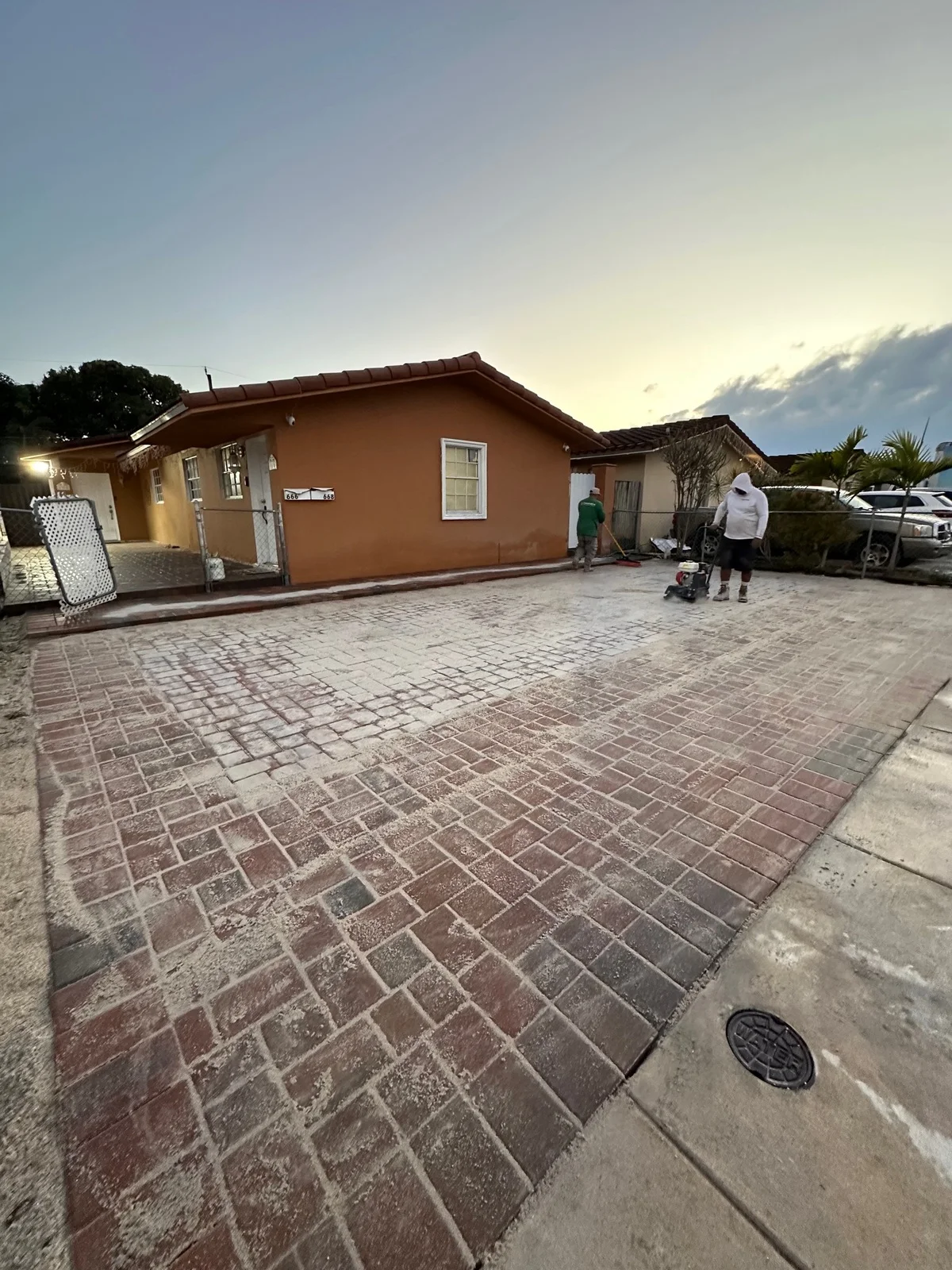
What a driveway asks of the ground under it
Width matters more than people expect. A drive built to the minimum feels fine until somebody steps out of a car onto wet grass every time it rains, and the edge course starts breaking down from being driven over.
A driveway is the only paver surface on most properties that carries a vehicle, and that changes everything under it. Passenger cars are not the design case; the design case is the delivery truck, the moving van, and the day somebody parks a loaded trailer on the apron.
The apron, where the drive meets the street, takes the worst of it. Vehicles turn there under load, which grinds and shoves the surface sideways rather than just pressing down. That is why aprons need the deepest base on the job and the most serious edge restraint.
A sunken paver is a symptom. The base under it is the disease.
Polymeric sand is a sequence job. Fill the joints while everything is dry. Sweep the paver faces clean, properly, before any water comes near. Then wet it the way the manufacturer specifies, no more and no less. Done in that order it binds in the joints and holds up to washout better than plain sand. Done fast, it binds where it was left, including on top of the pavers.
Pavers are separate pieces, and the joint sand is what lets them act like one surface. It locks each unit against its neighbors so weight spreads across the field. With full joints, a load gets shared. Once the joints wash out, every paver is on its own, which is where rocking starts and cracked corners follow.
Base depth
Set by what the surface carries, not by habit. A walkway and a truck-bearing drive are not the same excavation.
Compaction
Each lift of aggregate gets compacted before the next one goes down. The shortcut, one dump and a quick pass, compacts the surface and leaves the rest loose.
Fall
Roughly an eighth to a quarter inch per foot away from the building. Invisible underfoot, decisive for where water ends up.
More driveway work
We bring this work to properties across the region. A few places that keep us busy:
What it asks of you afterwards
Most sealing problems come down to the product. A sealer that is wrong for the material can leave a plastic-looking shine or hold moisture under it, and that is hard to undo. The right one, applied at the right time, deepens the color and keeps joint sand in place. Sealing stays optional, and we give you a straight answer on whether it is worth it here.
Walk your pavers now and then and look along the edges. If any paver has lifted more than about a quarter inch, treat it as urgent, because that is the height where people start catching their toes. For anyone managing a commercial property, it is a liability matter as much as upkeep.
A well-laid surface mostly looks after itself. What it does need is joints that stay full, so add sand when you see it dropping, and attention to any low spot before it spreads. Catching settling early keeps the repair small.
Travertine is the one people ask for around pools, and for a good reason: it stays noticeably cooler underfoot than concrete in direct sun. It is a natural stone, so there is variation between units, and it wants a sealer if it is somewhere that gets oil or heavy staining.
Of everything we install for homeowners, porcelain is the newest. What it brings is density: it soaks up almost no water and resists staining better than nearly anything else. What it demands is precision, both in the base, which has to be truly even, and in the cutting.
If you are unsure which material to choose, concrete pavers are the safe default. The range of shapes and colors is the widest of anything we install, and matching them for a repair or an addition down the road is easier than with any other paver. Know going in that the color moves a little during the first year or two as they cure out.
What we see when somebody else did it
On the day the job wraps, all of these look like good work. The damage comes later, so the habits never get corrected.
Using the wrong sand in the bedding
Bedding sand that is round acts like a layer of ball bearings. Pavers set on mason or beach sand drift under load. Sharp, angular concrete sand stays put.
Sealing too early
Fresh concrete pavers push a white residue to the surface as they cure. That is efflorescence, and it needs to finish before any sealer goes on. Seal in the first month and the haze can end up permanently under the coat.
Laying over the old surface
Paving over an old surface is a lot like painting over rust. It goes quickly and costs little, and the problem underneath keeps working. If the base caused the first failure, the new surface will show it again within a season or so.
Skipping the geotextile
A separation fabric between the subgrade and the base stops the two from mixing. Without it, fine soil migrates up into the aggregate, the base loses its structure, and you get settlement that no amount of surface work will fix.
Compaction in lifts is the difference between ten years and two.
Common questions
How long does the job take
A typical circular paver driveways job runs two to five working days once we start. Base work is the slow part; laying the field goes quickly. Weather moves things, and in summer we plan around the afternoon storms rather than pretending they will not happen.
Do I need to be home while you work
Being home is optional. Access and water are the two things we need. You will hear from us during the job, and right away if we find something below the surface that changes the scope.
Will the new pavers match what I already have
Concrete pavers drift a little in color as the sun and the years work on them, so a fresh unit next to one that has been down a while can stand out. Sometimes we match exactly and sometimes closely. If we cannot get close enough, you see the options before we order.
What happens to the old surface
Breaking out the old surface is the first stage of the job. It gets loaded and hauled off, and we recycle the concrete and old pavers when a recycler is in reach. That work is written into the scope.
How do you keep it from settling again
Settled pavers almost always point to something underneath. We trace it, whether it is drainage, a soft base or a root moving in, and fix that first. Pavers go back down only once the reason for the dip is gone.
Do you cover Miami, FL
Yes. Miami, FL is inside our regular working area and we are out that way most weeks. Call and we will tell you honestly when we could get to you.
Tell us what you are looking at
Tell us when works and we will come stand on it. Walking the property and seeing where the water goes answers more than any amount of back and forth, and you get our findings written up.
Quality you can stand on