What backyard paver patios should actually involve
Backyard patios sized to the way the space actually gets used.
What actually goes wrong
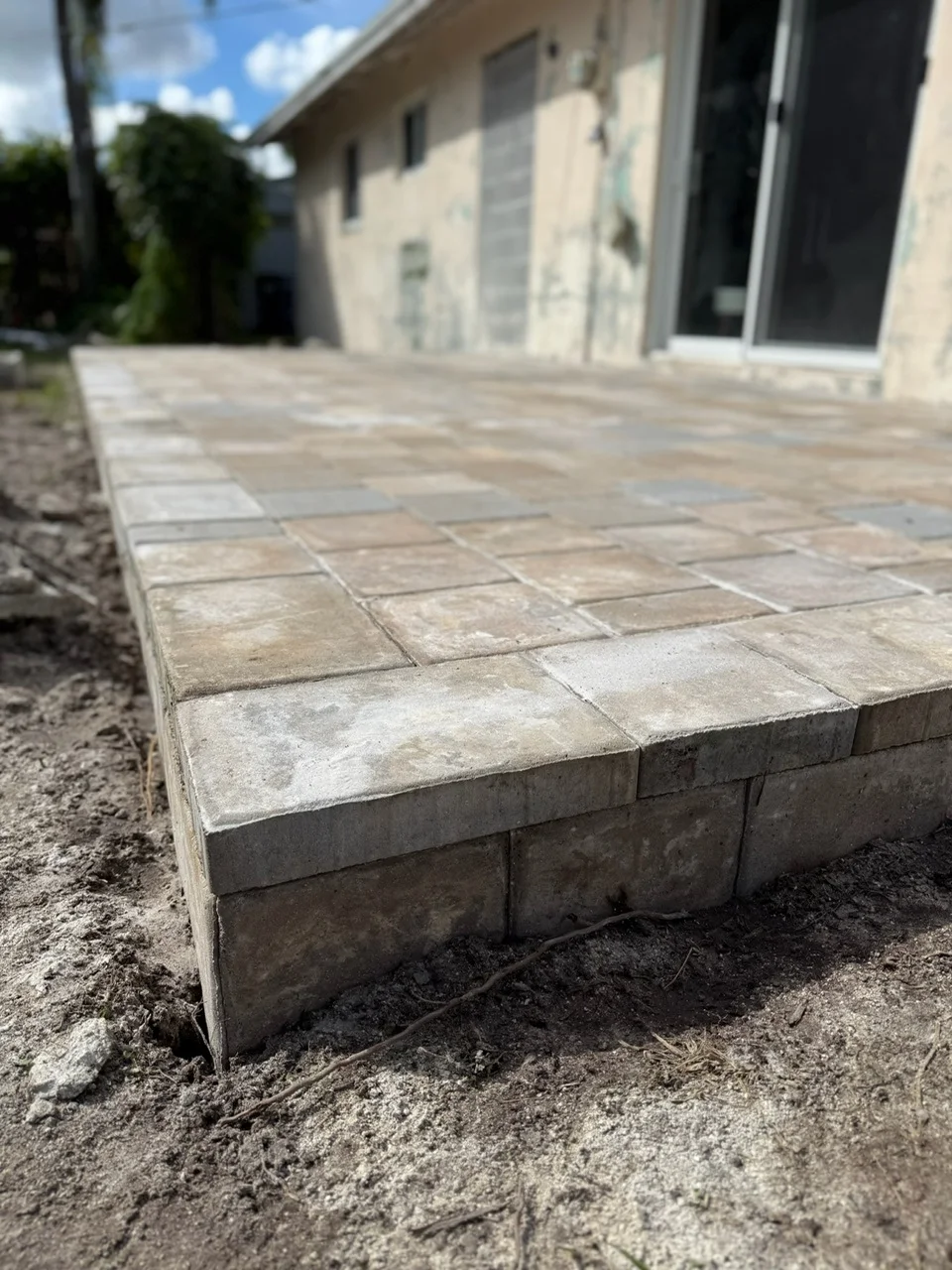
When a paver surface goes wrong in Florida, the pavers are rarely the thing that failed. Water got into the base, the base moved, and the surface followed it down. Fix the surface only and you are back in two years.
A lot of coastal ground is already close to full of water. With the water table that high, rain has nowhere deep to go, so it runs sideways under the surface and pulls sand from beneath driveway edges as it goes.
Then there are trees. A ficus or a black olive near a walkway sends roots out shallow and far, and the damp ground under pavers draws them in. Older shade trees do the same.
None of this is visible in a finished photo, which is why the cheap version and the right version look identical on day one. They stop looking identical around year two.
How we run this job
We come look at it
Before any pricing, we come see it. Our crew member walks the area with you and pays close attention to how water moves around it. What we tell you afterward is what we found, including when the job is smaller than you expected.
You get the plan in writing
Scope, materials, how long it takes, and what it costs, written down before anybody starts. No verbal numbers that change later.
We build the base first
The step most likely to get rushed is the one we slow down on. Excavation to proper depth, aggregate compacted in lifts, and a screeded bedding layer go in first. That buried base is what keeps the surface flat for a decade.
Pavers go down and get cut in
Laying the field is the fast part. The care is in the cuts at the edges and the restraint that locks the whole field in place.
Joints get filled and the site gets cleaned
Sand swept in and compacted, surface washed, debris hauled by us. You get the property back the way we found it, minus the problem.
What makes a patio last
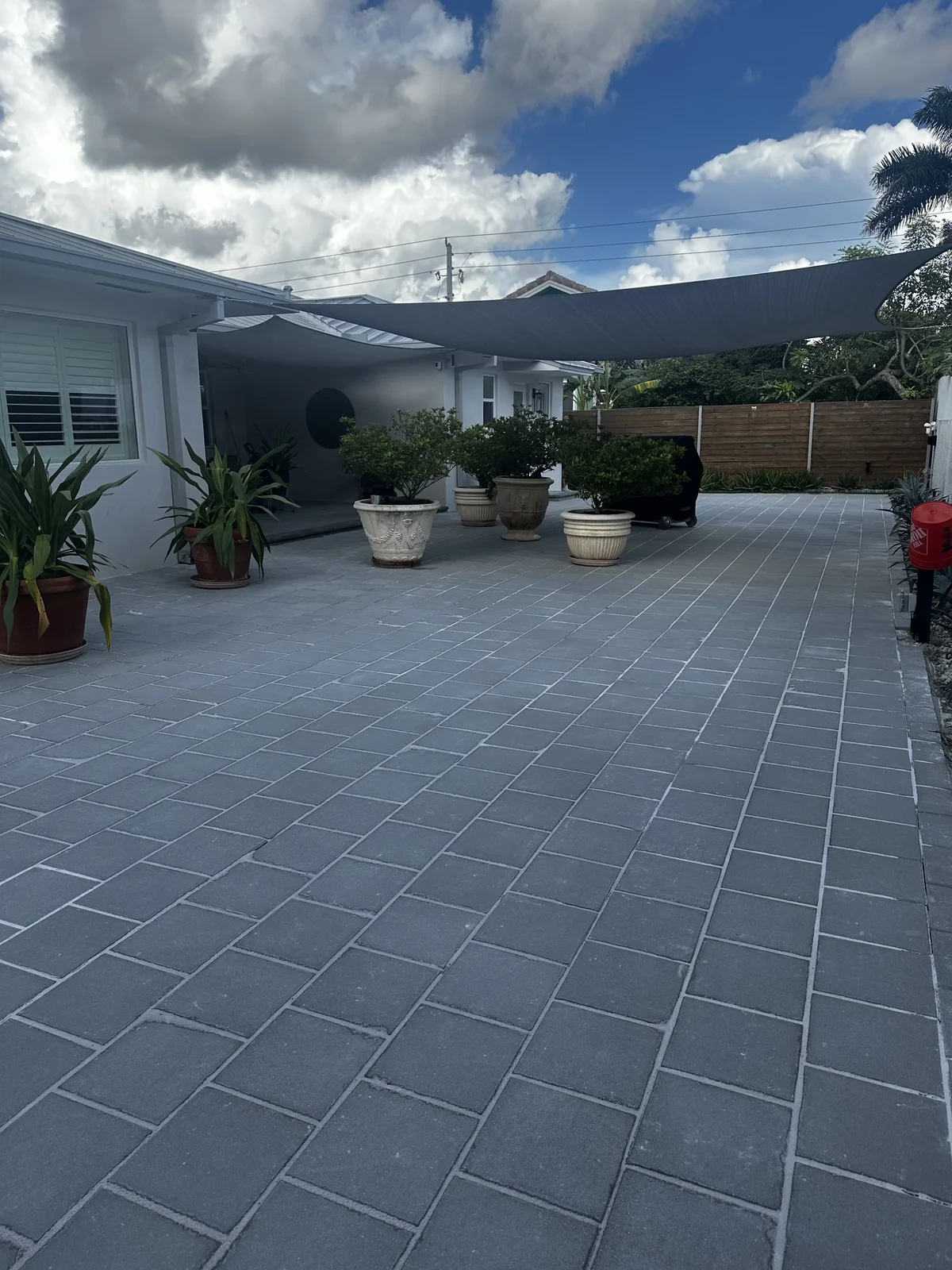
Furniture is the quiet load. Table and chair legs concentrate weight on a tiny footprint and will dish an under-compacted patio in a season. Sun umbrellas with heavy bases are the usual culprit.
A patio carries people and furniture rather than vehicles, so the base can be shallower than a driveway. What it cannot be is badly drained. A patio that holds water grows algae, gets slick, and pushes moisture back at the house.
Fall away from the building is the whole game. A patio wants a gentle slope carrying water into the yard, never toward a slab or a door threshold. On a tight lot with no fall available that means a channel drain or a permeable section built in from the start.
A sunken paver is a symptom. The base under it is the disease.
The cheapest material on a patio may be the one that holds it together. Joint sand transfers load between pavers, and that transfer is what makes a field of loose units act as a surface. When joints wash out, each paver is left carrying its own load. That is exactly when they begin to rock, and rocking pavers crack.
That hazy film you sometimes see on a newer patio is usually polymeric sand that was rushed. The sand binds when it gets wet, so it has to go into the joints dry and be swept completely off the paver faces before any water touches it. Then it gets watered in exactly the way the manufacturer says. Skip the sweeping and the binder sets on the surface instead of in the joint.
Fall
The surface drops about an eighth to a quarter inch every foot away from the building. It feels level and drains like it should.
Restraint
A perimeter edge restraint is what stops the field creeping outward and the joints opening from the outside in.
Joint sand
Structural, not cosmetic. It transfers load between units, which is the whole reason a field of loose pavers behaves like a surface.
More patio work
We cover this across the region. A few of the areas we work most:
What it asks of you afterwards
Most small things on a paver surface can wait for a convenient day. A lifted edge cannot. Anything raised more than about a quarter inch will catch someone’s foot sooner or later, and where the property is commercial, that turns into a liability question on top of the repair.
Upkeep on a well-built paver surface is light. Sweep leaves and debris off before they break down in the joints, top up the joint sand when it gets low, and call about any dip while it is still small. Most owners do little else.
Sealing really is a preference, which is why you hear different opinions on it. Our view: it is worth it where the surface takes oil, food or heavy staining, and less worth it on a walkway that only sees foot traffic. A poorly chosen sealer can leave a glossy sheen or trap moisture underneath, so product choice matters as much as the decision itself.
Before you pick travertine, think about what will happen on it. Near an outdoor kitchen or anywhere oil and heavy stains land, it needs a sealer to keep looking right. On a plain pool deck it is a comfortable choice, because it stays cooler underfoot than concrete in direct sun. As a natural stone, every unit varies a little.
Porcelain is the newest of these in residential work. It is dense, absorbs almost nothing, and is close to stain-proof. It needs precise base work because it is unforgiving of an uneven bed, and cutting it takes the right blade and patience.
Concrete pavers win on choice: they come in more shapes and colors than any other material we install. They also lay up consistently, which makes for a predictable job. The color runs through the whole unit, so it fades slowly and gently in the sun. Expect it to shift a bit in the first year or two as it cures out.
What we see when somebody else did it
Every one of these looks fine on the last day of the job. That is why contractors keep getting away with them.
Sealing too early
Fresh concrete pavers push a white residue to the surface as they cure. That is efflorescence, and it needs to finish before any sealer goes on. Seal in the first month and the haze can end up permanently under the coat.
Laying over the old surface
Paving over an old surface is a lot like painting over rust. It goes quickly and costs little, and the problem underneath keeps working. If the base caused the first failure, the new surface will show it again within a season or so.
Skipping the geotextile
This one cannot be checked after the fact. Once the pavers are down, nobody can see whether there is fabric under the base. If there is not, fine soil gradually moves up into the aggregate and weakens it, and the settling that follows takes a full rebuild to fix.
Using the wrong sand in the bedding
Concrete sand goes in the bedding for a reason: its grains are sharp and angular, so they lock. Mason sand and beach sand are rounded and let pavers wander under load.
The pavers are a wearing surface. The base is the building.
Common questions
How long does the job take
A typical backyard paver patios job runs two to five working days once we start. Base work is the slow part; laying the field goes quickly. Weather moves things, and in summer we plan around the afternoon storms rather than pretending they will not happen.
Do I need to be home while you work
Being home is optional. Access and water are the two things we need. You will hear from us during the job, and right away if we find something below the surface that changes the scope.
Will the new pavers match what I already have
Concrete pavers drift a little in color as the sun and the years work on them, so a fresh unit next to one that has been down a while can stand out. Sometimes we match exactly and sometimes closely. If we cannot get close enough, you see the options before we order.
What happens to the old surface
That part is on us. The existing surface gets broken out and hauled off the property, and concrete and pavers go to recycling when there is a recycler in the area. It is covered in the scope you sign.
How do you keep it from settling again
We find out why it sank before we touch it. Resetting pavers on the same weak base or over the same wet spot only buys you a little time. Usually the cure is better drainage and a properly rebuilt base, and sometimes it means dealing with a root or a downspout.
Do you cover Miami, FL
Miami, FL is squarely in our regular area. We work there most weeks. If you send a few photos of the job, we can usually tell you a lot before anyone even comes out.
Start with a conversation
You will get what we find in writing. One of us walks the property with you, checks where the water goes, and writes it up, which beats any answer we could give without seeing it.
Quality you can stand on