Pavers laid properly in Miami Beach
Miami Beach means tight access, limited staging room, and buildings where the deck work has to be staged around residents.
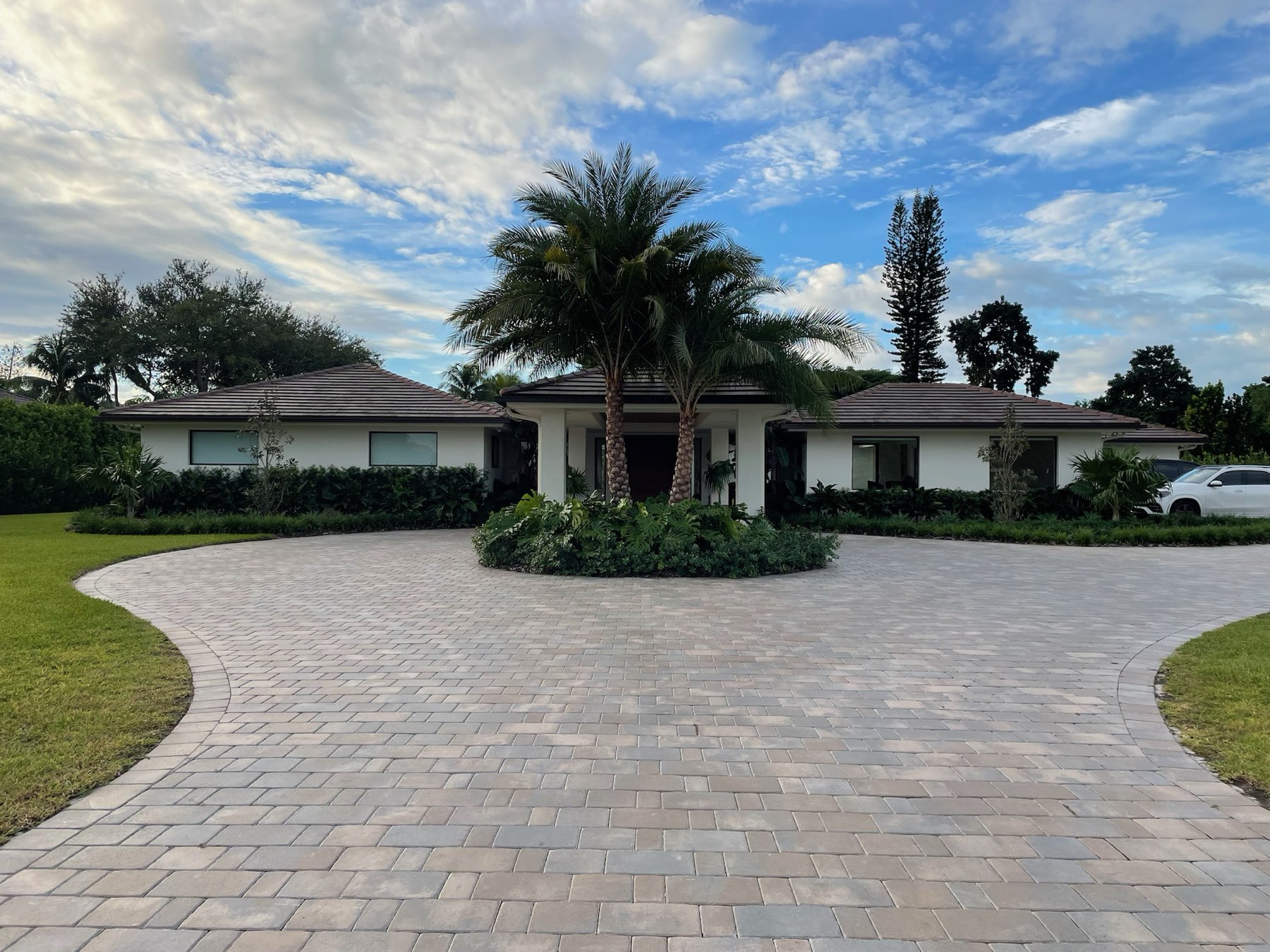
What we see on Miami Beach properties
Miami Beach means tight access, limited staging room, and buildings where the deck work has to be staged around residents.
Here is the honest version: a sunken paver is a symptom. The base under it lost material, usually to water, and the surface settled into the gap. Resetting the pavers without correcting the base just buys you a season.
Sunken driveway edges here usually trace back to groundwater. Much of the coast has a high water table, so water cannot drop very far before it starts moving laterally. That lateral movement is what works the sand loose from under the edge.
If a big tree is close by, its roots are a likely cause. The damp aggregate under a paver surface draws them in, and as they grow they push the pavers up out of line.
We are out this way most weeks, so a look at the property is usually a matter of days rather than months. If it turns out the honest answer is that it can wait, we will tell you that too.
How a job here runs
We come look at it
Expect an honest answer, even a small one. We walk the property with you, follow the water, and say exactly what we see. If you were bracing for a big job and it is not one, you will know.
You get the plan in writing
Scope, materials, schedule, and cost on paper before a shovel moves. The number you approve is the number, not an opening position.
We build the base first
Excavation to the depth this job actually needs, aggregate compacted lift by lift, bedding screeded flat. The slow part, and the part that decides whether the surface is still flat in ten years.
Pavers go down and get cut in
Field laid to the pattern, edges cut on site, and a restraint set around the perimeter so the field cannot creep.
Joints get filled and the site gets cleaned
Sand swept in and compacted, the surface washed down, and the property left the way we found it. We haul our own debris.
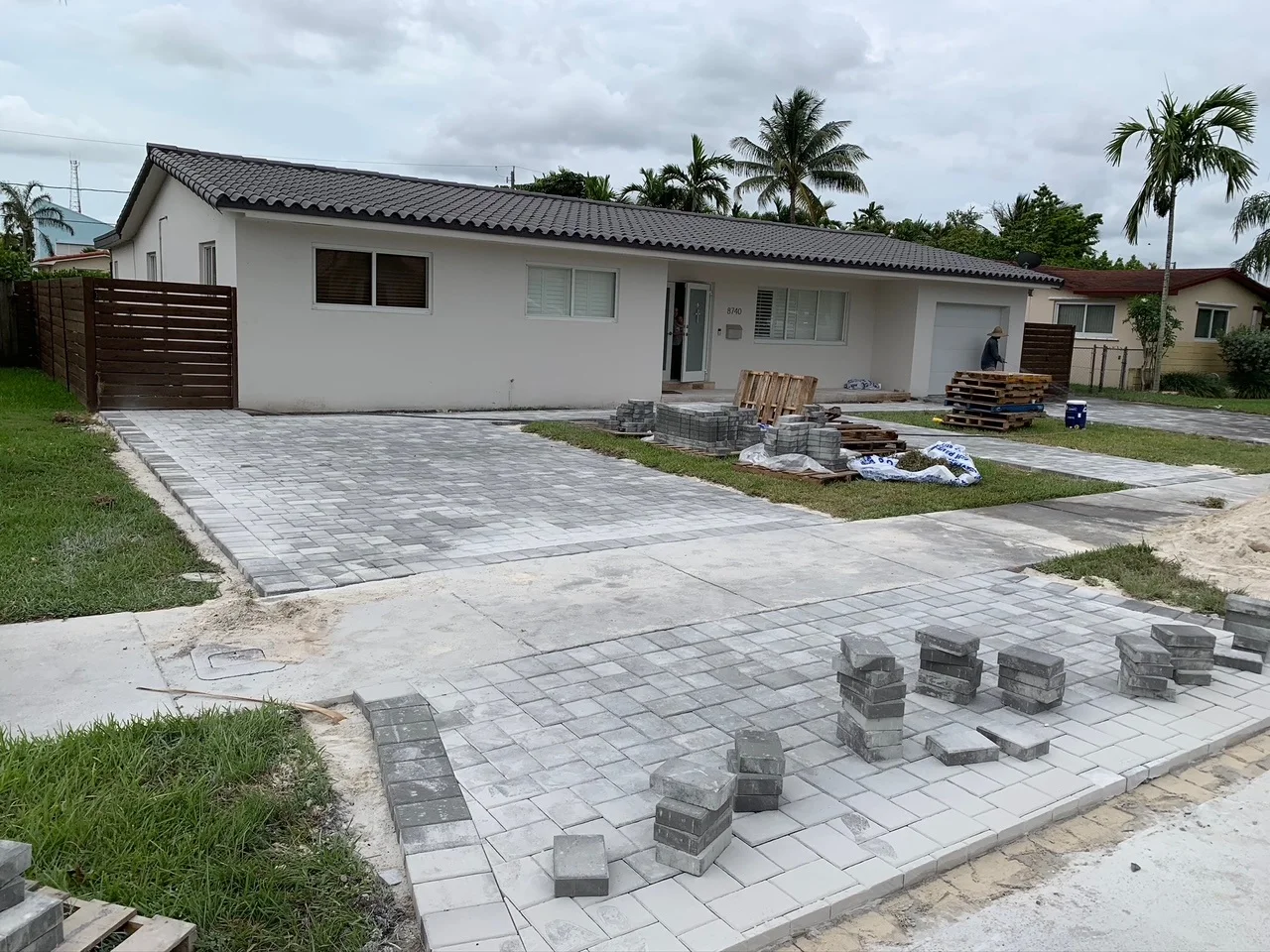
Why surfaces fail around here
On a commercial property the base is usually the first thing we size, because delivery trucks put more weight on a drive than anything a house will see. A residential driveway with a loaded pickup every day needs less than that, and a walkway that only carries people needs less again. Each one gets dug to its own depth. One depth for every surface on the property is a shortcut, and it shows up first where the trucks turn.
A plate compactor only reaches so deep. That is why the base goes in as a series of lifts, each a few inches thick and compacted before the next one lands on top. Put the full depth down at once and the plate firms up the top and leaves the bottom loose. It feels solid when you walk it. Then over the first year or two, the loose layer underneath consolidates unevenly and the surface settles in patches.
Start at the bottom and work up. The subgrade is the soil your property already has, and nothing we do changes what it is made of. On top of it goes the base: crushed aggregate, compacted until it carries weight on its own. Then a thin course of sharp sand, screeded flat so every paver beds at the same height. Then the pavers. Three of those four layers get buried on the first day, and they are the three that decide how the job ages.
The pavers are a wearing surface. The base is the building.
Getting water off the pavers is half of the drainage job on a commercial property. The other half is deciding where it lands. On a tight lot with no fall to spare, we usually choose between a channel drain at the low edge, a permeable section that lets water through to a stone reservoir, and a regrade of the planting bed next door. Building that in now costs less than coming back for it.
Irrigation is the one people overlook. A sprinkler head that hits the same few feet of paver twice a day keeps that part of the base saturated, and over time the sand underneath washes. Downspouts discharging at the edge and runoff coming off a neighboring grade do the same. The rain itself, landing on a well-jointed surface, is rarely the problem.
Puddles that sit on a patio for hours after a storm are a grading problem. So is water that runs toward the building. Both come from getting the fall wrong. The target is about an eighth to a quarter inch of drop per foot, heading away from the structure, which is too gentle to notice underfoot and enough to move the water off.
Compaction
A compactor can only reach so far down. That is why aggregate goes in lifts, each compacted on its own, instead of one deep pile with a firm crust on top.
Fall
Roughly an eighth to a quarter inch per foot away from the building. Invisible underfoot, decisive for where water ends up.
Restraint
A perimeter edge restraint is what stops the field creeping outward and the joints opening from the outside in.
What Miami Beach calls us for
Also nearby in Miami-Dade County:
What we tend to use around here
Of everything we install for homeowners, porcelain is the newest. What it brings is density: it soaks up almost no water and resists staining better than nearly anything else. What it demands is precision, both in the base, which has to be truly even, and in the cutting.
One practical reason we steer a lot of people toward concrete pavers is the future. Lines change, and a material that is easy to match makes a later extension or repair look like it was always there. They also offer the widest choice of shape and color. Plan on the color shifting slightly over the first year or two while they cure.
Clay brick costs more than concrete pavers and offers fewer shapes. What you get for that is color that does not fade, because the color is the fired clay itself. If the surface needs to look the same two decades from now, brick earns its price.
The edge restraint is the piece nobody thinks about and it is what stops the whole field from spreading. Pavers work by interlock, which means each unit is held by its neighbors. Take away the restraint at the perimeter and the outermost course starts creeping outward, the joints open, the sand washes, and the failure marches inward from the edge.
You can see this on almost any failing driveway. The middle usually looks fine and the outer two feet are a mess with wide joints and rocking units. That is not the edge wearing out faster, it is the edge restraint having failed and the field unlocking from the outside in.
Finding us in Miami Beach
We are based in Miami and out this way regularly.
The shortcuts that surface two years later
Every one of these looks fine on the last day of the job. That is why contractors keep getting away with them.
Laying over the old surface
Before paving over anything, ask why the old surface failed. If the answer is the base, a new surface on top of it is borrowing time. It goes down fast and cheap, and the same problem comes back through it.
Skipping the geotextile
The base only works if it stays clean crushed aggregate. Fabric under it keeps the soil below from mixing in. Skip it and the two layers blend a little more every rainy season, and once enough soil has moved up, the base cannot carry the load and the pavers settle.
Using the wrong sand in the bedding
Concrete sand goes in the bedding for a reason: its grains are sharp and angular, so they lock. Mason sand and beach sand are rounded and let pavers wander under load.
Sealing too early
Leave new concrete pavers unsealed through their first month. They are still curing, and efflorescence is still working out of them. Seal over that and the white haze can be locked under the sealer permanently.
A sunken paver is a symptom. The base under it is the disease.
Common questions
How long does the job take
A typical paver work job runs two to five working days once we start. Base work is the slow part; laying the field goes quickly. Weather moves things, and in summer we plan around the afternoon storms rather than pretending they will not happen.
Do I need to be home while you work
Not at all. With access to the site and a water source, we can work whether you are home or not. The one thing we will not do is make a big decision without you, so if something unexpected shows up, we phone you the same day.
Will the new pavers match what I already have
Often the best match is already on your property. When a new paver will not blend, we can pull units from a less visible area, use them on the visible patch, and put the new ones where nobody looks. Otherwise matches range from exact to close, because concrete pavers shift color a bit with sun and age.
What happens to the old surface
It leaves with us. We demo the existing surface, load it out, and send concrete and old pavers to a recycler when there is one nearby. Removal is part of the job we price, so it will not show up later as an extra.
How do you keep it from settling again
We find out why it sank before we touch it. Resetting pavers on the same weak base or over the same wet spot only buys you a little time. Usually the cure is better drainage and a properly rebuilt base, and sometimes it means dealing with a root or a downspout.
Do you cover Miami Beach, FL
Yes. Miami Beach, FL is inside our regular working area and we are out that way most weeks. Call and we will tell you honestly when we could get to you.
Have somebody come look at it
Send a couple of photos or just call. We will tell you what we think is going on, what it would take to fix, and whether it needs doing now or can wait.
Quality you can stand on