Paver Driveway Releveling that is still level in ten years
Bringing settled areas of a drive back to grade.
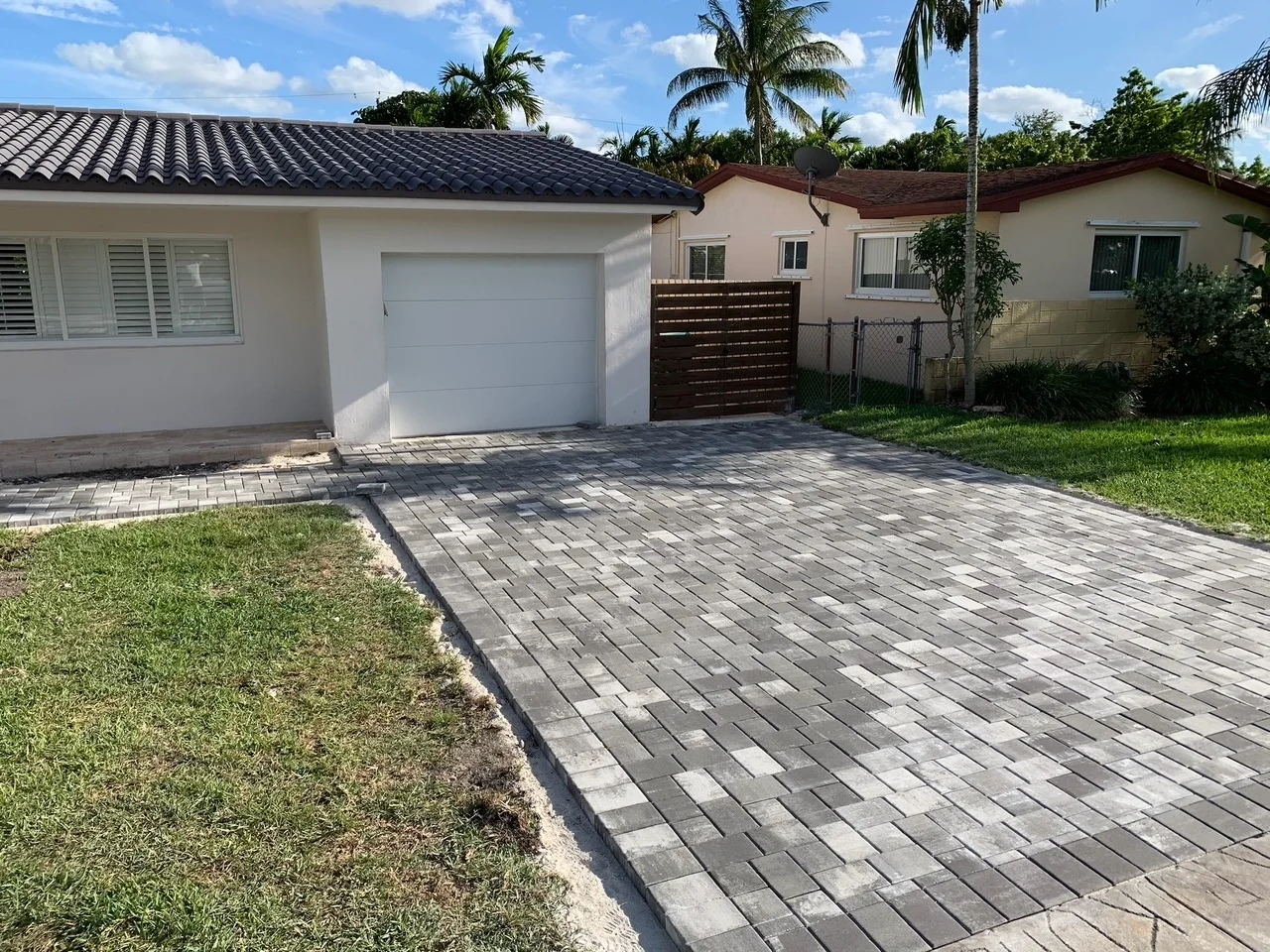
What actually goes wrong
Here is the honest version: a sunken paver is a symptom. The base under it lost material, usually to water, and the surface settled into the gap. Resetting the pavers without correcting the base just buys you a season.
Sunken driveway edges here usually trace back to groundwater. Much of the coast has a high water table, so water cannot drop very far before it starts moving laterally. That lateral movement is what works the sand loose from under the edge.
Then there are roots. A paver base keeps moisture under the surface, and a mature tree nearby will find it. As the roots thicken inside the base, they heave the pavers up.
That is why the schedule on our jobs is mostly spent on the part you will never see again. The surface takes a day or two. The ground it sits on takes the rest, and the ground is what you are actually paying for.
How we run this job
We come look at it
Before any pricing, we come see it. Our crew member walks the area with you and pays close attention to how water moves around it. What we tell you afterward is what we found, including when the job is smaller than you expected.
You get the plan in writing
Scope, materials, schedule, and cost on paper before a shovel moves. The number you approve is the number, not an opening position.
We build the base first
Dig to depth, compact the aggregate in layers, screed the bedding. Nobody ever sees this part again, which is exactly why most failures start here.
Pavers go down and get cut in
Laying the field is the fast part. The care is in the cuts at the edges and the restraint that locks the whole field in place.
Joints get filled and the site gets cleaned
Sand swept in and compacted, the surface washed down, and the property left the way we found it. We haul our own debris.
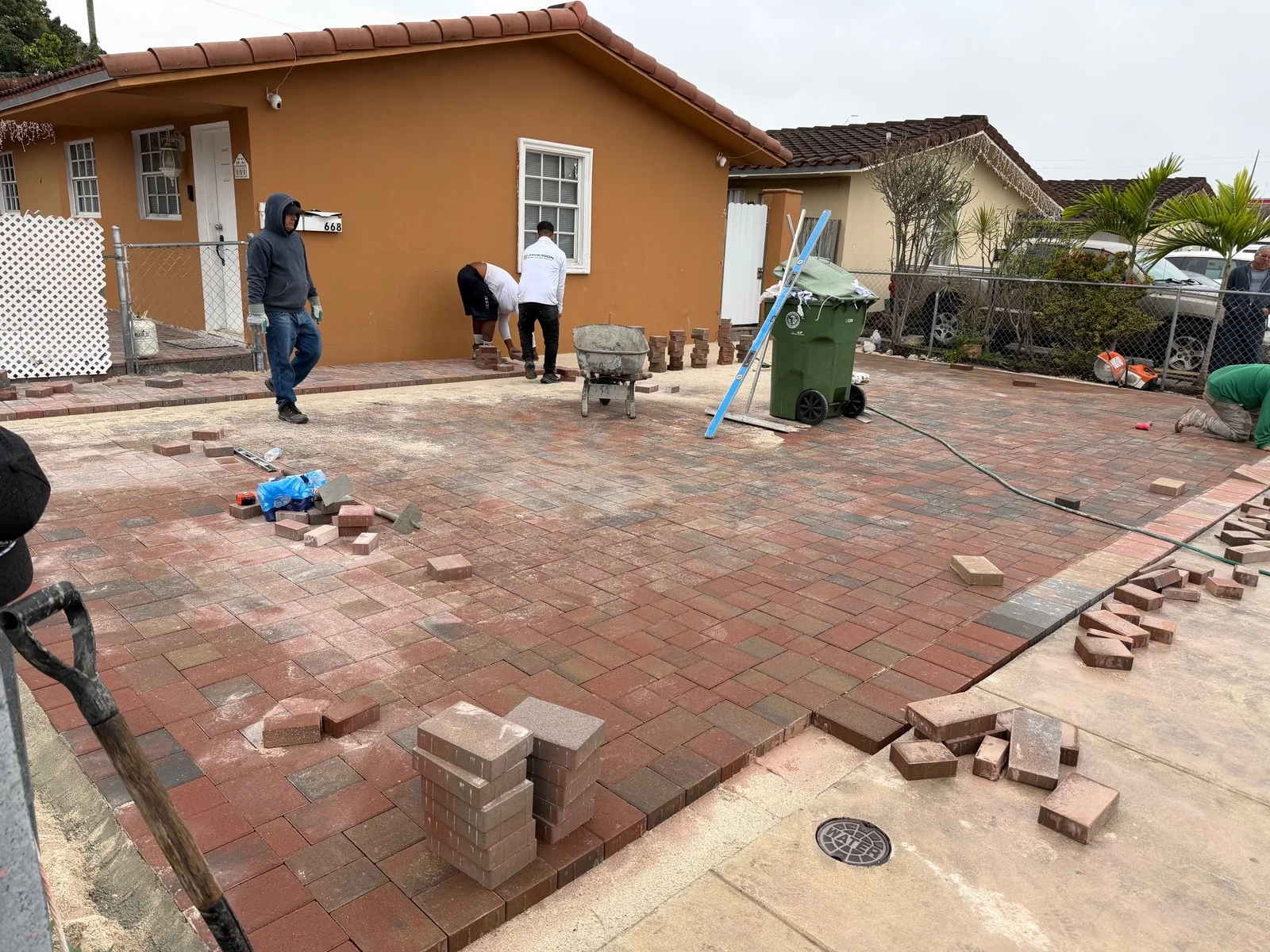
What a driveway asks of the ground under it
The apron, where the drive meets the street, takes the worst of it. Vehicles turn there under load, which grinds and shoves the surface sideways rather than just pressing down. That is why aprons need the deepest base on the job and the most serious edge restraint.
Width matters more than people expect. A drive built to the minimum feels fine until somebody steps out of a car onto wet grass every time it rains, and the edge course starts breaking down from being driven over.
A driveway is the only paver surface on most properties that carries a vehicle, and that changes everything under it. Passenger cars are not the design case; the design case is the delivery truck, the moving van, and the day somebody parks a loaded trailer on the apron.
If nobody talks to you about drainage, they are quoting a different job.
Joint sand is the last step on a patio, which is exactly why it gets rushed. Polymeric sand binds once it is wet and resists washout better than plain sand, so it is what most jobs use now. The catch is the cleanup. It goes in dry, the surface gets swept properly, and the water goes on the way the manufacturer specifies. Skipping ahead is how a new patio ends up hazy.
When we look at an older paver surface, the joints are one of the first things we check. That sand transfers load from paver to paver, so a field of separate units works as a single surface. Where joints have washed out, each paver is carrying its own load, and that is the spot where they start rocking and cracking. Empty joints are the early warning.
Restraint
A perimeter edge restraint is what stops the field creeping outward and the joints opening from the outside in.
Joint sand
Structural, not cosmetic. It transfers load between units, which is the whole reason a field of loose pavers behaves like a surface.
Separation
Geotextile between subgrade and base stops fine soil migrating up and destroying the aggregate structure.
More driveway work
We cover this across the region. A few of the areas we work most:
What it asks of you afterwards
Plenty of good paver jobs are never sealed. Unsealed concrete pavers weather to a softer color and the joints still do their job if they are kept topped up. Sealing earns its keep where stains are likely, around a grill or under a parked car, and where you want a darker, richer color. Ask us and we will give you a straight read on your surface.
Walk your pavers now and then and look along the edges. If any paver has lifted more than about a quarter inch, treat it as urgent, because that is the height where people start catching their toes. For anyone managing a commercial property, it is a liability matter as much as upkeep.
Upkeep on a well-built paver surface is light. Sweep leaves and debris off before they break down in the joints, top up the joint sand when it gets low, and call about any dip while it is still small. Most owners do little else.
Most travertine requests come from pool owners, and the heat is why. It stays noticeably cooler than concrete when the sun is on it. Expect variation between units, as you would with any natural stone. Sealing is worth it if the surface will catch oil or heavy stains, and less necessary if it will not.
People drawn to porcelain usually want a surface that will not stain, and it comes close. Its density means it absorbs almost nothing. Expect the install to be slower and more exacting than concrete pavers, since the bed has to be precisely flat and every cut needs the right blade.
Concrete pavers win on choice: they come in more shapes and colors than any other material we install. They also lay up consistently, which makes for a predictable job. The color runs through the whole unit, so it fades slowly and gently in the sun. Expect it to shift a bit in the first year or two as it cures out.
The shortcuts that surface two years later
Each of these hides under a clean new surface. Since the owner cannot see them at the end, they keep getting done.
Skipping the geotextile
This one cannot be checked after the fact. Once the pavers are down, nobody can see whether there is fabric under the base. If there is not, fine soil gradually moves up into the aggregate and weakens it, and the settling that follows takes a full rebuild to fix.
Using the wrong sand in the bedding
Bedding sand that is round acts like a layer of ball bearings. Pavers set on mason or beach sand drift under load. Sharp, angular concrete sand stays put.
Sealing too early
Fresh concrete pavers push a white residue to the surface as they cure. That is efflorescence, and it needs to finish before any sealer goes on. Seal in the first month and the haze can end up permanently under the coat.
Laying over the old surface
An overlay inherits everything beneath it. Settled spots and a soft base stay exactly where they were. If the base is what sank the old surface, the new layer just hides it for a season before the same failure comes back.
The pavers are a wearing surface. The base is the building.
Common questions
What happens to the old surface
Removal and disposal are included. We break out whatever is there now and take it off the property. Where we can get it to a recycler, the old concrete and pavers go there.
How do you keep it from settling again
A releveling that only lifts and resets the pavers will settle again, because whatever caused the dip is still there. Our fix starts underneath: rebuild the base in compacted layers, then sort out where the water is coming from, whether that is a downspout, a low grade or irrigation.
Do you work with HOAs and property managers
Often. Board approvals move on their own calendar, so we plan the job around it. Send us your submittal requirements and meeting dates and we will have what the board needs ready when it meets.
Do you cover Miami, FL
Yes. Miami, FL is inside our regular working area and we are out that way most weeks. Call and we will tell you honestly when we could get to you.
Is there a warranty
Yes. We put our workmanship warranty in writing. Before you sign, we also walk you through what falls outside it, like damage from new roots or from drainage that changes after we leave, so nobody is surprised later. Coverage for the pavers themselves comes from the manufacturer, and you get that paperwork from us.
Can you work around my pool being open
Usually. Pool deck work gets staged so you keep a safe path and the water stays covered while we cut. If there is a stretch where the pool has to be off limits we tell you which days up front.
Let us walk the property
Photos only tell us so much. Standing on the surface tells us the rest. One of us will come out, walk the property with you, check where the water runs, and put what we find in writing.
Quality you can stand on