Paver Patio Restoration, built on a base that holds
Lift, correct, relay and re-seal a patio that has gone tired.
What actually goes wrong
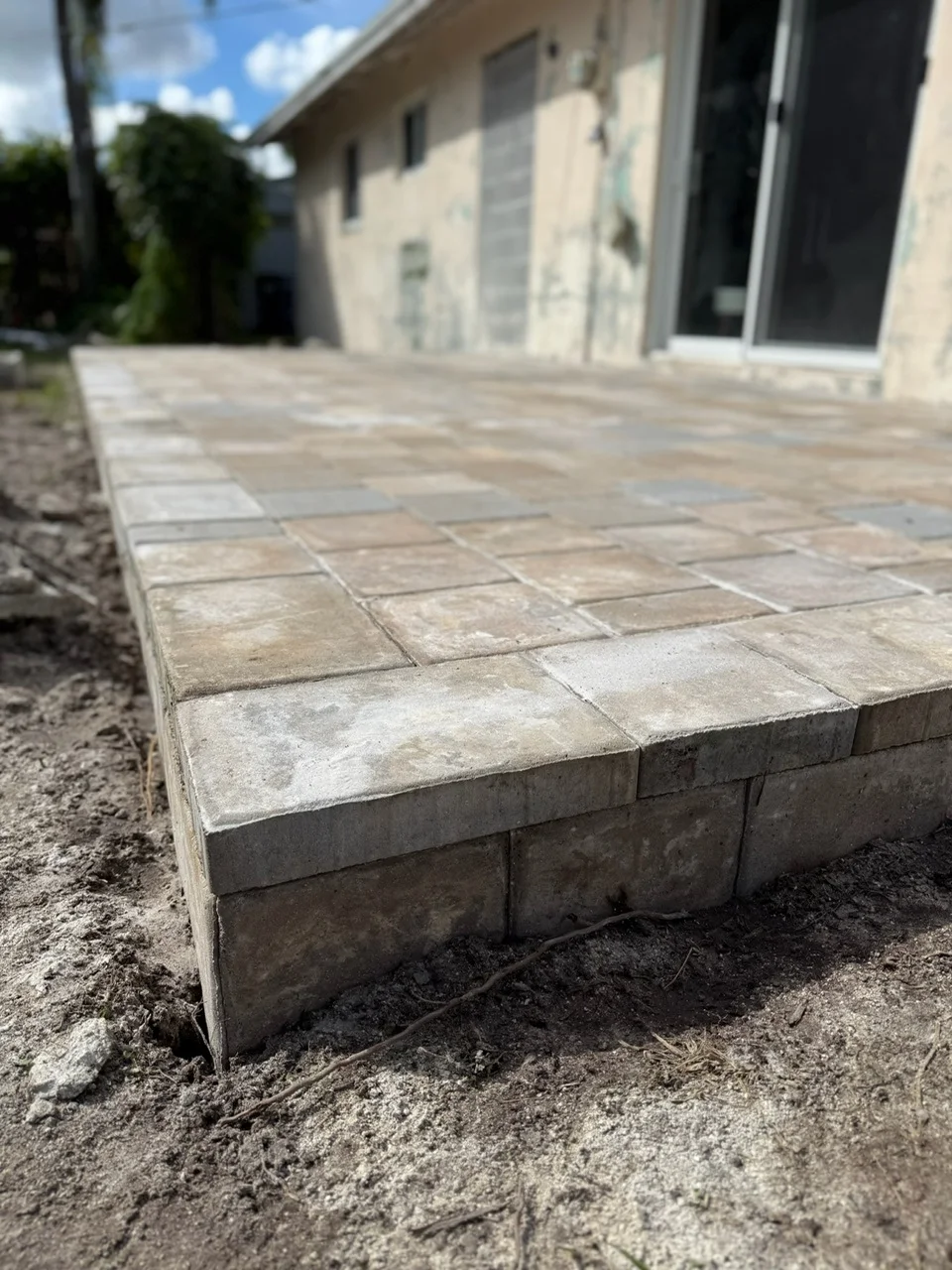
The failure is almost always below the pavers. Sand washes out of the joints, water gets down into the bedding, the bedding migrates, and the surface drops. Everything you can see is downstream of that.
Driveway edges usually go first, and the high water table across much of the coast is a big reason. Less room for water to drain down means more of it moving sideways through the base. Over time that flow carries the sand away from under the edge.
Large trees near a paver surface cause a lot of lifting. Their roots follow moisture, and the base under pavers holds plenty of it. Over the years they push in and raise the surface.
That is why the schedule on our jobs is mostly spent on the part you will never see again. The surface takes a day or two. The ground it sits on takes the rest, and the ground is what you are actually paying for.
How we run this job
We come look at it
Somebody from the crew comes out, stands on the problem, and tells you what is actually going on underneath it. No sales visit, just a look and an honest read.
You get the plan in writing
Everything in writing up front: what we are doing, what it is made of, how long it takes, and what it costs. Nothing changes without you signing off on it.
We build the base first
Dig to depth, compact the aggregate in layers, screed the bedding. Nobody ever sees this part again, which is exactly why most failures start here.
Pavers go down and get cut in
Field laid to the pattern, edges cut on site, and a restraint set around the perimeter so the field cannot creep.
Joints get filled and the site gets cleaned
Sand swept in and compacted, the surface washed down, and the property left the way we found it. We haul our own debris.
What makes a patio last
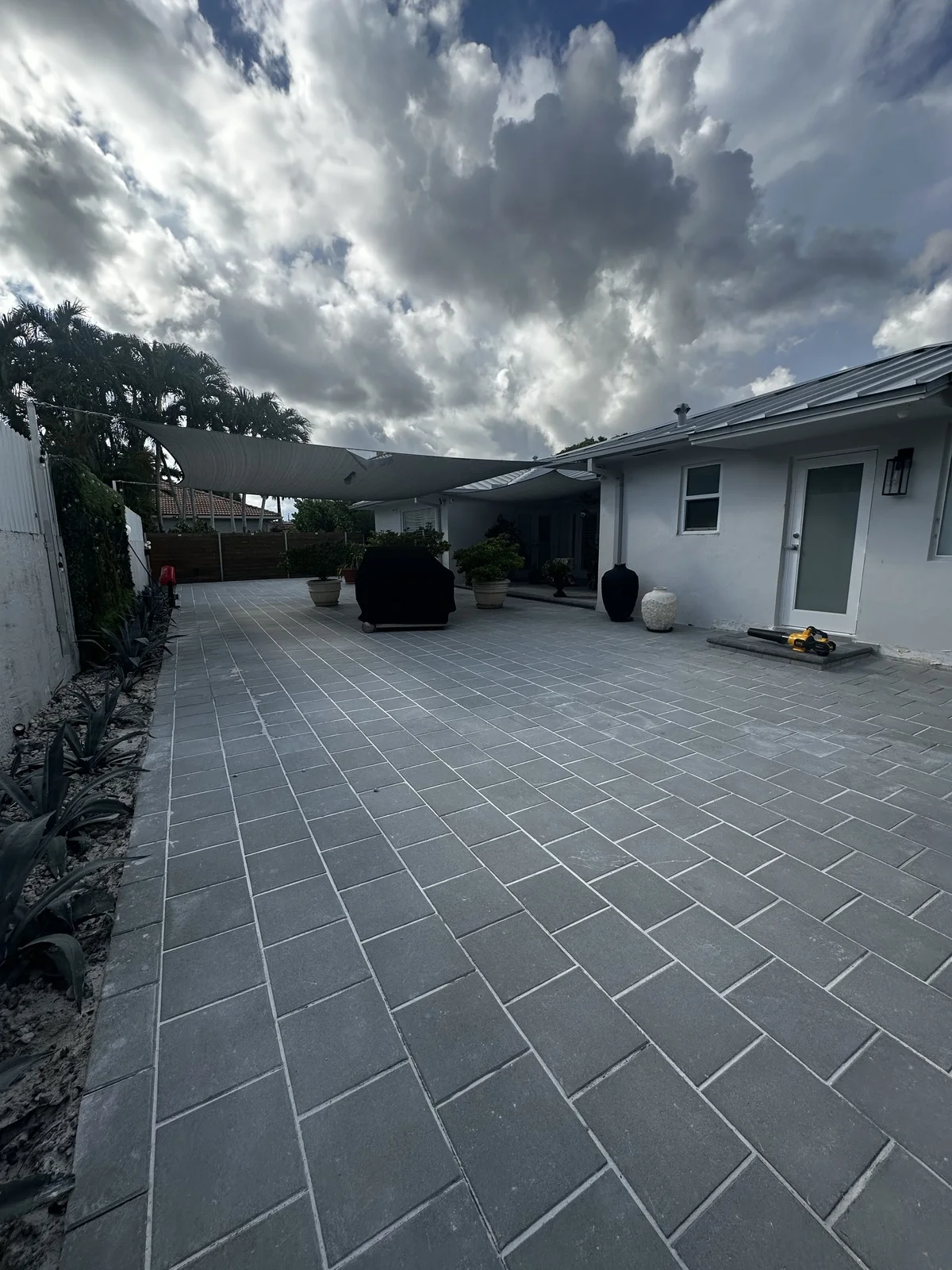
Fall away from the building is the whole game. A patio wants a gentle slope carrying water into the yard, never toward a slab or a door threshold. On a tight lot with no fall available that means a channel drain or a permeable section built in from the start.
Furniture is the quiet load. Table and chair legs concentrate weight on a tiny footprint and will dish an under-compacted patio in a season. Sun umbrellas with heavy bases are the usual culprit.
A patio carries people and furniture rather than vehicles, so the base can be shallower than a driveway. What it cannot be is badly drained. A patio that holds water grows algae, gets slick, and pushes moisture back at the house.
Compaction in lifts is the difference between ten years and two.
Settling at one corner usually has a single water source behind it. Picture a downspout pouring onto the edge in every storm. That edge stays wet, the sand underneath moves, and the corner drops. Irrigation hitting the same patch daily does the same thing more slowly. Rain spread across the whole surface rarely causes that kind of failure.
Ask whoever is pricing your job what fall they are building in. The answer should be around an eighth to a quarter inch per foot, away from the building. That is enough for water to leave the surface and gentle enough that it feels flat underfoot. Flat surfaces puddle, and surfaces graded the wrong way push water at the foundation.
The question to ask is where the water ends up after it leaves the pavers. On a commercial site that answer drives part of the design. A tight lot with no fall available might need a channel drain at the low edge, a permeable section draining into a stone reservoir, or a regraded planting bed. Building any of them during the install beats cutting the job back open later.
Separation
Geotextile between subgrade and base stops fine soil migrating up and destroying the aggregate structure.
Base depth
Set by what the surface carries, not by habit. A walkway and a truck-bearing drive are not the same excavation.
Compaction
Thin layers, each one compacted before the next goes on. A thick dump with one pass of the plate leaves loose stone hiding under a firm skin.
More patio work
We take this work all over the region. Some of the places we are in most often:
What it asks of you afterwards
Debris in the joints is the thing to stay ahead of. Leaves and grass clippings break down into soil, and soil in a joint is where weeds start. Sweep it out, keep the sand topped up, and a well-built surface will ask very little else of you.
Nobody needs to seal pavers for them to hold up. A properly built surface with full joints lasts on its own. Sealing is something you add if you want the color darker and stains easier to lift, knowing it means a recoat every few years and the right product for your material. If yours would not gain much, we will say so.
A lifted edge is the one problem worth fixing the week you notice it. Past about a quarter inch it becomes a trip hazard. Catching it early usually means resetting a few pavers. On a commercial property, waiting also means carrying a liability question until it is done.
Porcelain pavers have only recently become common on homes. They are very dense and take on almost no water, so stains have little to hold onto. The catch is the install. Porcelain shows every flaw in the bedding, so the base has to be exact, and cuts need the right blade and a slow hand.
Concrete pavers are the easiest material to live with over the long run. If one cracks or a section needs resetting, matching it is usually straightforward. The color is part of the paver itself, so it softens gradually in the sun. It also changes a little in the first year or two as the units cure, which surprises some owners, so we mention it up front.
Clay brick keeps its color essentially forever because the color is the fired clay itself. It costs more, comes in fewer shapes, and it is the right answer when you want a surface that looks the same in twenty years.
What we see when somebody else did it
None of these leave a mark you could spot at the final walk. That is the whole reason they keep coming back.
Using the wrong sand in the bedding
The grains matter. Sharp, angular concrete sand interlocks and holds a paver’s position. Rounded sand, such as mason or beach sand, keeps shifting under weight and lets the pavers wander.
Sealing too early
Give new concrete pavers time before sealing. They have to cure and let efflorescence work its way out. Sealing during the first month risks catching that white bloom under the sealer, where it stays for good.
Laying over the old surface
A new surface laid over an old one usually looks fine for about a season. After that, the base that ruined the first surface starts ruining the second. Speed and price are the only things the shortcut buys you.
Skipping the geotextile
Without a separation layer, the subgrade and the base slowly trade places. Soil particles ride water up into the stone while the stone presses down into the soil, and the base gets thinner every year. Surface repairs do nothing for that kind of settlement.
A sunken paver is a symptom. The base under it is the disease.
Common questions
Will the new pavers match what I already have
First we find out whether your paver line is still made. Older lines get discontinued, and even a current one can look a little different from units that have sat in the sun for years. If we can match, exactly or closely, we order. If not, we show you the options first, like pulling pavers from a less visible area.
What happens to the old surface
We remove it. Breaking out and hauling the old concrete or pavers is a normal part of our scope, and where a recycler is available, that material gets recycled instead of landfilled.
How do you keep it from settling again
We start with a question: where is the water going? That answer usually explains the settling. From there it is a matter of correcting the drainage and putting a proper base back in, plus handling any root or downspout feeding the problem.
Do you work with HOAs and property managers
Yes, HOA and condo work is part of what we do. We prepare submittals for the board and phase the job so residents still get in and out. Tell us your approval steps and we follow them.
Do you cover Miami, FL
Yes, Miami is our home area. Tell us where the property is and what you are thinking about, and we will give you a realistic idea of when we could be there.
Is there a warranty
Two warranties apply. Ours covers the workmanship and comes in writing. The manufacturer covers the pavers, and we give you their documentation. Our warranty does not cover conditions that change after the job, such as a new root or a drainage change, and we tell you that up front.
Let us walk the property
You do not have to book anything to get an opinion. Describe the problem over the phone or send photos, and we will tell you what we see and what it takes to put it right. Sometimes the right call is to wait a year, and we will say so.
Quality you can stand on