The Fort Lauderdale crew for driveways, patios and pool decks
Fort Lauderdale means waterfront lots, seawalls, and a water table that sits close enough to the surface to matter to a paver base.
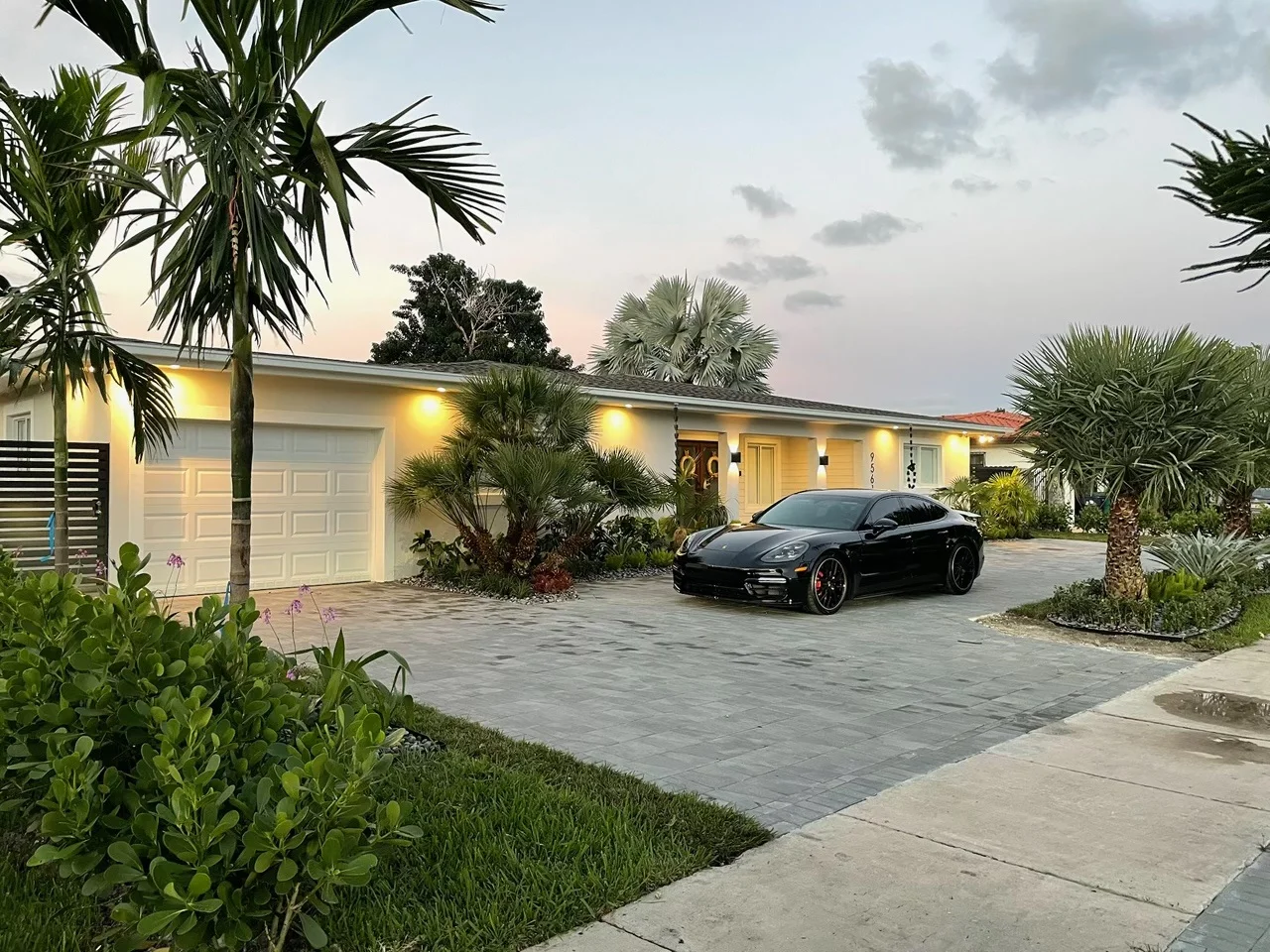
What we see on Fort Lauderdale properties
Fort Lauderdale means waterfront lots, seawalls, and a water table that sits close enough to the surface to matter to a paver base.
When a paver surface goes wrong in Florida, the pavers are rarely the thing that failed. Water got into the base, the base moved, and the surface followed it down. Fix the surface only and you are back in two years.
When a driveway edge starts to sink, look at the water. Along much of the coast the water table sits high, so rain has less room to drain down and tends to travel sideways instead. Moving sideways, it carries sand out from under the edge.
If a big tree is close by, its roots are a likely cause. The damp aggregate under a paver surface draws them in, and as they grow they push the pavers up out of line.
We are out this way most weeks, so a look at the property is usually a matter of days rather than months. If it turns out the honest answer is that it can wait, we will tell you that too.
How a job here runs
We come look at it
Expect an honest answer, even a small one. We walk the property with you, follow the water, and say exactly what we see. If you were bracing for a big job and it is not one, you will know.
You get the plan in writing
Scope, materials, how long it takes, and what it costs, written down before anybody starts. No verbal numbers that change later.
We build the base first
Excavation to the depth this job actually needs, aggregate compacted lift by lift, bedding screeded flat. The slow part, and the part that decides whether the surface is still flat in ten years.
Pavers go down and get cut in
Laying the field is the fast part. The care is in the cuts at the edges and the restraint that locks the whole field in place.
Joints get filled and the site gets cleaned
Sand swept in and compacted, the surface washed down, and the property left the way we found it. We haul our own debris.

What local conditions do to a paver surface
The sand in the joints is structural. It is what transfers load from one paver to the next, which is the whole mechanism that lets a field of loose units behave like a surface. When joints wash out, each paver starts carrying its own load alone, which is exactly when they start rocking and cracking.
That hazy film you sometimes see on a newer patio is usually polymeric sand that was rushed. The sand binds when it gets wet, so it has to go into the joints dry and be swept completely off the paver faces before any water touches it. Then it gets watered in exactly the way the manufacturer says. Skip the sweeping and the binder sets on the surface instead of in the joint.
A sunken paver is a symptom. The base under it is the disease.
People walking across pavers are rarely looking at their feet, which is why a raised edge matters. More than about a quarter inch of lift is enough to catch a toe. Deal with that one quickly, especially on commercial property, where it is a liability concern along with a maintenance one.
A well-laid surface mostly looks after itself. What it does need is joints that stay full, so add sand when you see it dropping, and attention to any low spot before it spreads. Catching settling early keeps the repair small.
Sealing is optional and it is a preference rather than a requirement. It deepens the color, makes stains easier to lift, and helps hold joint sand. It also needs redoing every few years and a bad sealer choice can leave a plastic-looking sheen or trap moisture. We will tell you honestly whether your surface benefits.
Separation
Geotextile between subgrade and base stops fine soil migrating up and destroying the aggregate structure.
Base depth
Set by what the surface carries, not by habit. A walkway and a truck-bearing drive are not the same excavation.
Compaction
Layered, then compacted, then layered again. One load spread and run over once looks finished and leaves loose material below the crust.
What Fort Lauderdale calls us for
Also nearby in Broward County:
What we tend to use around here
Most of what we put down is concrete pavers. They come in more shapes and colors than any other option and lay up predictably. Years later, when you want to add on or patch, they are also the easiest to match. The pigment runs all the way through each unit, so sun softens the color over time and there is no surface coat to wear through.
Pick clay brick if you want a surface that still looks like the day it went in twenty years from now. Its color is the fired clay, so it stays put. You will pay more and have fewer shapes to choose from.
Travertine is the one people ask for around pools, and for a good reason: it stays noticeably cooler underfoot than concrete in direct sun. It is a natural stone, so there is variation between units, and it wants a sealer if it is somewhere that gets oil or heavy staining.
You can see this on almost any failing driveway. The middle usually looks fine and the outer two feet are a mess with wide joints and rocking units. That is not the edge wearing out faster, it is the edge restraint having failed and the field unlocking from the outside in.
The edge restraint is the piece nobody thinks about and it is what stops the whole field from spreading. Pavers work by interlock, which means each unit is held by its neighbors. Take away the restraint at the perimeter and the outermost course starts creeping outward, the joints open, the sand washes, and the failure marches inward from the edge.
Finding us in Fort Lauderdale
We are based in Miami and out this way regularly.
Where these jobs go wrong
Each of these hides under a clean new surface. Since the owner cannot see them at the end, they keep getting done.
Using the wrong sand in the bedding
If pavers are wandering out of line, check the bedding. It should be angular concrete sand with sharp grains. Rounded mason or beach sand rolls under load and lets them move.
Sealing too early
Fresh concrete pavers push a white residue to the surface as they cure. That is efflorescence, and it needs to finish before any sealer goes on. Seal in the first month and the haze can end up permanently under the coat.
Laying over the old surface
An overlay inherits everything beneath it. Settled spots and a soft base stay exactly where they were. If the base is what sank the old surface, the new layer just hides it for a season before the same failure comes back.
Skipping the geotextile
The base only works if it stays clean crushed aggregate. Fabric under it keeps the soil below from mixing in. Skip it and the two layers blend a little more every rainy season, and once enough soil has moved up, the base cannot carry the load and the pavers settle.
Water is what ends most paver surfaces, and it rarely arrives from the sky.
Common questions
Do I need to be home while you work
No need. Leave us access and water, and go about your day. Plenty of customers head out in the morning and come back to a finished section. Anything we did not expect gets a phone call that day.
Will the new pavers match what I already have
You will know before we order anything. Plenty of repairs match exactly. Others come close, since concrete pavers shift color a little with sun and age and older lines get discontinued. When close is not good enough, we can move units from a less visible area onto the visible patch.
What happens to the old surface
Old surfaces come out completely before anything new is built. We haul the debris away and recycle the concrete and pavers wherever we have a recycler to take them. Nothing about removal gets billed as an add-on.
How do you keep it from settling again
A releveling that only lifts and resets the pavers will settle again, because whatever caused the dip is still there. Our fix starts underneath: rebuild the base in compacted layers, then sort out where the water is coming from, whether that is a downspout, a low grade or irrigation.
Do you work with HOAs and property managers
HOA, condo and multifamily properties are a regular part of our work. We are used to board timelines and submittals, and we schedule in phases so residents can still get around. Tell us how your approvals work.
Do you cover Fort Lauderdale, FL
Yes. Fort Lauderdale, FL is inside our regular working area and we are out that way most weeks. Call and we will tell you honestly when we could get to you.
Start with a conversation
Tell us when works and we will come stand on it. Walking the property and seeing where the water goes answers more than any amount of back and forth, and you get our findings written up.
Quality you can stand on