Paver work done properly in Coral Gables
Coral Gables has its own look and its own review process, and a lot of the older homes there were built with surfaces that predate anything we would install today. We are used to working inside those constraints.
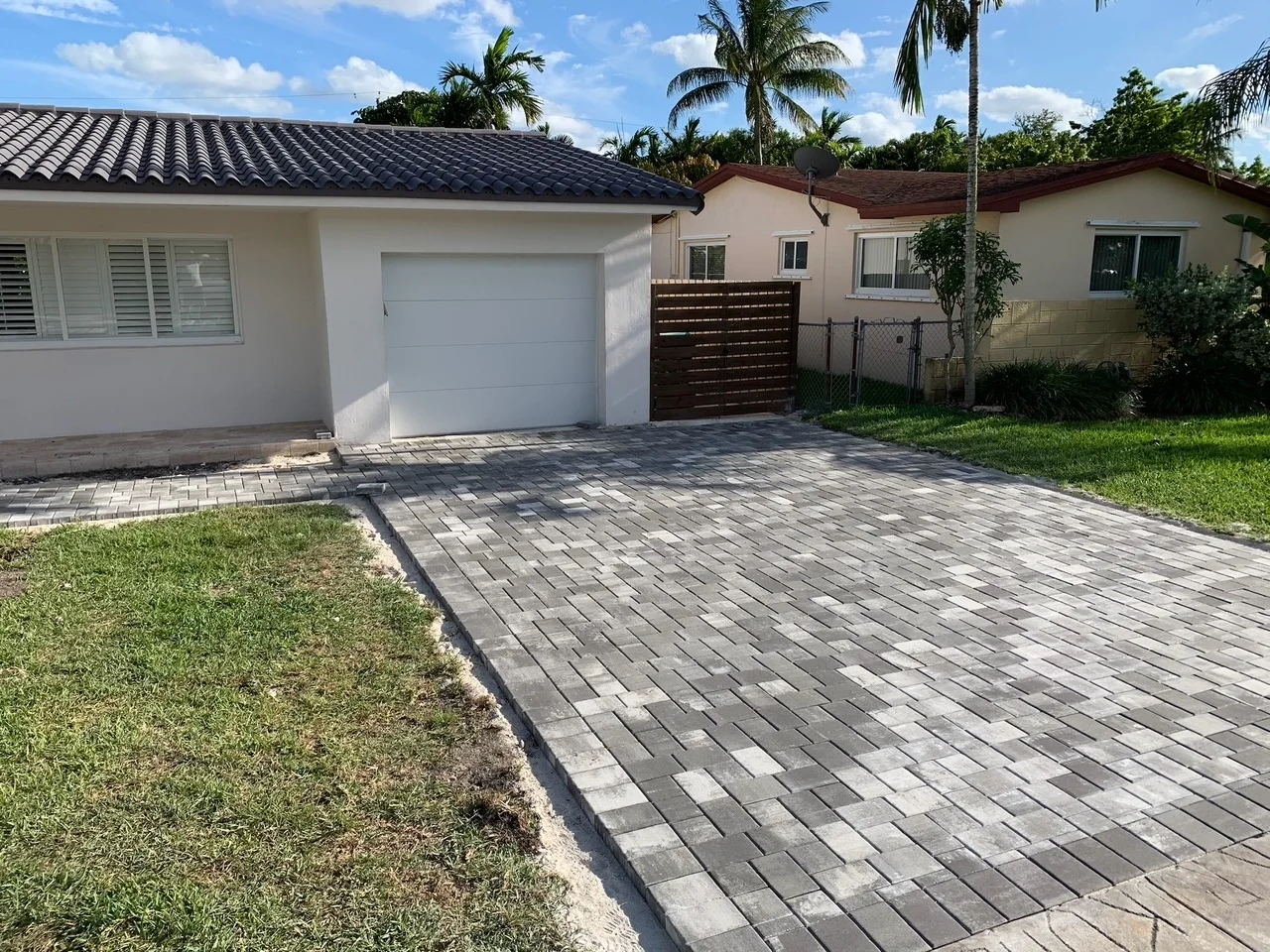
What we see on Coral Gables properties
Coral Gables has its own look and its own review process, and a lot of the older homes there were built with surfaces that predate anything we would install today. We are used to working inside those constraints.
When a paver surface goes wrong in Florida, the pavers are rarely the thing that failed. Water got into the base, the base moved, and the surface followed it down. Fix the surface only and you are back in two years.
On the coast we design for water that moves sideways. The water table sits high in a lot of places, which leaves rain little room to soak downward. It travels across instead, and that is the movement that strips sand from under a driveway’s edge.
Moisture collects under a walkway, and roots go where the moisture is. Ficus, black olive and a lot of older shade trees root shallow and wide, so they find that damp layer and push the pavers up.
We are out this way most weeks, so a look at the property is usually a matter of days rather than months. If it turns out the honest answer is that it can wait, we will tell you that too.
How a job here runs
We come look at it
You walk it with us. We look at the surface and where the water runs off it, then tell you what we honestly think, and that includes saying so when it is minor.
You get the plan in writing
Everything in writing up front: what we are doing, what it is made of, how long it takes, and what it costs. Nothing changes without you signing off on it.
We build the base first
Dig to depth, compact the aggregate in layers, screed the bedding. Nobody ever sees this part again, which is exactly why most failures start here.
Pavers go down and get cut in
Laying the field is the fast part. The care is in the cuts at the edges and the restraint that locks the whole field in place.
Joints get filled and the site gets cleaned
Sand swept in and compacted, the surface washed down, and the property left the way we found it. We haul our own debris.
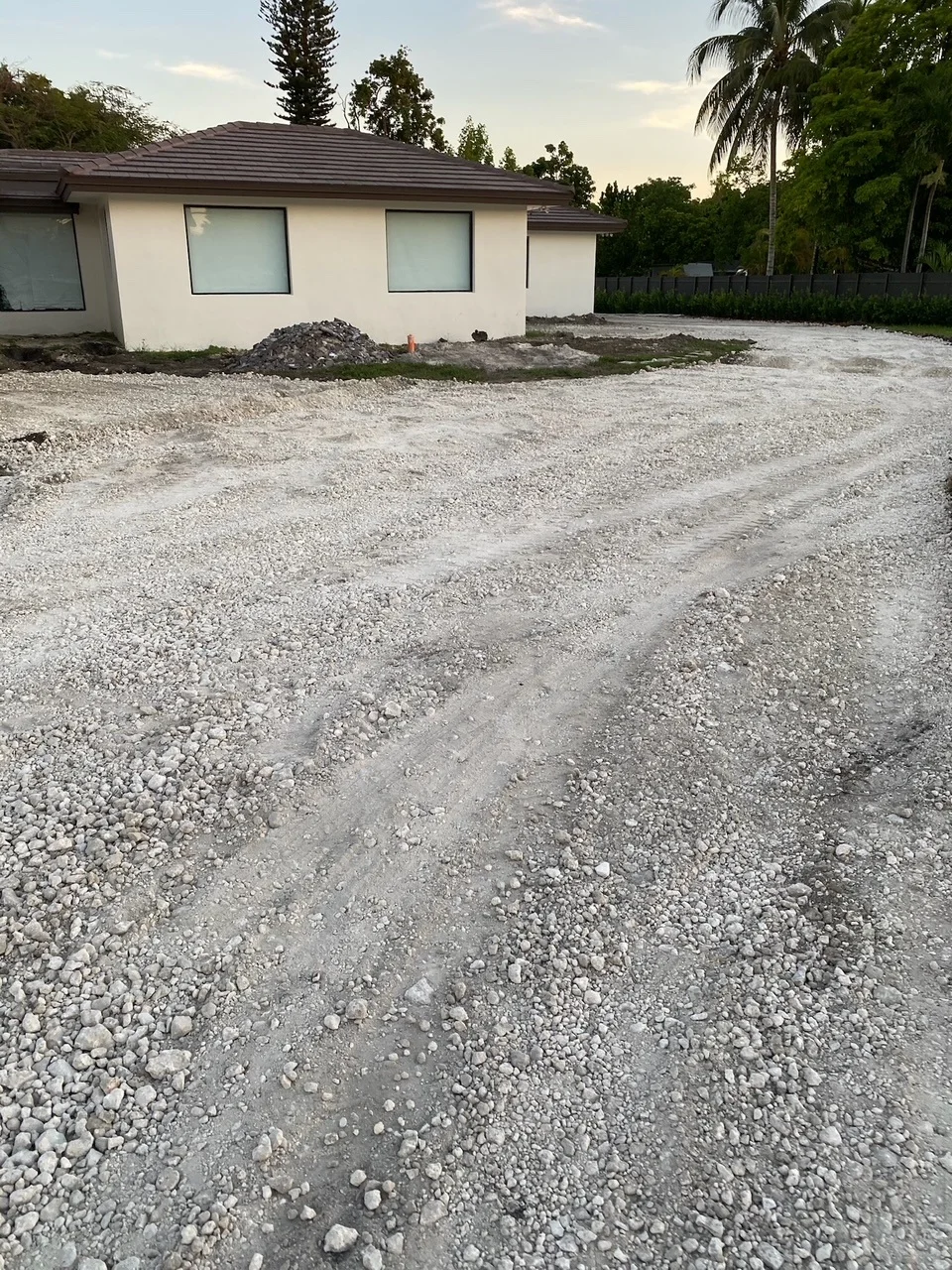
The ground under this part of the county
We do not move on to the next layer of base until the one below it is compacted. Each lift is a few inches of aggregate. It is slower than filling the excavation and running a plate over the top, and that is precisely why the faster method is so common: on day one, both look identical. The difference shows up a year later as patchy settlement.
On site the order runs backwards from what you end up seeing. We dig out to the subgrade, the native soil, and check it. We bring in crushed aggregate and compact it into a base, which is the layer that actually carries the surface. We screed a thin bed of sharp sand dead flat on top. Only then do the pavers go down. They are the wearing surface and the part people photograph, and they sit on top of the work that holds everything up.
Put a walkway’s base under a driveway and the driveway tells you soon enough. Tire tracks show up as ruts, the edges spread and pavers start to rock. A walkway that only carries people can live on a shallower base. A daily pickup needs more depth, and delivery trucks on a commercial drive need more than that. We size the base to the heaviest thing that will cross it.
The edge restraint is the piece nobody thinks about and the reason the field holds.
Puddles that sit on a patio for hours after a storm are a grading problem. So is water that runs toward the building. Both come from getting the fall wrong. The target is about an eighth to a quarter inch of drop per foot, heading away from the structure, which is too gentle to notice underfoot and enough to move the water off.
Drainage is the cheapest thing to fix while the ground is open and the most expensive thing to add later. Once water leaves the paved surface it has to land somewhere, and on a tight commercial lot with no fall to work with, that takes planning. We look at a channel drain along the low edge, a permeable section over a stone reservoir, or regrading the planting bed next door.
Before we design anything, we find out where the water on the site comes from. The usual sources are a downspout discharging at the edge, an irrigation head spraying the same patch twice a day, and a neighboring grade sending runoff across a corner. Rain falling evenly on jointed pavers matters far less.
Compaction
Layered, then compacted, then layered again. One load spread and run over once looks finished and leaves loose material below the crust.
Fall
Roughly an eighth to a quarter inch per foot away from the building. Invisible underfoot, decisive for where water ends up.
Restraint
A perimeter edge restraint is what stops the field creeping outward and the joints opening from the outside in.
What Coral Gables calls us for
Also nearby in Miami-Dade County:
What we tend to use around here
Most of what we put down is concrete pavers. They come in more shapes and colors than any other option and lay up predictably. Years later, when you want to add on or patch, they are also the easiest to match. The pigment runs all the way through each unit, so sun softens the color over time and there is no surface coat to wear through.
Clay brick is the long-game material. Fired clay keeps its color essentially forever, since the clay is the color. Expect a higher price and fewer shapes. In exchange, the surface should look about the same twenty years from now as it does the week we finish.
Most travertine requests come from pool owners, and the heat is why. It stays noticeably cooler than concrete when the sun is on it. Expect variation between units, as you would with any natural stone. Sealing is worth it if the surface will catch oil or heavy stains, and less necessary if it will not.
You can see this on almost any failing driveway. The middle usually looks fine and the outer two feet are a mess with wide joints and rocking units. That is not the edge wearing out faster, it is the edge restraint having failed and the field unlocking from the outside in.
The edge restraint is the piece nobody thinks about and it is what stops the whole field from spreading. Pavers work by interlock, which means each unit is held by its neighbors. Take away the restraint at the perimeter and the outermost course starts creeping outward, the joints open, the sand washes, and the failure marches inward from the edge.
Finding us in Coral Gables
We are based in Miami and out this way regularly.
What we see when somebody else did it
Each of these hides under a clean new surface. Since the owner cannot see them at the end, they keep getting done.
Sealing too early
Sealer works like a lid. Put it on a new concrete paver too early, in the first month, and whatever efflorescence has not come out yet gets trapped underneath as a permanent white haze. Let the pavers cure first.
Laying over the old surface
It is quick, it is cheap, and it inherits every problem underneath. If the base was the reason the old surface failed, putting a new one on top of it just hides the failure for a season.
Skipping the geotextile
A separation fabric between the subgrade and the base stops the two from mixing. Without it, fine soil migrates up into the aggregate, the base loses its structure, and you get settlement that no amount of surface work will fix.
Using the wrong sand in the bedding
Cheap, rounded sand in the bedding layer is how pavers end up drifting. Mason sand and beach sand roll under load. Bedding should be sharp, angular concrete sand.
The pavers are a wearing surface. The base is the building.
Common questions
Do I need to be home while you work
No need. Leave us access and water, and go about your day. Plenty of customers head out in the morning and come back to a finished section. Anything we did not expect gets a phone call that day.
Will the new pavers match what I already have
Sometimes exactly, sometimes closely. Concrete pavers change color a little with sun and age, and older lines get discontinued. If we cannot match, we will show you the options before we order anything, including pulling units from a less visible area to patch a visible one.
What happens to the old surface
That part is on us. The existing surface gets broken out and hauled off the property, and concrete and pavers go to recycling when there is a recycler in the area. It is covered in the scope you sign.
How do you keep it from settling again
Settled pavers almost always point to something underneath. We trace it, whether it is drainage, a soft base or a root moving in, and fix that first. Pavers go back down only once the reason for the dip is gone.
Do you work with HOAs and property managers
Often. Board approvals move on their own calendar, so we plan the job around it. Send us your submittal requirements and meeting dates and we will have what the board needs ready when it meets.
Do you cover Coral Gables, FL
Yes. Coral Gables, FL is inside our regular working area and we are out that way most weeks. Call and we will tell you honestly when we could get to you.
Have somebody come look at it
Call and describe it, or send pictures. You will get a straight answer about what is wrong and what it takes to put right, including when the honest answer is that it can wait a year.
Quality you can stand on