The Palmetto Bay crew for driveways, patios and pool decks
A lot of Palmetto Bay sits low, so drainage is usually the first thing we look at rather than the last.
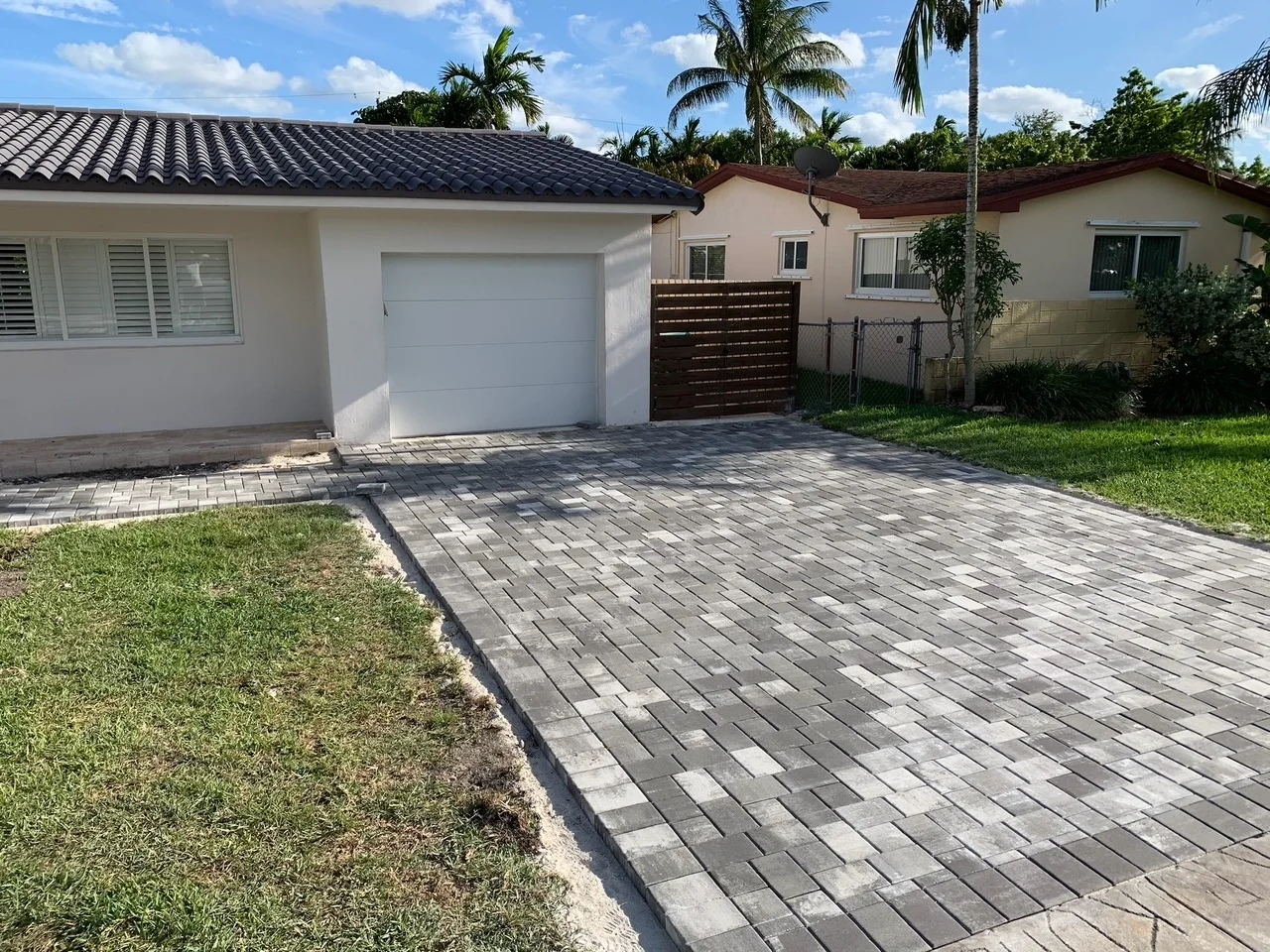
What we see on Palmetto Bay properties
A lot of Palmetto Bay sits low, so drainage is usually the first thing we look at rather than the last.
Here is the honest version: a sunken paver is a symptom. The base under it lost material, usually to water, and the surface settled into the gap. Resetting the pavers without correcting the base just buys you a season.
Why does base work get so much attention here? South Florida pairs loose, sandy ground that shifts with moving water with rain that falls hard and fast. A drier climate lets a weak base hide. Here, every summer is an inspection.
If a big tree is close by, its roots are a likely cause. The damp aggregate under a paver surface draws them in, and as they grow they push the pavers up out of line.
We are out this way most weeks, so a look at the property is usually a matter of days rather than months. If it turns out the honest answer is that it can wait, we will tell you that too.
How a job here runs
We come look at it
Somebody from the crew walks the property with you, looks at where water goes, and tells you what we actually see. If the fix is smaller than you were expecting, we will say so.
You get the plan in writing
Scope, materials, how long it takes, and what it costs, written down before anybody starts. No verbal numbers that change later.
We build the base first
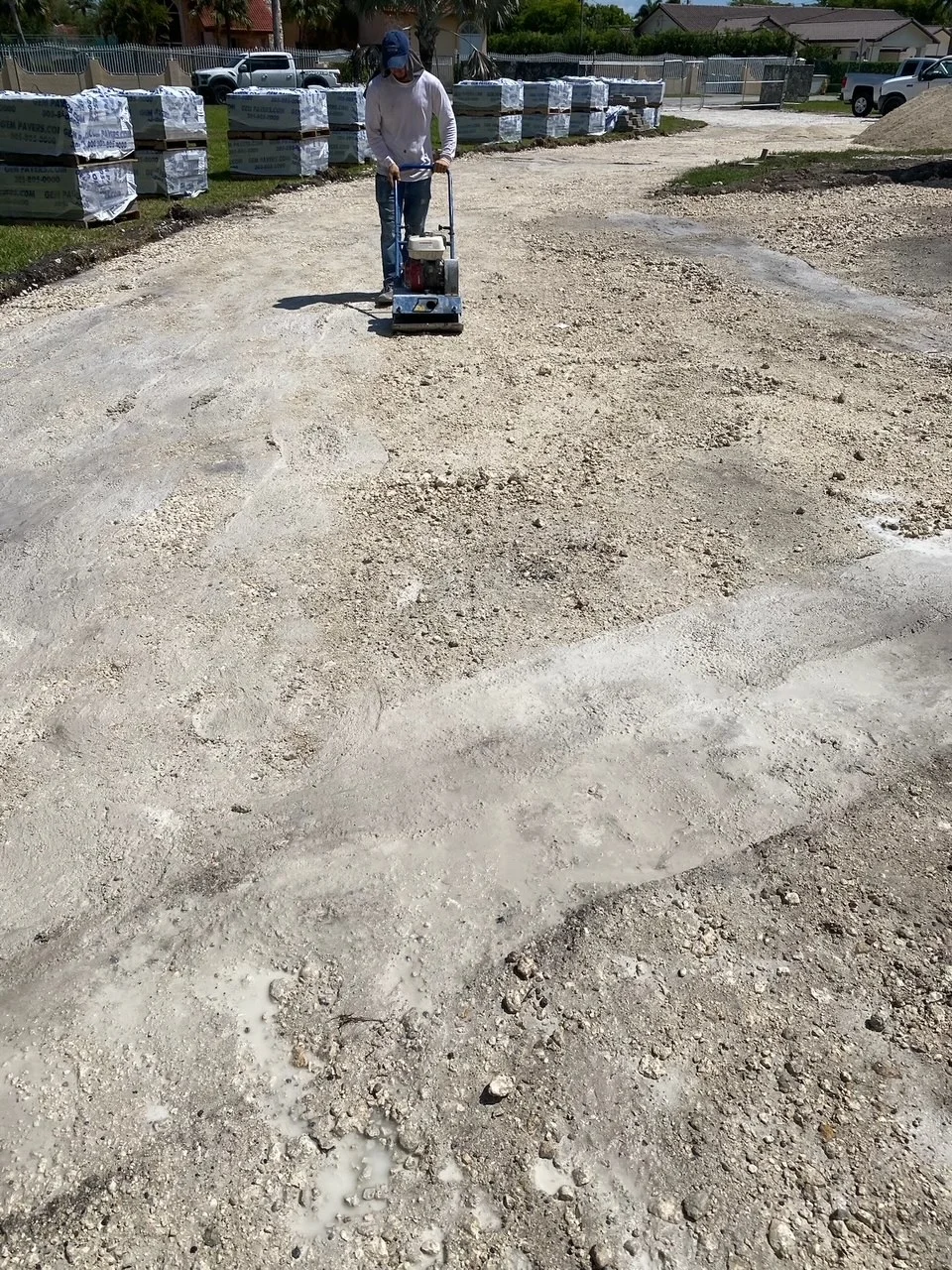
Dig to depth, compact the aggregate in layers, screed the bedding. Nobody ever sees this part again, which is exactly why most failures start here.
Pavers go down and get cut in
The field goes down to the pattern, edge cuts happen on site, and the perimeter gets a restraint so nothing creeps.
Joints get filled and the site gets cleaned
Sand swept in and compacted, the surface washed down, and the property left the way we found it. We haul our own debris.
Why surfaces fail around here
The cheapest material on a patio may be the one that holds it together. Joint sand transfers load between pavers, and that transfer is what makes a field of loose units act as a surface. When joints wash out, each paver is left carrying its own load. That is exactly when they begin to rock, and rocking pavers crack.
That hazy film you sometimes see on a newer patio is usually polymeric sand that was rushed. The sand binds when it gets wet, so it has to go into the joints dry and be swept completely off the paver faces before any water touches it. Then it gets watered in exactly the way the manufacturer says. Skip the sweeping and the binder sets on the surface instead of in the joint.
Compaction in lifts is the difference between ten years and two.
A well-laid surface mostly looks after itself. What it does need is joints that stay full, so add sand when you see it dropping, and attention to any low spot before it spreads. Catching settling early keeps the repair small.
Sealing is optional and it is a preference rather than a requirement. It deepens the color, makes stains easier to lift, and helps hold joint sand. It also needs redoing every few years and a bad sealer choice can leave a plastic-looking sheen or trap moisture. We will tell you honestly whether your surface benefits.
It does not take much. An edge lifted a little more than a quarter inch looks minor and still catches toes. That makes it the item to act on quickly once an install has settled in. If the pavers serve a commercial property, the stakes include liability, beyond keeping the surface in shape.
Base depth
Set by what the surface carries, not by habit. A walkway and a truck-bearing drive are not the same excavation.
Compaction
A compactor can only reach so far down. That is why aggregate goes in lifts, each compacted on its own, instead of one deep pile with a firm crust on top.
Fall
The surface drops about an eighth to a quarter inch every foot away from the building. It feels level and drains like it should.
What Palmetto Bay calls us for
Also nearby in Miami-Dade County:
What we tend to use around here
Before you pick travertine, think about what will happen on it. Near an outdoor kitchen or anywhere oil and heavy stains land, it needs a sealer to keep looking right. On a plain pool deck it is a comfortable choice, because it stays cooler underfoot than concrete in direct sun. As a natural stone, every unit varies a little.
Of everything we install for homeowners, porcelain is the newest. What it brings is density: it soaks up almost no water and resists staining better than nearly anything else. What it demands is precision, both in the base, which has to be truly even, and in the cutting.
If you are unsure which material to choose, concrete pavers are the safe default. The range of shapes and colors is the widest of anything we install, and matching them for a repair or an addition down the road is easier than with any other paver. Know going in that the color moves a little during the first year or two as they cure out.
You can see this on almost any failing driveway. The middle usually looks fine and the outer two feet are a mess with wide joints and rocking units. That is not the edge wearing out faster, it is the edge restraint having failed and the field unlocking from the outside in.
The edge restraint is the piece nobody thinks about and it is what stops the whole field from spreading. Pavers work by interlock, which means each unit is held by its neighbors. Take away the restraint at the perimeter and the outermost course starts creeping outward, the joints open, the sand washes, and the failure marches inward from the edge.
Finding us in Palmetto Bay
We are based in Miami and out this way regularly.
How this gets done badly
Each of these hides under a clean new surface. Since the owner cannot see them at the end, they keep getting done.
Sealing too early
Sealing is a timing job on new concrete pavers. They have to cure, and their efflorescence has to work out to the surface, before the sealer goes on. Rush it into the first month and the white haze gets sealed in.
Laying over the old surface
Before paving over anything, ask why the old surface failed. If the answer is the base, a new surface on top of it is borrowing time. It goes down fast and cheap, and the same problem comes back through it.
Skipping the geotextile
A separation fabric between the subgrade and the base stops the two from mixing. Without it, fine soil migrates up into the aggregate, the base loses its structure, and you get settlement that no amount of surface work will fix.
Using the wrong sand in the bedding
Beach sand and mason sand are round, so they roll under load like ball bearings. Bedding needs sharp, angular concrete sand that locks together and keeps pavers where they were set.
The edge restraint is the piece nobody thinks about and the reason the field holds.
Common questions
How long does the job take
A typical paver work job runs two to five working days once we start. Base work is the slow part; laying the field goes quickly. Weather moves things, and in summer we plan around the afternoon storms rather than pretending they will not happen.
Do I need to be home while you work
No need. Leave us access and water, and go about your day. Plenty of customers head out in the morning and come back to a finished section. Anything we did not expect gets a phone call that day.
Will the new pavers match what I already have
Concrete pavers drift a little in color as the sun and the years work on them, so a fresh unit next to one that has been down a while can stand out. Sometimes we match exactly and sometimes closely. If we cannot get close enough, you see the options before we order.
What happens to the old surface
Old surfaces come out completely before anything new is built. We haul the debris away and recycle the concrete and pavers wherever we have a recycler to take them. Nothing about removal gets billed as an add-on.
How do you keep it from settling again
We find out why it sank before we touch it. Resetting pavers on the same weak base or over the same wet spot only buys you a little time. Usually the cure is better drainage and a properly rebuilt base, and sometimes it means dealing with a root or a downspout.
Do you cover Palmetto Bay, FL
Yes. Palmetto Bay, FL is inside our regular working area and we are out that way most weeks. Call and we will tell you honestly when we could get to you.
Let us walk the property
Send a couple of photos or just call. We will tell you what we think is going on, what it would take to fix, and whether it needs doing now or can wait.
Quality you can stand on