The Boca Raton crew for driveways, patios and pool decks
Boca has a high concentration of managed communities with strict paver and color standards, so approvals come before shovels.
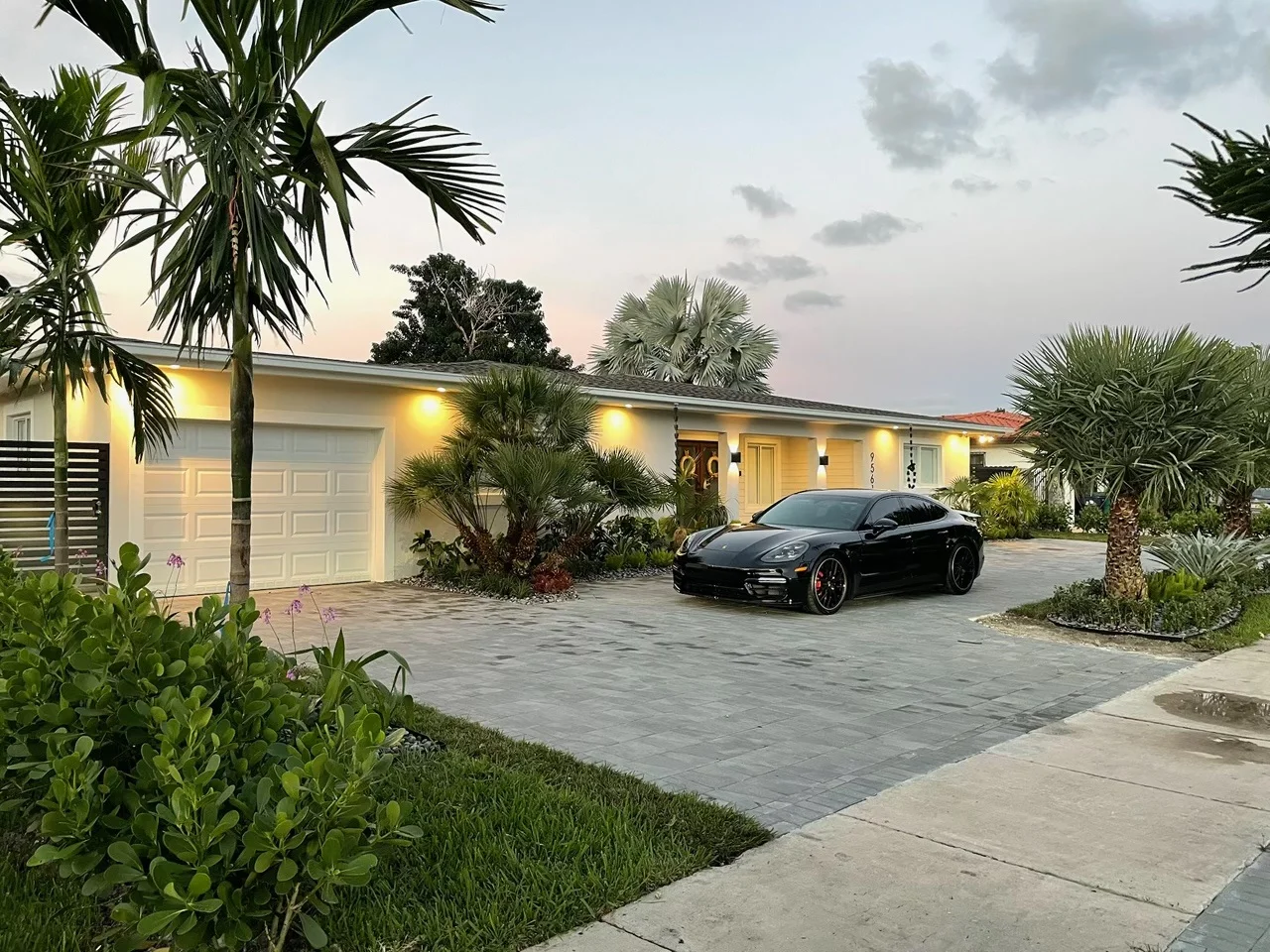
What we see on Boca Raton properties
Boca has a high concentration of managed communities with strict paver and color standards, so approvals come before shovels.
Here is the honest version: a sunken paver is a symptom. The base under it lost material, usually to water, and the surface settled into the gap. Resetting the pavers without correcting the base just buys you a season.
We pay extra attention to driveway edges on the coast. A high water table means rain cannot sink very far, so it moves sideways through the ground, and the edge is where that flow pulls sand out first.
Then there are trees. A ficus or a black olive near a walkway sends roots out shallow and far, and the damp ground under pavers draws them in. Older shade trees do the same.
We are out this way most weeks, so a look at the property is usually a matter of days rather than months. If it turns out the honest answer is that it can wait, we will tell you that too.
How a job here runs
We come look at it
Somebody from the crew comes out, stands on the problem, and tells you what is actually going on underneath it. No sales visit, just a look and an honest read.
You get the plan in writing
Scope, materials, how long it takes, and what it costs, written down before anybody starts. No verbal numbers that change later.
We build the base first
The step most likely to get rushed is the one we slow down on. Excavation to proper depth, aggregate compacted in lifts, and a screeded bedding layer go in first. That buried base is what keeps the surface flat for a decade.
Pavers go down and get cut in
The field goes down to the pattern, edge cuts happen on site, and the perimeter gets a restraint so nothing creeps.
Joints get filled and the site gets cleaned
Sand swept in and compacted, the surface washed down, and the property left the way we found it. We haul our own debris.
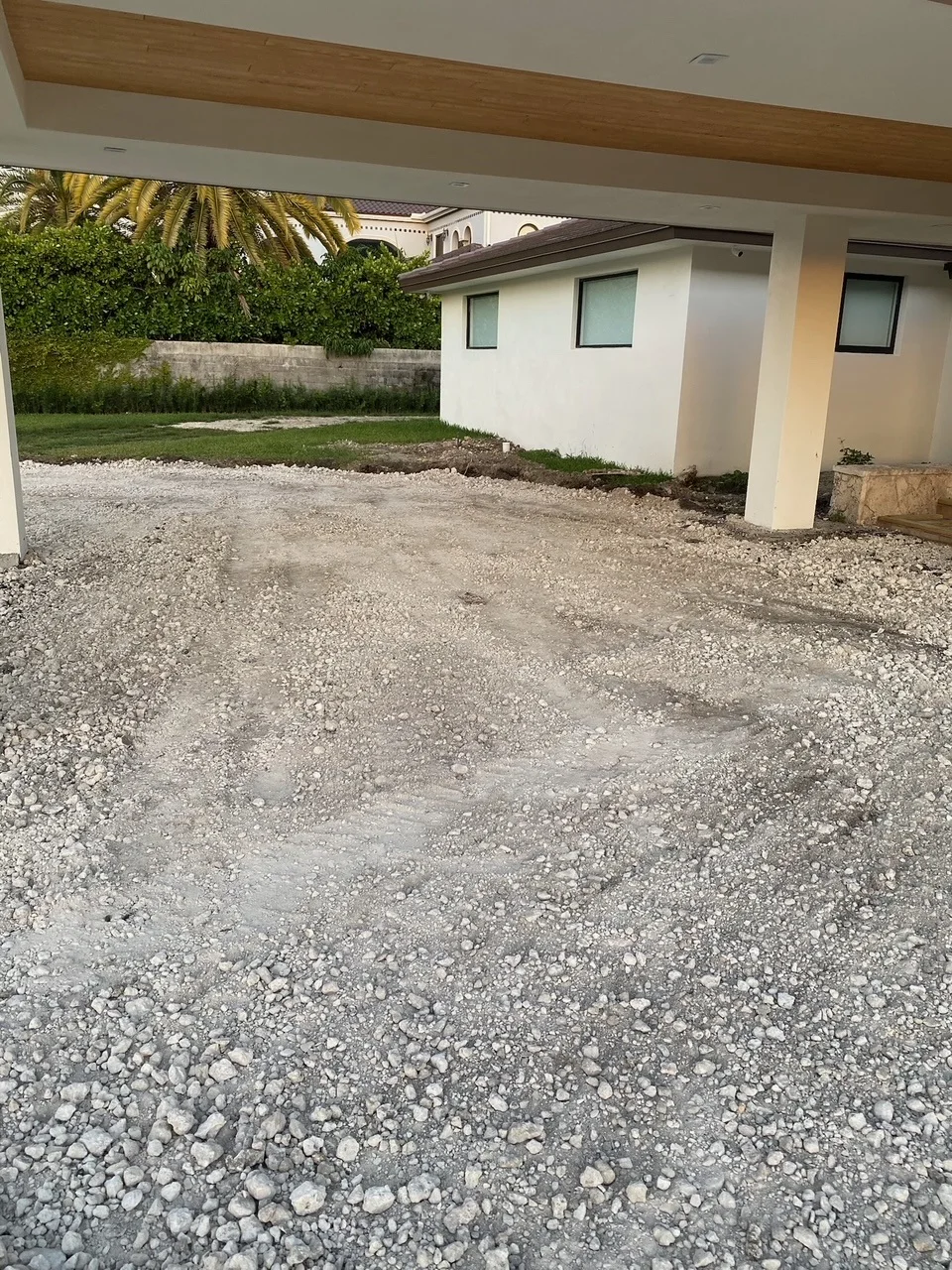
The ground under this part of the county
Depth is decided by what the surface has to carry. A walkway that only ever sees people can sit on a shallower base than a driveway that takes a loaded pickup every day, and a commercial drive that takes delivery trucks needs more again. Anybody who quotes the same base depth for a garden path and a driveway is not measuring, they are guessing.
If you watch one part of the install, watch the base go in. Aggregate should arrive in thin layers, a few inches each, with the compactor running over every layer before more is added. A crew that dumps the whole depth and runs one pass over the top is leaving loose material underneath a firm crust. That base will look perfect and behave for about a year before patches start dropping.
On site the order runs backwards from what you end up seeing. We dig out to the subgrade, the native soil, and check it. We bring in crushed aggregate and compact it into a base, which is the layer that actually carries the surface. We screed a thin bed of sharp sand dead flat on top. Only then do the pavers go down. They are the wearing surface and the part people photograph, and they sit on top of the work that holds everything up.
A sunken paver is a symptom. The base under it is the disease.
An eighth to a quarter inch per foot does not sound like much, and walking on it you would swear the surface is level. That small, steady drop away from the building is what carries water off. A flat surface holds puddles. A surface sloped the wrong way delivers runoff to the foundation, which is a far bigger problem.
Drainage is the cheapest thing to fix while the ground is open and the most expensive thing to add later. Once water leaves the paved surface it has to land somewhere, and on a tight commercial lot with no fall to work with, that takes planning. We look at a channel drain along the low edge, a permeable section over a stone reservoir, or regrading the planting bed next door.
Irrigation is the one people overlook. A sprinkler head that hits the same few feet of paver twice a day keeps that part of the base saturated, and over time the sand underneath washes. Downspouts discharging at the edge and runoff coming off a neighboring grade do the same. The rain itself, landing on a well-jointed surface, is rarely the problem.
Fall
The surface drops about an eighth to a quarter inch every foot away from the building. It feels level and drains like it should.
Restraint
A perimeter edge restraint is what stops the field creeping outward and the joints opening from the outside in.
Joint sand
Structural, not cosmetic. It transfers load between units, which is the whole reason a field of loose pavers behaves like a surface.
What Boca Raton calls us for
Also nearby in Palm Beach County:
What we tend to use around here
Sun fades color that was added to a material. Clay brick has none added: its color is the fired clay, which is why it holds essentially forever. It runs more expensive and offers fewer shapes, and it suits anyone who wants the same look in twenty years.
Travertine is a natural stone, and it behaves like one. Color and texture shift from unit to unit, so a deck has a less uniform look than concrete pavers give you. It also stays cooler under bare feet in direct sun, which is why pool owners ask for it. Seal it if it is going to see oil or heavy stains.
Of everything we install for homeowners, porcelain is the newest. What it brings is density: it soaks up almost no water and resists staining better than nearly anything else. What it demands is precision, both in the base, which has to be truly even, and in the cutting.
You can see this on almost any failing driveway. The middle usually looks fine and the outer two feet are a mess with wide joints and rocking units. That is not the edge wearing out faster, it is the edge restraint having failed and the field unlocking from the outside in.
The edge restraint is the piece nobody thinks about and it is what stops the whole field from spreading. Pavers work by interlock, which means each unit is held by its neighbors. Take away the restraint at the perimeter and the outermost course starts creeping outward, the joints open, the sand washes, and the failure marches inward from the edge.
Finding us in Boca Raton
We are based in Miami and out this way regularly.
The shortcuts that surface two years later
On the day the job wraps, all of these look like good work. The damage comes later, so the habits never get corrected.
Laying over the old surface
Before paving over anything, ask why the old surface failed. If the answer is the base, a new surface on top of it is borrowing time. It goes down fast and cheap, and the same problem comes back through it.
Skipping the geotextile
A separation fabric between the subgrade and the base stops the two from mixing. Without it, fine soil migrates up into the aggregate, the base loses its structure, and you get settlement that no amount of surface work will fix.
Using the wrong sand in the bedding
Cheap, rounded sand in the bedding layer is how pavers end up drifting. Mason sand and beach sand roll under load. Bedding should be sharp, angular concrete sand.
Sealing too early
Leave new concrete pavers unsealed through their first month. They are still curing, and efflorescence is still working out of them. Seal over that and the white haze can be locked under the sealer permanently.
If nobody talks to you about drainage, they are quoting a different job.
Common questions
Do I need to be home while you work
No. Access and a working hose bib are all we need. We will keep you posted as the job goes, and if we uncover something we did not expect, you get a call that day so you can decide with us.
Will the new pavers match what I already have
Sometimes exactly, sometimes closely. Concrete pavers change color a little with sun and age, and older lines get discontinued. If we cannot match, we will show you the options before we order anything, including pulling units from a less visible area to patch a visible one.
What happens to the old surface
It leaves with us. We demo the existing surface, load it out, and send concrete and old pavers to a recycler when there is one nearby. Removal is part of the job we price, so it will not show up later as an extra.
How do you keep it from settling again
A releveling that only lifts and resets the pavers will settle again, because whatever caused the dip is still there. Our fix starts underneath: rebuild the base in compacted layers, then sort out where the water is coming from, whether that is a downspout, a low grade or irrigation.
Do you work with HOAs and property managers
Regularly. We are used to submittals, board timelines, and phasing work so residents keep access. Tell us what your approval process looks like and we will work inside it.
Do you cover Boca Raton, FL
Yes. Boca Raton, FL is inside our regular working area and we are out that way most weeks. Call and we will tell you honestly when we could get to you.
Let us walk the property
Get in touch however suits you, with a call or an email with pictures attached. You will hear plainly what is wrong and what the repair involves. Some problems are better left another year, and when yours is one of them, we will tell you.
Quality you can stand on