Paver Color Restoration, built on a base that holds
Bringing faded units back without a plastic looking film.

What actually goes wrong
Here is the honest version: a sunken paver is a symptom. The base under it lost material, usually to water, and the surface settled into the gap. Resetting the pavers without correcting the base just buys you a season.
A lot of coastal ground is already close to full of water. With the water table that high, rain has nowhere deep to go, so it runs sideways under the surface and pulls sand from beneath driveway edges as it goes.
The second common cause is roots. Shallow, wide root systems on ficus, black olive and older shade trees head toward moisture, and the ground under a walkway holds plenty of it.
We would rather lose a bid than skip the base work, because the base work is the job. Everything above it is finish.
How we run this job
We come look at it
We start in person. Someone from the crew comes out, looks at the problem and follows the water across the property. You get our honest read on the spot, and if the fix is small, we say it is small.
You get the plan in writing
Scope, materials, schedule, and cost on paper before a shovel moves. The number you approve is the number, not an opening position.
We build the base first
Dig to depth, compact the aggregate in layers, screed the bedding. Nobody ever sees this part again, which is exactly why most failures start here.
Pavers go down and get cut in
The field goes down to the pattern, edge cuts happen on site, and the perimeter gets a restraint so nothing creeps.
Joints get filled and the site gets cleaned
Sand swept in and compacted, the surface washed down, and the property left the way we found it. We haul our own debris.
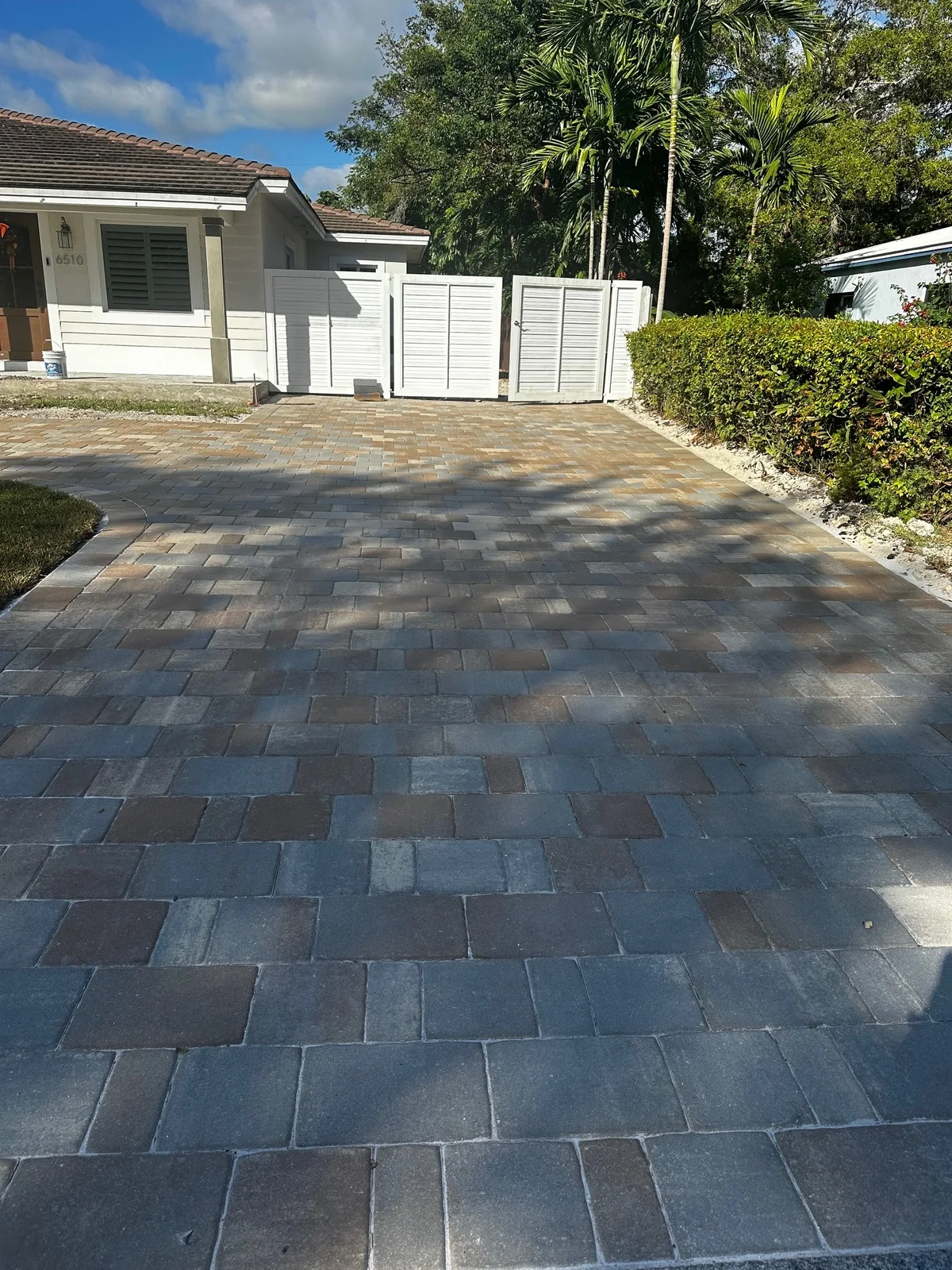
What cleaning and sealing can and cannot do
Efflorescence is not a defect. New concrete pavers push mineral salts to the surface as they cure, and it clears on its own or with the right cleaner. Sealing over it before it has finished is what turns a temporary haze into a permanent one.
Restoration is chemistry more than construction. Cleaning, sealing and stain removal all depend on what the unit is made of, how old it is, and what is actually on the surface.
Pressure is the most common way people damage their own pavers. Too much pressure erodes the cement paste off a concrete unit and blows the joint sand out, which looks clean for a week and then fails faster than before. Cleaning is a chemistry job with pressure as an assist, not the other way around.
A sunken paver is a symptom. The base under it is the disease.
We draw the water’s route before we draw the paver pattern. On a commercial job, once rain runs off the surface, the design has to say where it goes next. With a tight lot and no fall available, that might be a channel drain along the low side or a permeable section feeding a stone reservoir. Sometimes it is a regrade of the planting bed beside it. All of them are cheaper now than later.
A properly jointed paver field sheds most of the rain that lands on it. The water that does the harm usually comes from somewhere specific, and finding it is half the job. Check where your downspouts discharge, where the sprinkler heads point, and whether the lot next door drains across your corner.
Puddles that sit on a patio for hours after a storm are a grading problem. So is water that runs toward the building. Both come from getting the fall wrong. The target is about an eighth to a quarter inch of drop per foot, heading away from the structure, which is too gentle to notice underfoot and enough to move the water off.
Base depth
Set by what the surface carries, not by habit. A walkway and a truck-bearing drive are not the same excavation.
Compaction
Layered, then compacted, then layered again. One load spread and run over once looks finished and leaves loose material below the crust.
Fall
A gentle pitch away from the structure, roughly an eighth to a quarter inch per foot, so water runs off instead of pooling or heading for the foundation.
More restoration work
We cover this across the region. A few of the areas we work most:
What it asks of you afterwards
Plenty of good paver jobs are never sealed. Unsealed concrete pavers weather to a softer color and the joints still do their job if they are kept topped up. Sealing earns its keep where stains are likely, around a grill or under a parked car, and where you want a darker, richer color. Ask us and we will give you a straight read on your surface.
People walking across pavers are rarely looking at their feet, which is why a raised edge matters. More than about a quarter inch of lift is enough to catch a toe. Deal with that one quickly, especially on commercial property, where it is a liability concern along with a maintenance one.
Upkeep on a well-built paver surface is light. Sweep leaves and debris off before they break down in the joints, top up the joint sand when it gets low, and call about any dip while it is still small. Most owners do little else.
Pick a paver at random from our jobs and it is probably concrete. You get the widest pick of shapes and colors, and a unit that lays predictably. Because the color is mixed into the concrete, it fades slowly with sun and does not peel or wear away. Early on it does drift a little as the pavers finish curing.
Sun fades color that was added to a material. Clay brick has none added: its color is the fired clay, which is why it holds essentially forever. It runs more expensive and offers fewer shapes, and it suits anyone who wants the same look in twenty years.
Before you pick travertine, think about what will happen on it. Near an outdoor kitchen or anywhere oil and heavy stains land, it needs a sealer to keep looking right. On a plain pool deck it is a comfortable choice, because it stays cooler underfoot than concrete in direct sun. As a natural stone, every unit varies a little.
The failures we get called out to fix
On the day the job wraps, all of these look like good work. The damage comes later, so the habits never get corrected.
Laying over the old surface
Overlaying is tempting because it skips the tear-out and costs less up front. It also inherits every problem below. When the old surface failed because of the base, the new one is sitting on the same bad base and goes the same way.
Skipping the geotextile
When we tear out a failed paver job, a muddy base with no fabric under it is a common sight. The soil and the stone have blended into one weak layer. That is exactly what separation fabric is there to prevent, and why resetting pavers on top of that mess never holds.
Using the wrong sand in the bedding
Cheap, rounded sand in the bedding layer is how pavers end up drifting. Mason sand and beach sand roll under load. Bedding should be sharp, angular concrete sand.
Sealing too early
Fresh concrete pavers push a white residue to the surface as they cure. That is efflorescence, and it needs to finish before any sealer goes on. Seal in the first month and the haze can end up permanently under the coat.
If nobody talks to you about drainage, they are quoting a different job.
Common questions
How long does the job take
A typical paver color restoration job runs two to five working days once we start. Base work is the slow part; laying the field goes quickly. Weather moves things, and in summer we plan around the afternoon storms rather than pretending they will not happen.
Do I need to be home while you work
No need. Leave us access and water, and go about your day. Plenty of customers head out in the morning and come back to a finished section. Anything we did not expect gets a phone call that day.
Will the new pavers match what I already have
Concrete pavers drift a little in color as the sun and the years work on them, so a fresh unit next to one that has been down a while can stand out. Sometimes we match exactly and sometimes closely. If we cannot get close enough, you see the options before we order.
What happens to the old surface
Removal and disposal are included. We break out whatever is there now and take it off the property. Where we can get it to a recycler, the old concrete and pavers go there.
How do you keep it from settling again
We find out why it sank before we touch it. Resetting pavers on the same weak base or over the same wet spot only buys you a little time. Usually the cure is better drainage and a properly rebuilt base, and sometimes it means dealing with a root or a downspout.
Do you cover Miami, FL
Yes. Miami, FL is inside our regular working area and we are out that way most weeks. Call and we will tell you honestly when we could get to you.
Start with a conversation
You will get what we find in writing. One of us walks the property with you, checks where the water goes, and writes it up, which beats any answer we could give without seeing it.
Quality you can stand on