Paver work for Pinecrest homes and properties
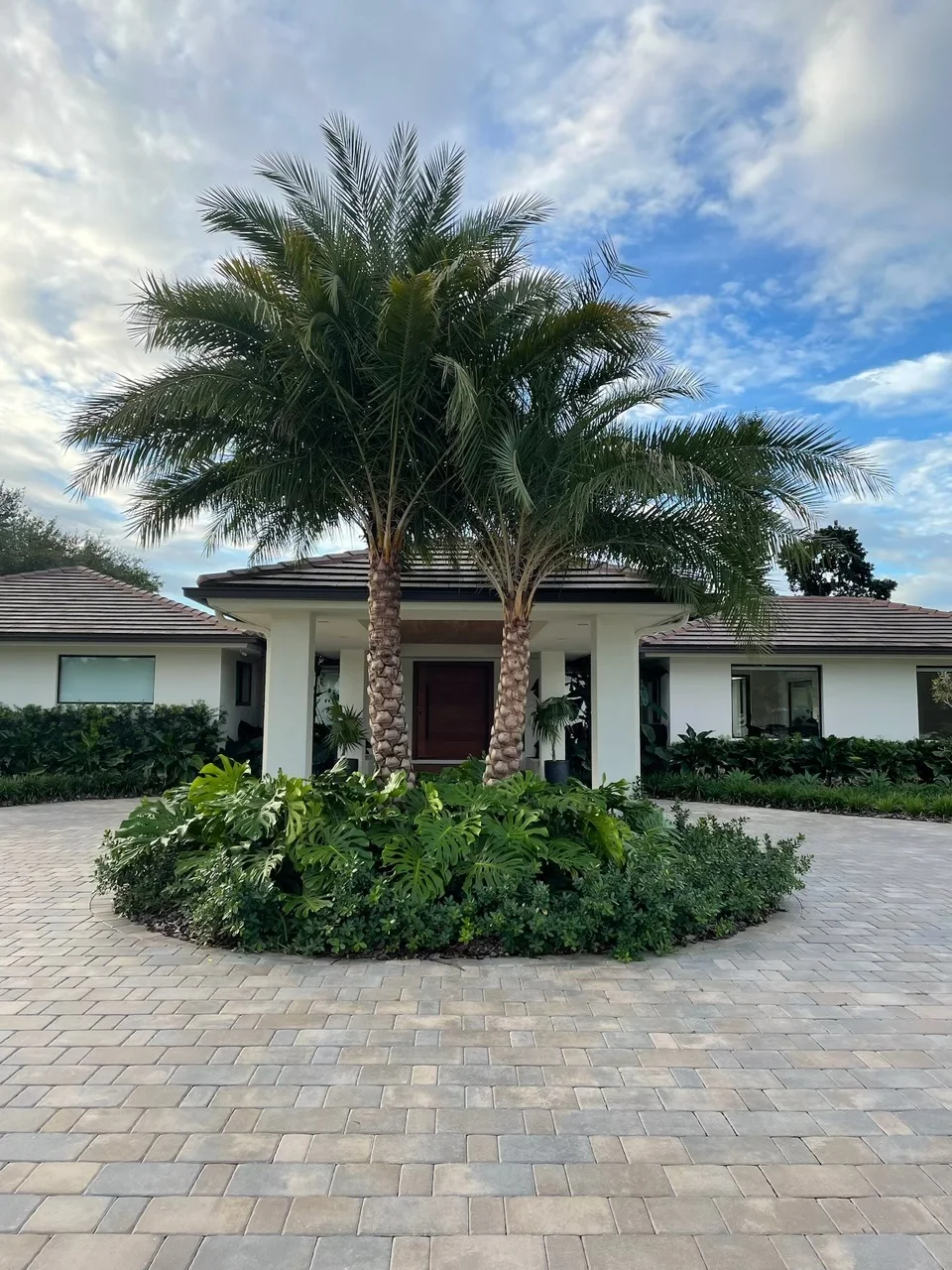
Pinecrest lots are big and the drives are long, which means a long run where any dip in the base shows up as a visible dip in the surface.
What we see on Pinecrest properties
Pinecrest lots are big and the drives are long, which means a long run where any dip in the base shows up as a visible dip in the surface.
When a paver surface goes wrong in Florida, the pavers are rarely the thing that failed. Water got into the base, the base moved, and the surface followed it down. Fix the surface only and you are back in two years.
A lot of coastal ground is already close to full of water. With the water table that high, rain has nowhere deep to go, so it runs sideways under the surface and pulls sand from beneath driveway edges as it goes.
A lifted section near a tree is usually the roots. The base under pavers holds moisture, so roots grow into it and push the surface up as they get bigger.
We are out this way most weeks, so a look at the property is usually a matter of days rather than months. If it turns out the honest answer is that it can wait, we will tell you that too.
How a job here runs
We come look at it
We come to you and look at the surface in person. The water path gets as much attention as the pavers themselves. You will get a plain account of what we see, and we will not inflate a small problem into a big job.
You get the plan in writing
Everything in writing up front: what we are doing, what it is made of, how long it takes, and what it costs. Nothing changes without you signing off on it.
We build the base first
Dig to depth, compact the aggregate in layers, screed the bedding. Nobody ever sees this part again, which is exactly why most failures start here.
Pavers go down and get cut in
The field goes down to the pattern, edge cuts happen on site, and the perimeter gets a restraint so nothing creeps.
Joints get filled and the site gets cleaned
Joints filled and set, everything washed down, our own debris on our own truck. The site is yours again the same day we finish.
Why surfaces fail around here
That hazy film you sometimes see on a newer patio is usually polymeric sand that was rushed. The sand binds when it gets wet, so it has to go into the joints dry and be swept completely off the paver faces before any water touches it. Then it gets watered in exactly the way the manufacturer says. Skip the sweeping and the binder sets on the surface instead of in the joint.
The sand in the joints is structural. It is what transfers load from one paver to the next, which is the whole mechanism that lets a field of loose units behave like a surface. When joints wash out, each paver starts carrying its own load alone, which is exactly when they start rocking and cracking.
The edge restraint is the piece nobody thinks about and the reason the field holds.
Upkeep on a well-built paver surface is light. Sweep leaves and debris off before they break down in the joints, top up the joint sand when it gets low, and call about any dip while it is still small. Most owners do little else.
Sealing really is a preference, which is why you hear different opinions on it. Our view: it is worth it where the surface takes oil, food or heavy staining, and less worth it on a walkway that only sees foot traffic. A poorly chosen sealer can leave a glossy sheen or trap moisture underneath, so product choice matters as much as the decision itself.
If one thing gets a phone call right away, make it a raised edge. Once a paver sits more than about a quarter inch above its neighbors, somebody is going to catch a toe on it. On a commercial property that is a liability issue, and it is a maintenance one too.
Base depth
Set by what the surface carries, not by habit. A walkway and a truck-bearing drive are not the same excavation.
Compaction
Compacting the whole base in one go only firms up the top. We place aggregate in layers and compact each one, so the base is solid all the way down.
Fall
Roughly an eighth to a quarter inch per foot away from the building. Invisible underfoot, decisive for where water ends up.
What Pinecrest calls us for
Also nearby in Miami-Dade County:
What we tend to use around here
Most of what we put down is concrete pavers. They come in more shapes and colors than any other option and lay up predictably. Years later, when you want to add on or patch, they are also the easiest to match. The pigment runs all the way through each unit, so sun softens the color over time and there is no surface coat to wear through.
Pick clay brick if you want a surface that still looks like the day it went in twenty years from now. Its color is the fired clay, so it stays put. You will pay more and have fewer shapes to choose from.
Most travertine requests come from pool owners, and the heat is why. It stays noticeably cooler than concrete when the sun is on it. Expect variation between units, as you would with any natural stone. Sealing is worth it if the surface will catch oil or heavy stains, and less necessary if it will not.
The edge restraint is the piece nobody thinks about and it is what stops the whole field from spreading. Pavers work by interlock, which means each unit is held by its neighbors. Take away the restraint at the perimeter and the outermost course starts creeping outward, the joints open, the sand washes, and the failure marches inward from the edge.
You can see this on almost any failing driveway. The middle usually looks fine and the outer two feet are a mess with wide joints and rocking units. That is not the edge wearing out faster, it is the edge restraint having failed and the field unlocking from the outside in.
Finding us in Pinecrest
We are based in Miami and out this way regularly.
What we see when somebody else did it
A finished job hides all of these. Because nobody can spot them at handover, they keep showing up on paver work.
Using the wrong sand in the bedding
Bedding sand that is round acts like a layer of ball bearings. Pavers set on mason or beach sand drift under load. Sharp, angular concrete sand stays put.
Sealing too early
A white haze trapped under sealer usually means somebody sealed too soon. New concrete pavers need time to cure and push out their efflorescence first. Seal in the first month and that haze can be locked in for good.
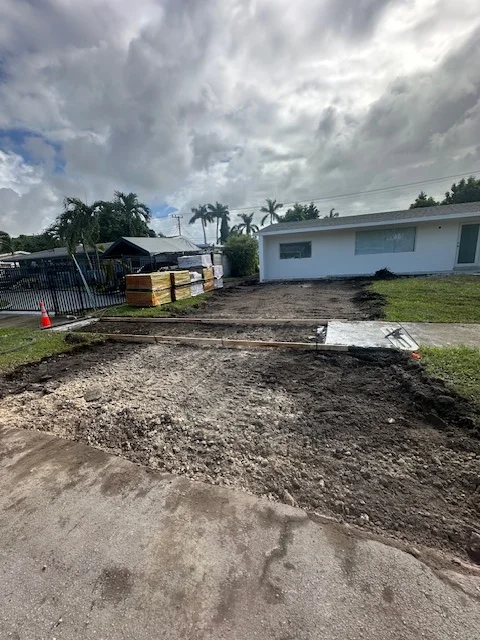
Laying over the old surface
Paving over an old surface is a lot like painting over rust. It goes quickly and costs little, and the problem underneath keeps working. If the base caused the first failure, the new surface will show it again within a season or so.
Skipping the geotextile
The base only works if it stays clean crushed aggregate. Fabric under it keeps the soil below from mixing in. Skip it and the two layers blend a little more every rainy season, and once enough soil has moved up, the base cannot carry the load and the pavers settle.
Water is what ends most paver surfaces, and it rarely arrives from the sky.
Common questions
Do I need to be home while you work
No. We need access and a water source. Most people go to work and come home to a finished section. If we hit something unexpected we call you that day, not at the end.
Will the new pavers match what I already have
Sometimes exactly, sometimes closely. Concrete pavers change color a little with sun and age, and older lines get discontinued. If we cannot match, we will show you the options before we order anything, including pulling units from a less visible area to patch a visible one.
What happens to the old surface
Old surfaces come out completely before anything new is built. We haul the debris away and recycle the concrete and pavers wherever we have a recycler to take them. Nothing about removal gets billed as an add-on.
How do you keep it from settling again
A releveling that only lifts and resets the pavers will settle again, because whatever caused the dip is still there. Our fix starts underneath: rebuild the base in compacted layers, then sort out where the water is coming from, whether that is a downspout, a low grade or irrigation.
Do you work with HOAs and property managers
Your rules come first. We regularly work for associations and property managers, which means board timelines and submittals are routine for us. Share your approval process and we will schedule the work, in phases if needed, so residents keep access.
Do you cover Pinecrest, FL
Yes. Pinecrest, FL is inside our regular working area and we are out that way most weeks. Call and we will tell you honestly when we could get to you.
Let us walk the property
Give us a look at it in person. We walk the whole property, pay attention to drainage, and write up what we found, which is quicker than trading descriptions over the phone.
Quality you can stand on