Paver Patio Repair done so it stays flat
Resetting the settled corner or the rocking course without a full rebuild.
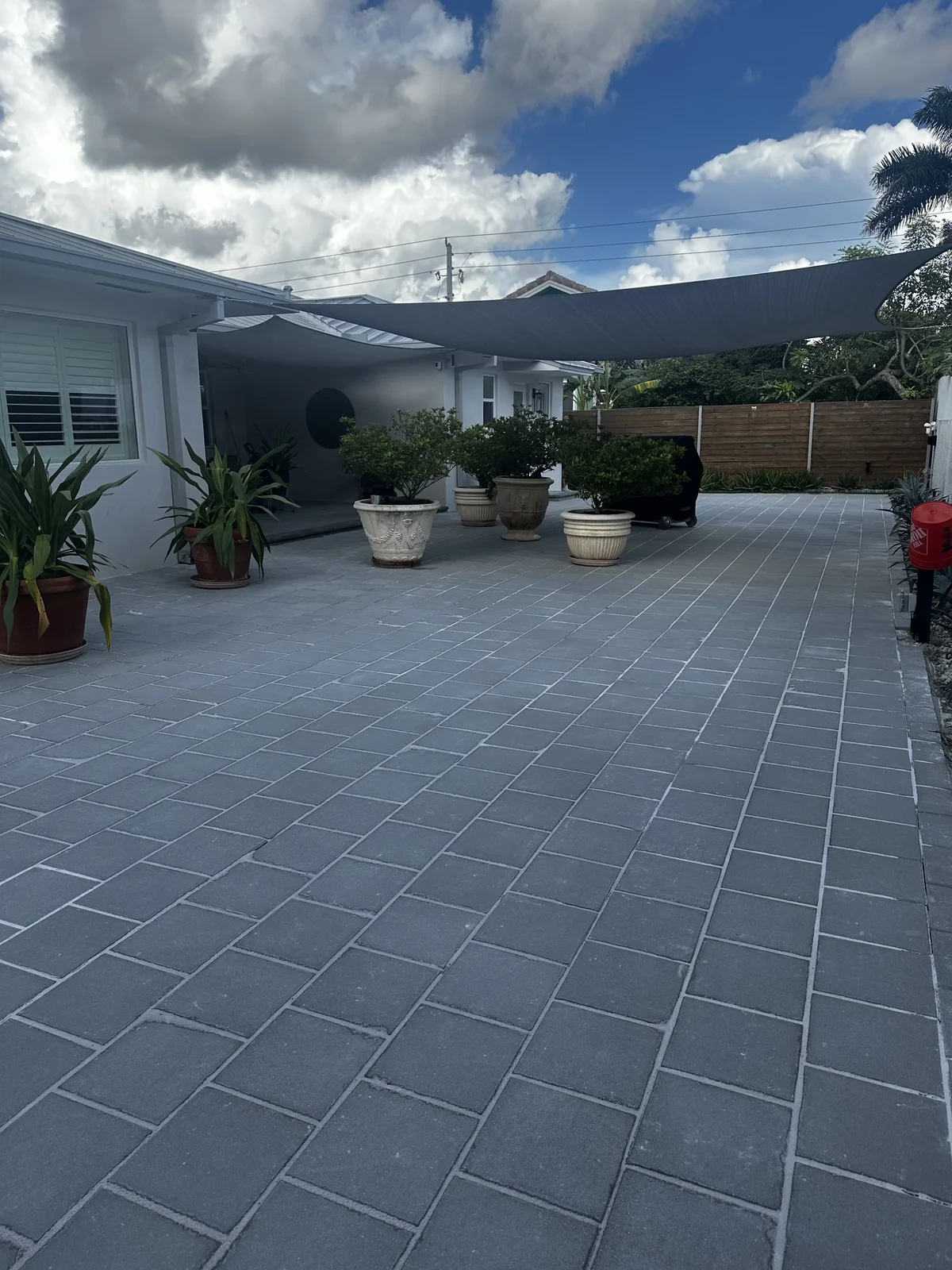
What actually goes wrong
Almost every paver problem we get called out to is a base problem wearing a surface disguise. The pavers themselves are fine. They are concrete or stone, and they will outlast most of us. What moves is what is underneath them.
The water table sits high across a lot of the coast, so there is less room for water to go down and more reason for it to move sideways. That is what takes the sand out from under a driveway edge.
Mature trees are the second cause. Roots go where the water is, and a paver base holds moisture, so they grow straight into it and push the surface up.
We would rather lose a bid than skip the base work, because the base work is the job. Everything above it is finish.
How we run this job
We come look at it
A straight read starts on site. We come out, walk the whole property with you, trace the water, and tell you what we see without dressing it up. Small problems get called small.
You get the plan in writing
Scope, materials, how long it takes, and what it costs, written down before anybody starts. No verbal numbers that change later.
We build the base first
Dig to depth, compact the aggregate in layers, screed the bedding. Nobody ever sees this part again, which is exactly why most failures start here.
Pavers go down and get cut in
Laying the field is the fast part. The care is in the cuts at the edges and the restraint that locks the whole field in place.
Joints get filled and the site gets cleaned
Joints filled and set, everything washed down, our own debris on our own truck. The site is yours again the same day we finish.
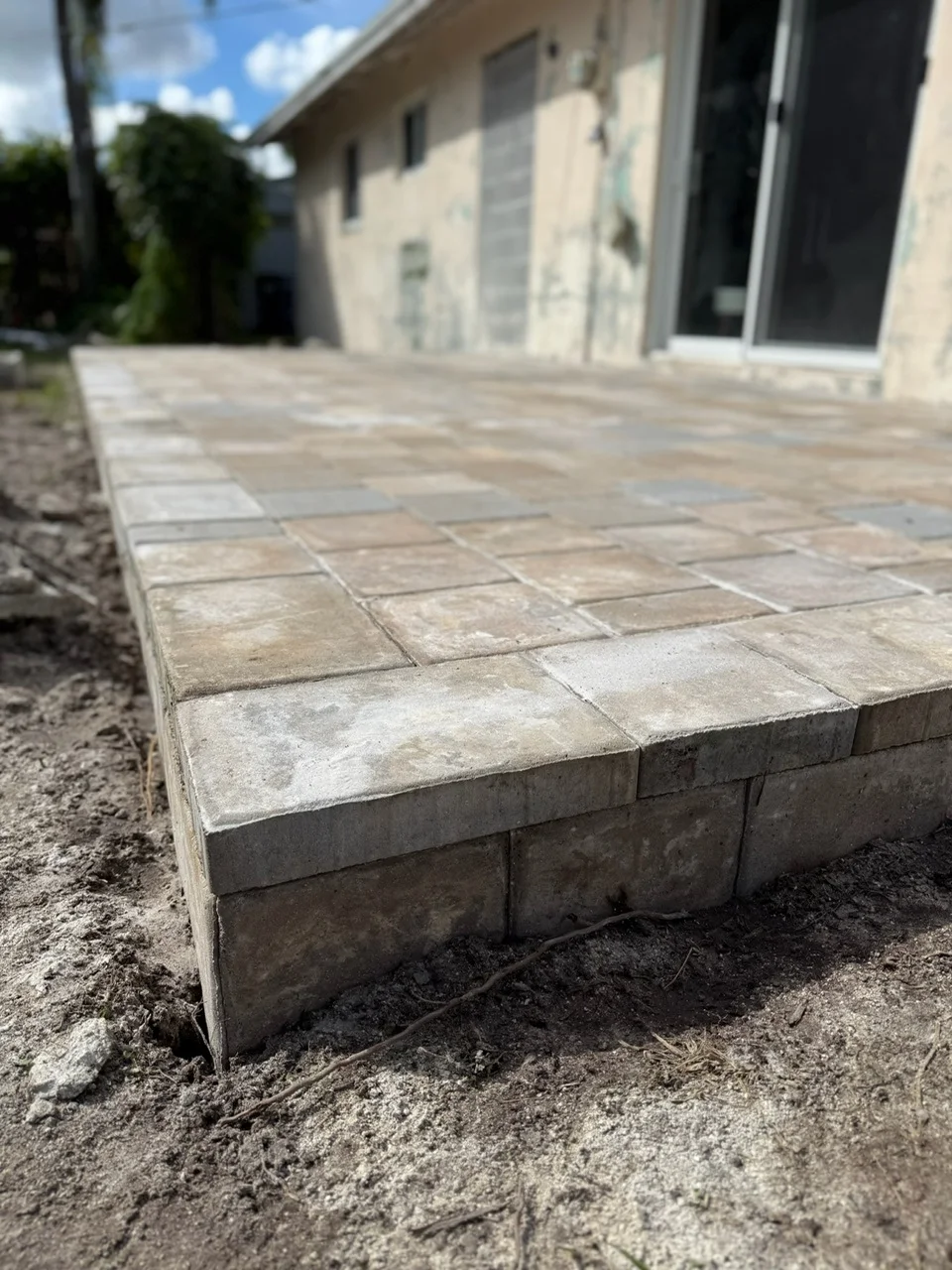
What makes a patio last
A patio carries people and furniture rather than vehicles, so the base can be shallower than a driveway. What it cannot be is badly drained. A patio that holds water grows algae, gets slick, and pushes moisture back at the house.
Fall away from the building is the whole game. A patio wants a gentle slope carrying water into the yard, never toward a slab or a door threshold. On a tight lot with no fall available that means a channel drain or a permeable section built in from the start.
Furniture is the quiet load. Table and chair legs concentrate weight on a tiny footprint and will dish an under-compacted patio in a season. Sun umbrellas with heavy bases are the usual culprit.
Water is what ends most paver surfaces, and it rarely arrives from the sky.
Polymeric sand needs a dry patio to go into. It is designed to bind when it gets wet, which is why it resists washout better than plain sand, and also why moisture at the wrong moment ruins it. We fill the joints dry, sweep the surface fully clean, then water it in following the manufacturer’s instructions. When that sweep gets rushed, the residue bonds to the paver faces and leaves a haze.
A paver that rocks under your foot usually has an empty joint beside it. The sand between pavers is what passes load from one unit to its neighbors, so a step on one is shared across several. Once that sand washes out, each paver carries its own weight alone. That is when they start to move, and once they move, they start to crack.
Compaction
Done in lifts, layer by layer. Dump it all at once and a quick pass leaves a hard crust sitting on loose material that settles later.
Fall
We pitch the surface roughly an eighth to a quarter inch per foot away from the building, enough to shed water without anyone noticing a slope.
Restraint
A perimeter edge restraint is what stops the field creeping outward and the joints opening from the outside in.
More patio work
We cover the whole region for this. Areas we work in regularly include:
What it asks of you afterwards
The thing worth acting on quickly is a trip hazard. A lifted edge of more than about a quarter inch is something somebody will catch a toe on, and on a commercial property that is a liability question as well as a maintenance one.
Pavers that went down on a proper base do not ask for much. Every so often, look at the joints. If the sand is low, refill it, and if leaves or dirt are packed in, clear them out. Watch for settling and deal with it while it is small.
If you like the look of freshly wet pavers, sealing gets you close to that all the time. It also makes stains easier to lift and helps hold the joint sand. What it asks of you is a recoat every few years and some care in choosing a product, since the wrong one can look plasticky or trap moisture. We will be straight with you about whether yours needs it.
With clay brick there is no pigment to fade. The color comes from the clay as it is fired, so the paver looks essentially the same for as long as it lasts. The trade is a higher price and a smaller choice of shapes.
Two things to know about travertine. It is natural stone, so expect differences in tone between units. And it stays cooler than concrete underfoot in direct sun, which makes it the usual pick around a pool. If the spot gets oil or heavy staining, add a sealer to the plan.
Porcelain pavers have only recently become common on homes. They are very dense and take on almost no water, so stains have little to hold onto. The catch is the install. Porcelain shows every flaw in the bedding, so the base has to be exact, and cuts need the right blade and a slow hand.
What we see when somebody else did it
These are the mistakes you cannot catch by looking at a fresh install. That is exactly what keeps them in circulation.
Skipping the geotextile
Fabric between the ground and the base is a small step that keeps the base doing its job. Sandy soil especially wants to wash up into the stone layer above it. When it does, the base loses its strength and you get low spots that come back no matter how often they are reset.
Using the wrong sand in the bedding
The grains matter. Sharp, angular concrete sand interlocks and holds a paver’s position. Rounded sand, such as mason or beach sand, keeps shifting under weight and lets the pavers wander.
Sealing too early
Everybody wants the new pavers sealed right away. That is the mistake. Concrete pavers need to cure and clear their efflorescence first, and sealing in the first month can lock a white haze under the sealer permanently.
Laying over the old surface
When someone asks us to pave over what they have, we look at the old surface first. If the base is why it failed, an overlay keeps that problem and puts a nicer face on it for a season. Quick and cheap, and still broken underneath.
A sunken paver is a symptom. The base under it is the disease.
Common questions
Will the new pavers match what I already have
First we find out whether your paver line is still made. Older lines get discontinued, and even a current one can look a little different from units that have sat in the sun for years. If we can match, exactly or closely, we order. If not, we show you the options first, like pulling pavers from a less visible area.
What happens to the old surface
You do not have to deal with it. Our crew breaks out the old surface and hauls it away, and the concrete and pavers are recycled wherever a recycler is available. Haul-off is already in the scope.
How do you keep it from settling again
Find the water first. In most cases a settled spot traces back to drainage, like a downspout emptying at the edge, and the base under it has washed or softened. Correct the drainage, rebuild that section of base, and the pavers go back down on something solid.
Do you work with HOAs and property managers
We put together submittals for HOA boards and property managers regularly. Tell us what your approval process requires and we will work inside it, including phasing so residents keep access.
Do you cover Miami, FL
Yes. Miami is where we are based, so it is about as close to home as our work gets. Give us a call and we will tell you when we can come out.
Is there a warranty
You get a written warranty from us covering the installation work. On top of that, the pavers come with the manufacturer’s own coverage, and we make sure that paperwork reaches you. What changes later, a new tree root or altered drainage, is outside our warranty, and we say so before the job starts.
Start with a conversation
Most questions about pavers get answered on site. We will come walk the property, look at how water moves across it, and send you a write-up of what we found.
Quality you can stand on