Permeable Patios without the part that fails later
Patios that drain through themselves and stay usable after rain.
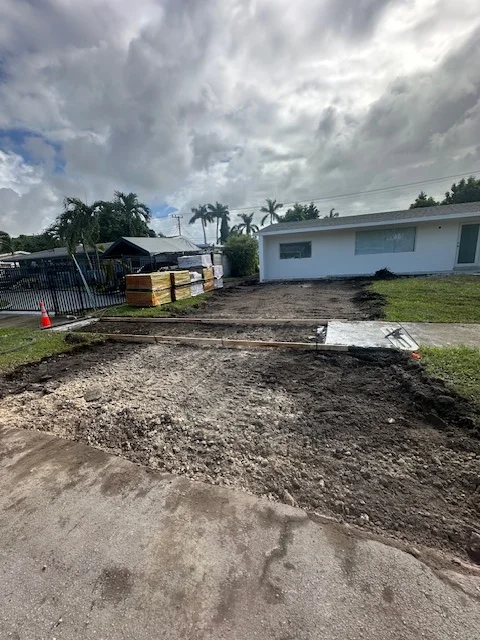
What actually goes wrong
The failure is almost always below the pavers. Sand washes out of the joints, water gets down into the bedding, the bedding migrates, and the surface drops. Everything you can see is downstream of that.
We pay extra attention to driveway edges on the coast. A high water table means rain cannot sink very far, so it moves sideways through the ground, and the edge is where that flow pulls sand out first.
Some lifted pavers have nothing to do with water running off. Ficus, black olive and many older shade trees run roots shallow and wide, and a damp walkway base is exactly what they go looking for.
None of this is visible in a finished photo, which is why the cheap version and the right version look identical on day one. They stop looking identical around year two.
How we run this job
We come look at it
Nobody can tell you much from a photo. One of us comes and walks the property with you, looks at where water collects, and gives you an honest opinion, small job or big one.
You get the plan in writing
Scope, materials, schedule, and cost on paper before a shovel moves. The number you approve is the number, not an opening position.
We build the base first
Excavation to the depth this job actually needs, aggregate compacted lift by lift, bedding screeded flat. The slow part, and the part that decides whether the surface is still flat in ten years.
Pavers go down and get cut in
Field laid to the pattern, edges cut on site, and a restraint set around the perimeter so the field cannot creep.
Joints get filled and the site gets cleaned
Sand swept in and compacted, the surface washed down, and the property left the way we found it. We haul our own debris.
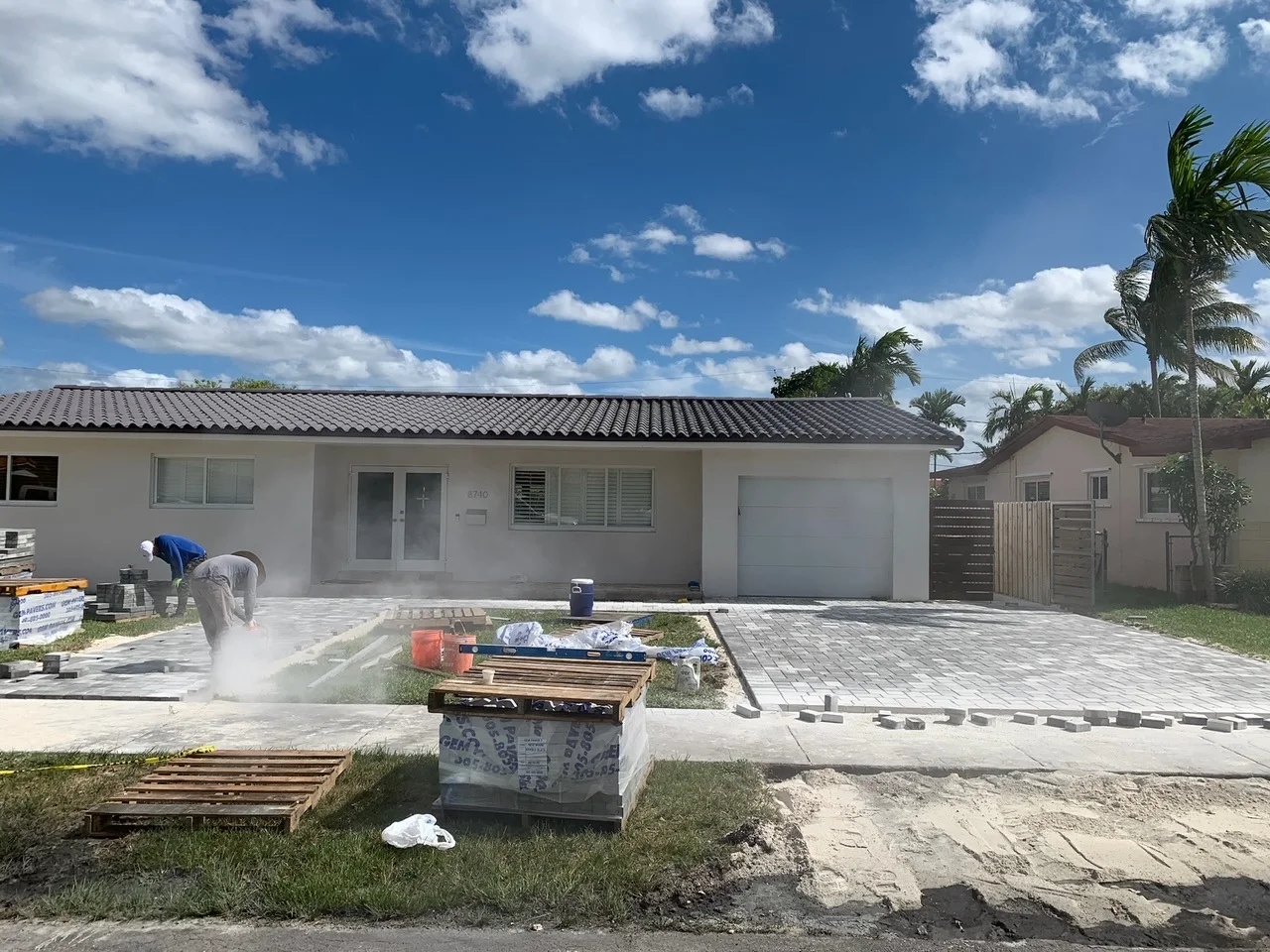
Where the water goes when it rains here
On site the order runs backwards from what you end up seeing. We dig out to the subgrade, the native soil, and check it. We bring in crushed aggregate and compact it into a base, which is the layer that actually carries the surface. We screed a thin bed of sharp sand dead flat on top. Only then do the pavers go down. They are the wearing surface and the part people photograph, and they sit on top of the work that holds everything up.
Put a walkway’s base under a driveway and the driveway tells you soon enough. Tire tracks show up as ruts, the edges spread and pavers start to rock. A walkway that only carries people can live on a shallower base. A daily pickup needs more depth, and delivery trucks on a commercial drive need more than that. We size the base to the heaviest thing that will cross it.
Every lift of base gets compacted before the next goes on. That means a few inches of aggregate, a full pass with the compactor, then the next few inches. It is tedious and it matters more than almost anything else in the job, because a base compacted only on top hides loose material that settles later. On the day the work finishes, you would never know the difference.
If nobody talks to you about drainage, they are quoting a different job.
Joint sand is the last step on a patio, which is exactly why it gets rushed. Polymeric sand binds once it is wet and resists washout better than plain sand, so it is what most jobs use now. The catch is the cleanup. It goes in dry, the surface gets swept properly, and the water goes on the way the manufacturer specifies. Skipping ahead is how a new patio ends up hazy.
The cheapest material on a patio may be the one that holds it together. Joint sand transfers load between pavers, and that transfer is what makes a field of loose units act as a surface. When joints wash out, each paver is left carrying its own load. That is exactly when they begin to rock, and rocking pavers crack.
Separation
Geotextile between subgrade and base stops fine soil migrating up and destroying the aggregate structure.
Base depth
Set by what the surface carries, not by habit. A walkway and a truck-bearing drive are not the same excavation.
Compaction
A compactor can only reach so far down. That is why aggregate goes in lifts, each compacted on its own, instead of one deep pile with a firm crust on top.
More drainage work
Across the region, these are some of the areas where we do this work most often:
What it asks of you afterwards
Sealing really is a preference, which is why you hear different opinions on it. Our view: it is worth it where the surface takes oil, food or heavy staining, and less worth it on a walkway that only sees foot traffic. A poorly chosen sealer can leave a glossy sheen or trap moisture underneath, so product choice matters as much as the decision itself.
If one thing gets a phone call right away, make it a raised edge. Once a paver sits more than about a quarter inch above its neighbors, somebody is going to catch a toe on it. On a commercial property that is a liability issue, and it is a maintenance one too.
Most of the maintenance happens before the pavers go down. Get the base and joints right and the owner’s part is short: keep organic debris out of the joints, refill sand as needed, and address any settled patch early.
Clay brick costs more than concrete pavers and offers fewer shapes. What you get for that is color that does not fade, because the color is the fired clay itself. If the surface needs to look the same two decades from now, brick earns its price.
Travertine is the one people ask for around pools, and for a good reason: it stays noticeably cooler underfoot than concrete in direct sun. It is a natural stone, so there is variation between units, and it wants a sealer if it is somewhere that gets oil or heavy staining.
If staining is your main worry, porcelain is close to stain-proof. It absorbs almost nothing. It asks more of the installer than most materials, though: an uneven bed shows through, so base work has to be precise, and cutting it cleanly takes the proper blade and some patience.
What we see when somebody else did it
Each of these hides under a clean new surface. Since the owner cannot see them at the end, they keep getting done.
Laying over the old surface
It is quick, it is cheap, and it inherits every problem underneath. If the base was the reason the old surface failed, putting a new one on top of it just hides the failure for a season.
Skipping the geotextile
This one cannot be checked after the fact. Once the pavers are down, nobody can see whether there is fabric under the base. If there is not, fine soil gradually moves up into the aggregate and weakens it, and the settling that follows takes a full rebuild to fix.
Using the wrong sand in the bedding
Cheap, rounded sand in the bedding layer is how pavers end up drifting. Mason sand and beach sand roll under load. Bedding should be sharp, angular concrete sand.
Sealing too early
A white haze trapped under sealer usually means somebody sealed too soon. New concrete pavers need time to cure and push out their efflorescence first. Seal in the first month and that haze can be locked in for good.
Water is what ends most paver surfaces, and it rarely arrives from the sky.
Common questions
Will the new pavers match what I already have
You will know before we order anything. Plenty of repairs match exactly. Others come close, since concrete pavers shift color a little with sun and age and older lines get discontinued. When close is not good enough, we can move units from a less visible area onto the visible patch.
What happens to the old surface
Old surfaces come out completely before anything new is built. We haul the debris away and recycle the concrete and pavers wherever we have a recycler to take them. Nothing about removal gets billed as an add-on.
How do you keep it from settling again
We find out why it sank before we touch it. Resetting pavers on the same weak base or over the same wet spot only buys you a little time. Usually the cure is better drainage and a properly rebuilt base, and sometimes it means dealing with a root or a downspout.
Do you work with HOAs and property managers
Yes. Property managers usually want clear communication and no surprises, and that is how we like to work too. Tell us what your approval process requires and we will work inside it.
Do you cover Miami, FL
We do. Miami, FL is home base for us, and our crews are in the area most weeks. Call with what you have in mind and we will be straight with you about timing.
Is there a warranty
Yes, in writing, covering our workmanship. Manufacturer coverage on the pavers themselves comes from the manufacturer and we will hand you that paperwork too. We will also tell you plainly what a warranty does not cover, like a new root or a changed drainage condition.
Tell us what you are looking at
Send a couple of photos or just call. We will tell you what we think is going on, what it would take to fix, and whether it needs doing now or can wait.
Quality you can stand on