Residential Paver Installation that is still level in ten years
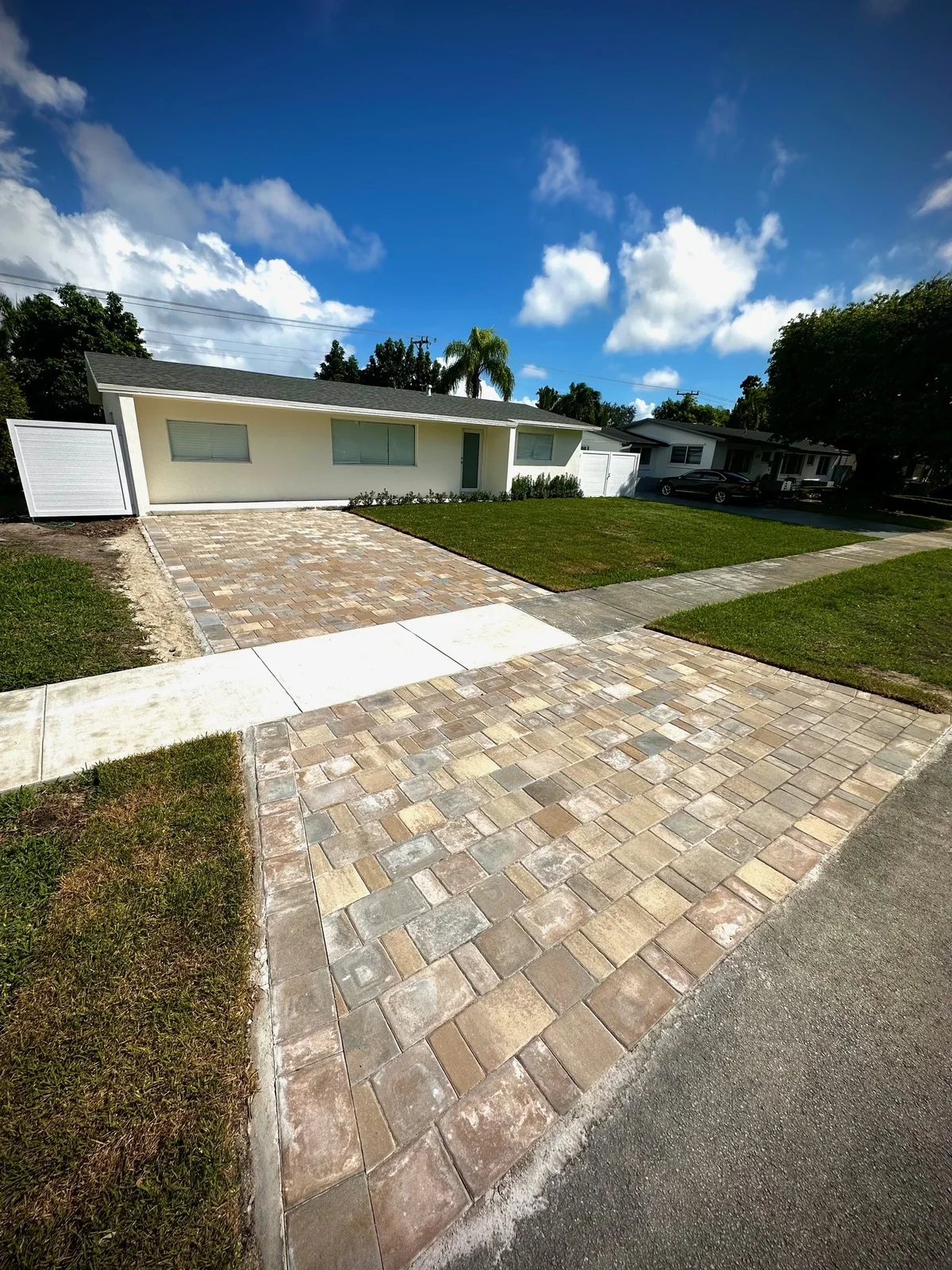
Homes, from a single walk to the whole front of the property.
What actually goes wrong
Here is the honest version: a sunken paver is a symptom. The base under it lost material, usually to water, and the surface settled into the gap. Resetting the pavers without correcting the base just buys you a season.
Sunken driveway edges here usually trace back to groundwater. Much of the coast has a high water table, so water cannot drop very far before it starts moving laterally. That lateral movement is what works the sand loose from under the edge.
A lifted section near a tree is usually the roots. The base under pavers holds moisture, so roots grow into it and push the surface up as they get bigger.
We would rather lose a bid than skip the base work, because the base work is the job. Everything above it is finish.
How we run this job
We come look at it
We come to you and look at the surface in person. The water path gets as much attention as the pavers themselves. You will get a plain account of what we see, and we will not inflate a small problem into a big job.
You get the plan in writing
Scope, materials, how long it takes, and what it costs, written down before anybody starts. No verbal numbers that change later.
We build the base first
Dig to depth, compact the aggregate in layers, screed the bedding. Nobody ever sees this part again, which is exactly why most failures start here.
Pavers go down and get cut in
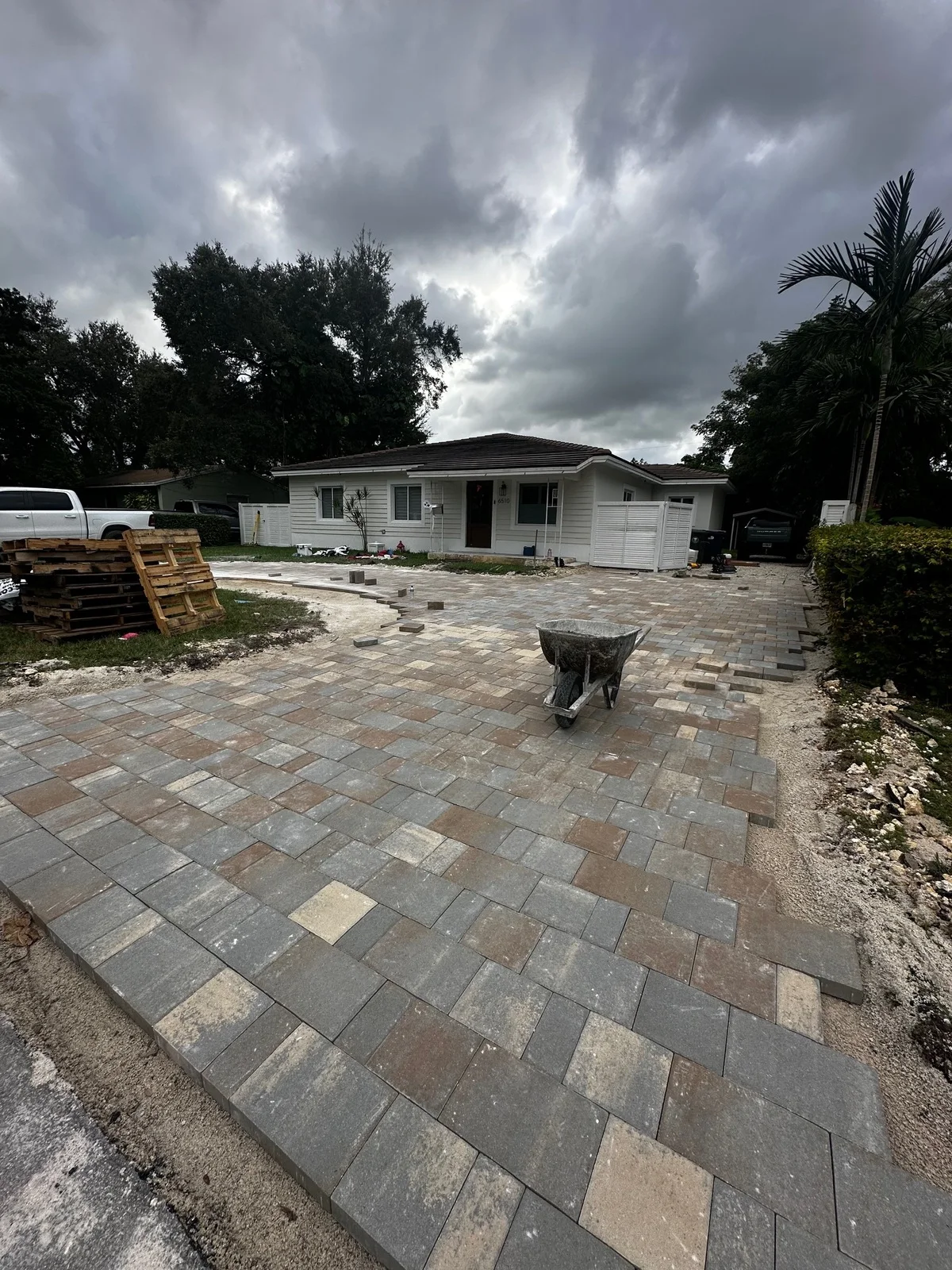
Field laid to the pattern, edges cut on site, and a restraint set around the perimeter so the field cannot creep.
Joints get filled and the site gets cleaned
Sand swept in and compacted, the surface washed down, and the property left the way we found it. We haul our own debris.
What a proper installation actually involves
If you are comparing contractors, ask them about the three layers you will never see. A paver surface has four. The pavers on top are the wearing surface. Under them sits a thin bedding course of sharp sand, screeded flat. Under that is the base of compacted crushed aggregate, the layer that does the structural work. Under that is the subgrade, your native soil. A contractor who only wants to talk about paver colors is skipping the part that holds the thing up.
Put a walkway’s base under a driveway and the driveway tells you soon enough. Tire tracks show up as ruts, the edges spread and pavers start to rock. A walkway that only carries people can live on a shallower base. A daily pickup needs more depth, and delivery trucks on a commercial drive need more than that. We size the base to the heaviest thing that will cross it.
Settling that shows up a year after an install usually has the same cause. The base was compacted once, at full depth, so only the top few inches got tight. The rest stayed loose and slowly packed down under traffic and rain. We build bases in lifts, a few inches at a time, compacting each layer before the next goes on, so the whole depth is firm.
The pavers are a wearing surface. The base is the building.
Joint sand looks like filler between the pretty parts, and it does more work than anything else you can see. Sand packed into the joints is how one paver hands part of its load to the ones around it, and that sharing is what turns loose units into a surface. Lose the sand and the sharing stops. Each paver bears its own load, and that is exactly when rocking and cracking begin.
The manufacturer’s instructions on a bag of polymeric sand are worth following to the letter. The product binds when wetted, which is what keeps it in the joints when plain sand would wash out. Install it dry and sweep the pavers properly before any water goes on, then water it the way the bag says. Patios with a cloudy residue over the pavers are almost always jobs where somebody cut those steps short.
Restraint
A perimeter edge restraint is what stops the field creeping outward and the joints opening from the outside in.
Joint sand
Structural, not cosmetic. It transfers load between units, which is the whole reason a field of loose pavers behaves like a surface.
Separation
Geotextile between subgrade and base stops fine soil migrating up and destroying the aggregate structure.
More installation work
We cover this across the region. A few of the areas we work most:
What it asks of you afterwards
Sealing is optional and it is a preference rather than a requirement. It deepens the color, makes stains easier to lift, and helps hold joint sand. It also needs redoing every few years and a bad sealer choice can leave a plastic-looking sheen or trap moisture. We will tell you honestly whether your surface benefits.
Most small things on a paver surface can wait for a convenient day. A lifted edge cannot. Anything raised more than about a quarter inch will catch someone’s foot sooner or later, and where the property is commercial, that turns into a liability question on top of the repair.
Upkeep on a well-built paver surface is light. Sweep leaves and debris off before they break down in the joints, top up the joint sand when it gets low, and call about any dip while it is still small. Most owners do little else.
Where it fits, porcelain is a very low-fuss surface to own. Spills sit on top instead of soaking in, because the material absorbs almost nothing. The work is all on the install side: precise base preparation, a perfectly even bedding course and careful cutting with the right blade.
If you are unsure which material to choose, concrete pavers are the safe default. The range of shapes and colors is the widest of anything we install, and matching them for a repair or an addition down the road is easier than with any other paver. Know going in that the color moves a little during the first year or two as they cure out.
Pick clay brick if you want a surface that still looks like the day it went in twenty years from now. Its color is the fired clay, so it stays put. You will pay more and have fewer shapes to choose from.
The failures we get called out to fix
On the day the job wraps, all of these look like good work. The damage comes later, so the habits never get corrected.
Sealing too early
Fresh concrete pavers push a white residue to the surface as they cure. That is efflorescence, and it needs to finish before any sealer goes on. Seal in the first month and the haze can end up permanently under the coat.
Laying over the old surface
Overlaying is tempting because it skips the tear-out and costs less up front. It also inherits every problem below. When the old surface failed because of the base, the new one is sitting on the same bad base and goes the same way.
Skipping the geotextile
The base only works if it stays clean crushed aggregate. Fabric under it keeps the soil below from mixing in. Skip it and the two layers blend a little more every rainy season, and once enough soil has moved up, the base cannot carry the load and the pavers settle.
Using the wrong sand in the bedding
If pavers are wandering out of line, check the bedding. It should be angular concrete sand with sharp grains. Rounded mason or beach sand rolls under load and lets them move.
If nobody talks to you about drainage, they are quoting a different job.
Common questions
Will the new pavers match what I already have
Concrete pavers drift a little in color as the sun and the years work on them, so a fresh unit next to one that has been down a while can stand out. Sometimes we match exactly and sometimes closely. If we cannot get close enough, you see the options before we order.
What happens to the old surface
Removal and disposal are included. We break out whatever is there now and take it off the property. Where we can get it to a recycler, the old concrete and pavers go there.
How do you keep it from settling again
Pulling up the low pavers is the easy part. Keeping them level means fixing what let them drop, which is usually water undermining the base or a base that was weak to begin with. We correct both before anything goes back down, and handle a root if one is involved.
Do you work with HOAs and property managers
Your rules come first. We regularly work for associations and property managers, which means board timelines and submittals are routine for us. Share your approval process and we will schedule the work, in phases if needed, so residents keep access.
Do you cover Miami, FL
Miami, FL is squarely in our regular area. We work there most weeks. If you send a few photos of the job, we can usually tell you a lot before anyone even comes out.
Is there a warranty
Yes, and you get it on paper. It covers the work we did. The paver manufacturer backs the product separately, and we make sure you have their paperwork too. What a warranty will not cover, like a root that grows in later or a change in how water moves across the property, we will spell out plainly.
Start with a conversation
Tell us about it by phone, or email us photos at info@paverson.com. We will explain what is wrong and what it takes to fix it properly. If the honest answer is that nothing needs doing for a year, you will hear that.
Quality you can stand on