Restaurant Patio Pavers done so it stays flat
Dining patios built for wet service traffic and rolling carts.
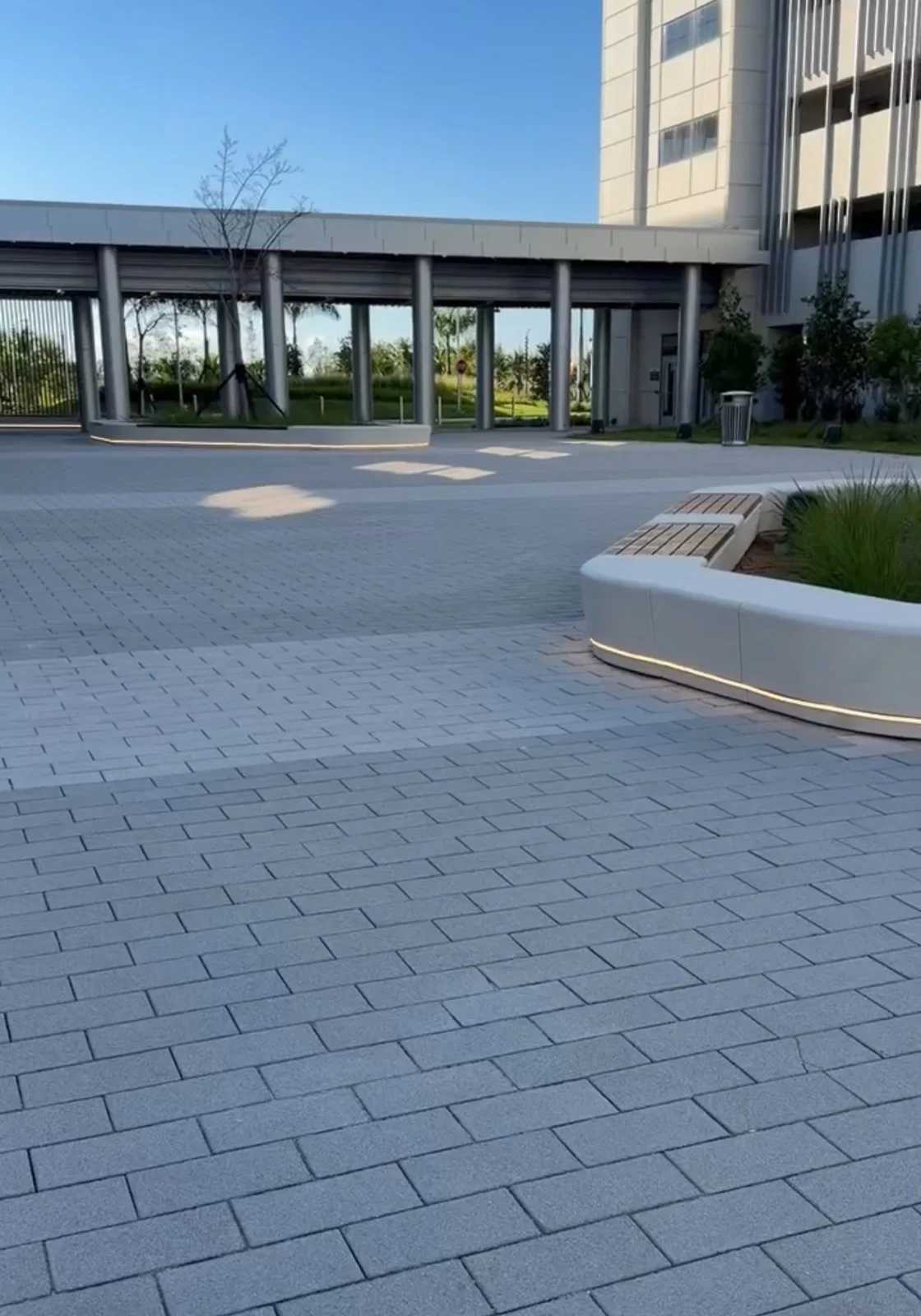
What actually goes wrong
Here is the honest version: a sunken paver is a symptom. The base under it lost material, usually to water, and the surface settled into the gap. Resetting the pavers without correcting the base just buys you a season.
Most of the sinking and shifting we see in South Florida comes back to two local conditions. The sandy ground moves when water passes through it, and the rain arrives in big bursts. Put those together and a base that would be fine up north gets a real test every summer.
The second common cause is roots. Shallow, wide root systems on ficus, black olive and older shade trees head toward moisture, and the ground under a walkway holds plenty of it.
That is why the schedule on our jobs is mostly spent on the part you will never see again. The surface takes a day or two. The ground it sits on takes the rest, and the ground is what you are actually paying for.
How we run this job
We come look at it
Somebody from the crew comes out, stands on the problem, and tells you what is actually going on underneath it. No sales visit, just a look and an honest read.
You get the plan in writing
Scope, materials, how long it takes, and what it costs, written down before anybody starts. No verbal numbers that change later.
We build the base first
Excavation to the depth this job actually needs, aggregate compacted lift by lift, bedding screeded flat. The slow part, and the part that decides whether the surface is still flat in ten years.
Pavers go down and get cut in
The field goes down to the pattern, edge cuts happen on site, and the perimeter gets a restraint so nothing creeps.
Joints get filled and the site gets cleaned
Sand swept in and compacted, surface washed, debris hauled by us. You get the property back the way we found it, minus the problem.
What changes on a commercial property
Accessibility is not optional on commercial property. Slopes, transitions and detectable warnings are code, and a resurfacing job that quietly changes a slope can put a compliant property out of compliance.
Commercial work is a sequencing problem as much as a construction one. The property has to keep operating, which means phasing, temporary routing, and being honest about which days a given area is genuinely unusable.
Load cases are different too. Delivery vehicles, dumpster trucks and fire apparatus all cross surfaces that look residential, and a base built for cars fails quickly under them. The dumpster pad is almost always the first thing to go.
The pavers are a wearing surface. The base is the building.
Getting the fall right is quiet work. It means setting the base so the finished surface drops about an eighth to a quarter inch per foot away from the building, then checking it as the job goes. Done right, nobody notices it. Done wrong, you either get standing water or water pushed back against the foundation.
We draw the water’s route before we draw the paver pattern. On a commercial job, once rain runs off the surface, the design has to say where it goes next. With a tight lot and no fall available, that might be a channel drain along the low side or a permeable section feeding a stone reservoir. Sometimes it is a regrade of the planting bed beside it. All of them are cheaper now than later.
A properly jointed paver field sheds most of the rain that lands on it. The water that does the harm usually comes from somewhere specific, and finding it is half the job. Check where your downspouts discharge, where the sprinkler heads point, and whether the lot next door drains across your corner.
Compaction
Layered, then compacted, then layered again. One load spread and run over once looks finished and leaves loose material below the crust.
Fall
Away from the building, always, at about an eighth to a quarter inch per foot. That small slope decides where every storm ends up.
Restraint
A perimeter edge restraint is what stops the field creeping outward and the joints opening from the outside in.
More commercial work
This is work we do throughout the region. Here are a few of our most frequent areas:
What it asks of you afterwards
Sealing really is a preference, which is why you hear different opinions on it. Our view: it is worth it where the surface takes oil, food or heavy staining, and less worth it on a walkway that only sees foot traffic. A poorly chosen sealer can leave a glossy sheen or trap moisture underneath, so product choice matters as much as the decision itself.
Walk your pavers now and then and look along the edges. If any paver has lifted more than about a quarter inch, treat it as urgent, because that is the height where people start catching their toes. For anyone managing a commercial property, it is a liability matter as much as upkeep.
Owners are often surprised how little a properly built paver surface needs from them. The joints are where most of the attention goes: keep them full of sand and free of leaves that would otherwise rot in place. Beyond that, keep an eye out for any area that starts to sink.
Concrete pavers win on choice: they come in more shapes and colors than any other material we install. They also lay up consistently, which makes for a predictable job. The color runs through the whole unit, so it fades slowly and gently in the sun. Expect it to shift a bit in the first year or two as it cures out.
Clay brick is the long-game material. Fired clay keeps its color essentially forever, since the clay is the color. Expect a higher price and fewer shapes. In exchange, the surface should look about the same twenty years from now as it does the week we finish.
Travertine is quarried stone, so no two pieces look quite alike. Some people love that variation and some find it busy, so it is worth seeing a few units side by side before you commit. Its big practical advantage is temperature: in direct sun it stays cooler underfoot than concrete, which is why it shows up around so many pools.
The failures we get called out to fix
Each of these hides under a clean new surface. Since the owner cannot see them at the end, they keep getting done.
Using the wrong sand in the bedding
Bedding sand that is round acts like a layer of ball bearings. Pavers set on mason or beach sand drift under load. Sharp, angular concrete sand stays put.
Sealing too early
Sealer works like a lid. Put it on a new concrete paver too early, in the first month, and whatever efflorescence has not come out yet gets trapped underneath as a permanent white haze. Let the pavers cure first.
Laying over the old surface
Before paving over anything, ask why the old surface failed. If the answer is the base, a new surface on top of it is borrowing time. It goes down fast and cheap, and the same problem comes back through it.
Skipping the geotextile
The base only works if it stays clean crushed aggregate. Fabric under it keeps the soil below from mixing in. Skip it and the two layers blend a little more every rainy season, and once enough soil has moved up, the base cannot carry the load and the pavers settle.
A sunken paver is a symptom. The base under it is the disease.
Common questions
Do I need to be home while you work
Being home is optional. Access and water are the two things we need. You will hear from us during the job, and right away if we find something below the surface that changes the scope.
Will the new pavers match what I already have
You will know before we order anything. Plenty of repairs match exactly. Others come close, since concrete pavers shift color a little with sun and age and older lines get discontinued. When close is not good enough, we can move units from a less visible area onto the visible patch.
What happens to the old surface
Old surfaces come out completely before anything new is built. We haul the debris away and recycle the concrete and pavers wherever we have a recycler to take them. Nothing about removal gets billed as an add-on.
How do you keep it from settling again
The answer depends on what made it settle, which is why we look before we price it. Drainage problems get corrected and a failed base gets dug out and rebuilt, and if a root is pushing, it gets dealt with too. Then the pavers go back down on a base with a reason to stay put.
Do you work with HOAs and property managers
Your rules come first. We regularly work for associations and property managers, which means board timelines and submittals are routine for us. Share your approval process and we will schedule the work, in phases if needed, so residents keep access.
Do you cover Miami, FL
Yes. Miami, FL is inside our regular working area and we are out that way most weeks. Call and we will tell you honestly when we could get to you.
Have somebody come look at it
Send a couple of photos or just call. We will tell you what we think is going on, what it would take to fix, and whether it needs doing now or can wait.
Quality you can stand on