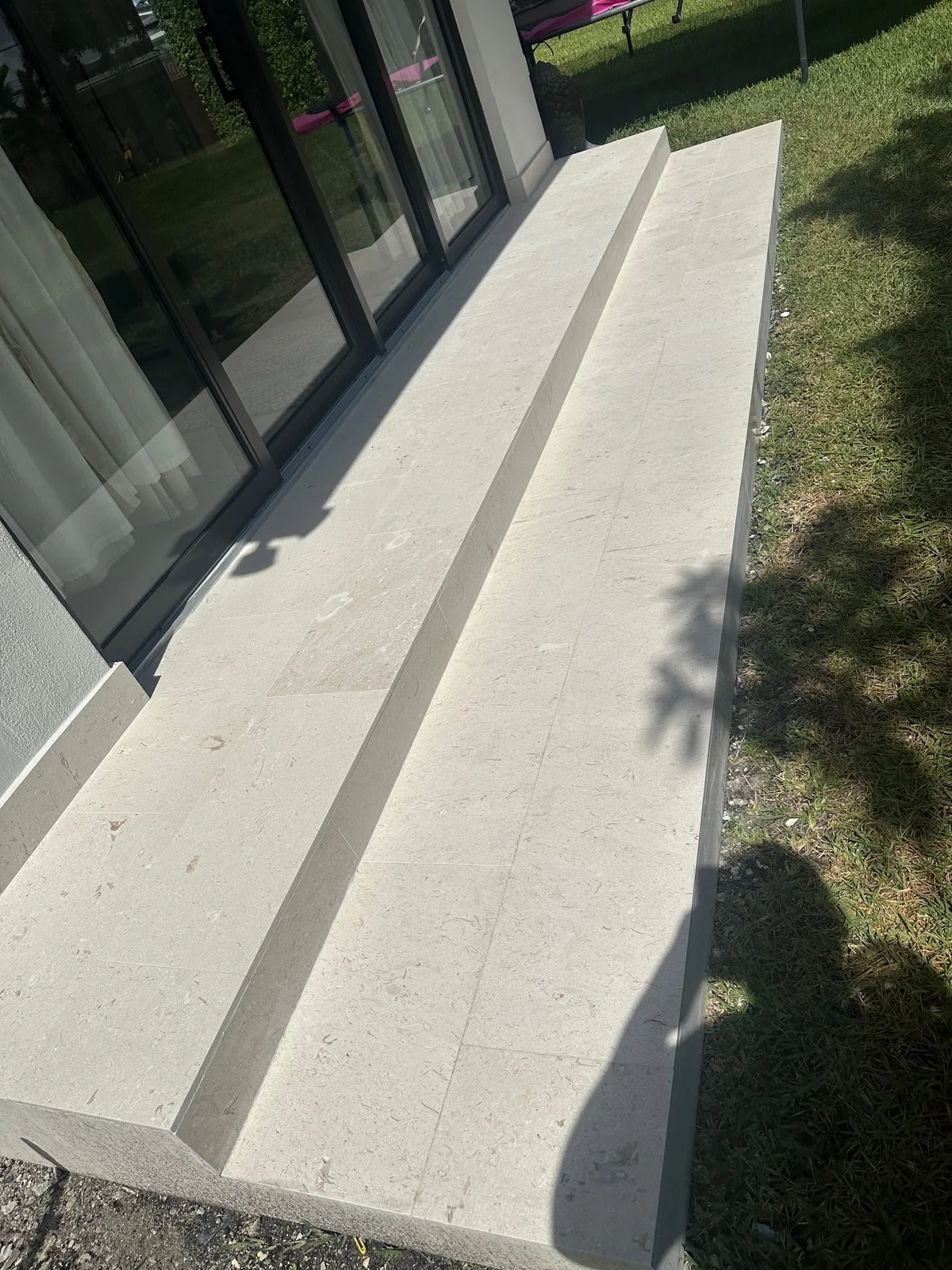
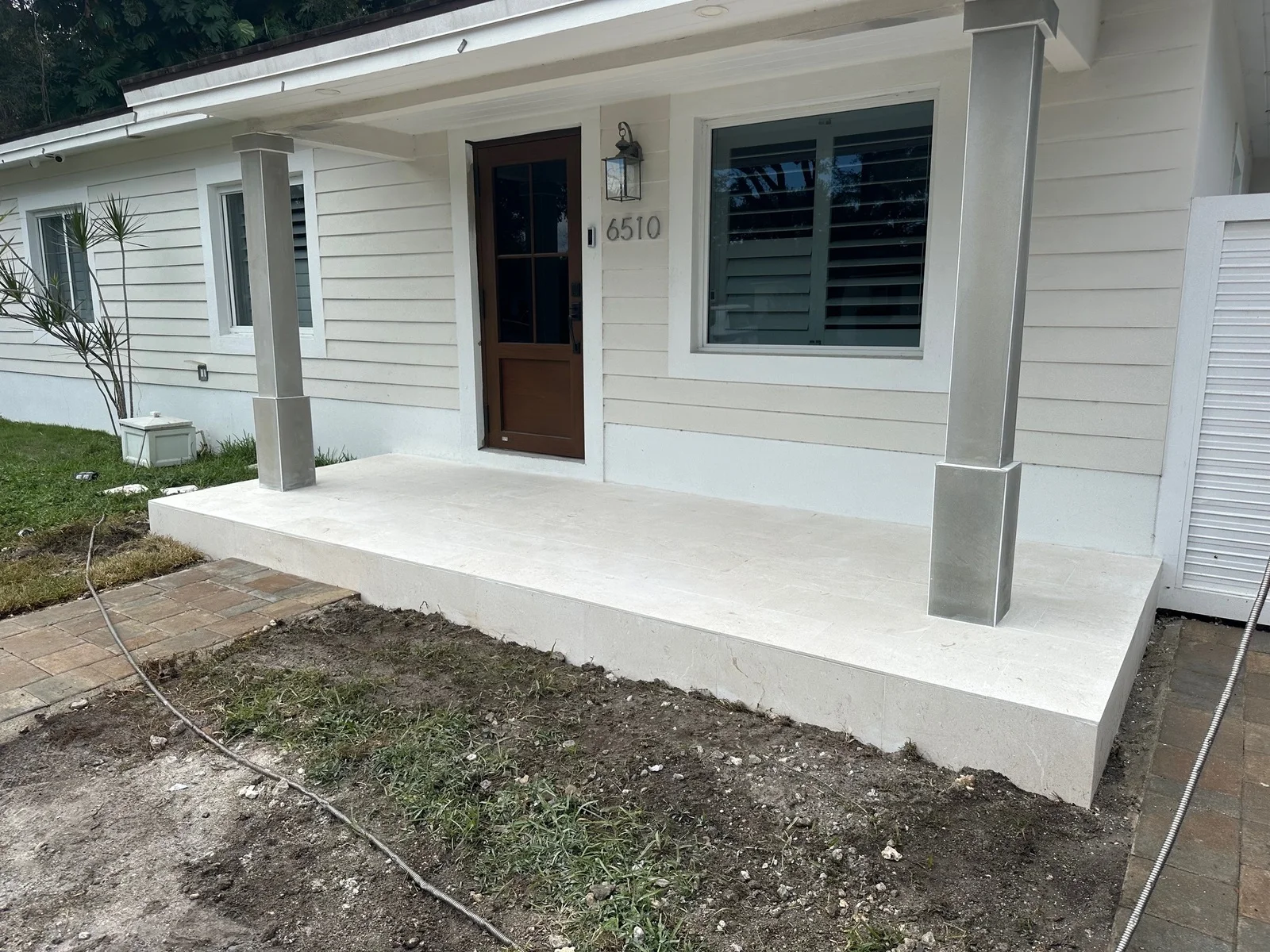
Paver Steps Installation, built on a base that holds
Steps built to an even rise so nobody has to think about their feet.
What actually goes wrong
Here is the honest version: a sunken paver is a symptom. The base under it lost material, usually to water, and the surface settled into the gap. Resetting the pavers without correcting the base just buys you a season.
Watch what one heavy afternoon storm does to a South Florida yard: a lot of water arrives at once, and it moves through sand that shifts as it goes. That is the load a paver base here has to survive every summer. Up north the same base would get an easier life.
The second common cause is roots. Shallow, wide root systems on ficus, black olive and older shade trees head toward moisture, and the ground under a walkway holds plenty of it.
So the real question to ask anybody bidding this work is not what pavers they use. It is how deep they excavate, how they compact, and where they think your water goes. The answers tell you everything about how long the job will last.
How we run this job
We come look at it
Before any pricing, we come see it. Our crew member walks the area with you and pays close attention to how water moves around it. What we tell you afterward is what we found, including when the job is smaller than you expected.
You get the plan in writing
Scope, materials, schedule, and cost on paper before a shovel moves. The number you approve is the number, not an opening position.
We build the base first
Dig to depth, compact the aggregate in layers, screed the bedding. Nobody ever sees this part again, which is exactly why most failures start here.
Pavers go down and get cut in
Laying the field is the fast part. The care is in the cuts at the edges and the restraint that locks the whole field in place.
Joints get filled and the site gets cleaned
Sand swept in and compacted, surface washed, debris hauled by us. You get the property back the way we found it, minus the problem.
What a proper installation actually involves
The heaviest thing that ever crosses the surface sets the depth, even if it only comes once a week. A walkway for people can sit on a shallow base. A home driveway that sees a loaded pickup needs a deeper one. A commercial drive where delivery trucks pull in needs deeper still. If somebody hands you the same base depth for a garden path and a driveway, they did not measure anything.
Every lift of base gets compacted before the next goes on. That means a few inches of aggregate, a full pass with the compactor, then the next few inches. It is tedious and it matters more than almost anything else in the job, because a base compacted only on top hides loose material that settles later. On the day the work finishes, you would never know the difference.
Start at the bottom and work up. The subgrade is the soil your property already has, and nothing we do changes what it is made of. On top of it goes the base: crushed aggregate, compacted until it carries weight on its own. Then a thin course of sharp sand, screeded flat so every paver beds at the same height. Then the pavers. Three of those four layers get buried on the first day, and they are the three that decide how the job ages.
A sunken paver is a symptom. The base under it is the disease.
We draw the water’s route before we draw the paver pattern. On a commercial job, once rain runs off the surface, the design has to say where it goes next. With a tight lot and no fall available, that might be a channel drain along the low side or a permeable section feeding a stone reservoir. Sometimes it is a regrade of the planting bed beside it. All of them are cheaper now than later.
A downspout that discharges right at the edge of a paver surface puts a whole roof’s worth of water into one small patch of base every storm. Irrigation heads that spray the same spot twice a day and runoff from a neighboring grade do similar damage. Compared with those, rain falling across a properly jointed surface is minor.
Fall matters more than people think. A paver surface wants a slope of roughly an eighth to a quarter inch per foot away from the building. That is subtle enough that you will not notice it walking on it and steep enough that water leaves instead of standing. Get it flat and you get puddles; get it backwards and you send water at the foundation.
Separation
Geotextile between subgrade and base stops fine soil migrating up and destroying the aggregate structure.
Base depth
Set by what the surface carries, not by habit. A walkway and a truck-bearing drive are not the same excavation.
Compaction
The base is built in lifts with compaction between each one. A base dumped in one load and run over quickly only has a crust holding it together.
More installation work
This is work we do throughout the region. Here are a few of our most frequent areas:
What it asks of you afterwards
Small problems stay small on pavers if you catch them. A low spot fixed early is a quick reset. Left alone, it collects water and grows. Beyond watching for that, keeping the joints full and clean covers nearly everything a good install asks of you.
Most sealing problems come down to the product. A sealer that is wrong for the material can leave a plastic-looking shine or hold moisture under it, and that is hard to undo. The right one, applied at the right time, deepens the color and keeps joint sand in place. Sealing stays optional, and we give you a straight answer on whether it is worth it here.
Most small things on a paver surface can wait for a convenient day. A lifted edge cannot. Anything raised more than about a quarter inch will catch someone’s foot sooner or later, and where the property is commercial, that turns into a liability question on top of the repair.
One practical reason we steer a lot of people toward concrete pavers is the future. Lines change, and a material that is easy to match makes a later extension or repair look like it was always there. They also offer the widest choice of shape and color. Plan on the color shifting slightly over the first year or two while they cure.
Clay brick costs more than concrete pavers and offers fewer shapes. What you get for that is color that does not fade, because the color is the fired clay itself. If the surface needs to look the same two decades from now, brick earns its price.
Travertine is quarried stone, so no two pieces look quite alike. Some people love that variation and some find it busy, so it is worth seeing a few units side by side before you commit. Its big practical advantage is temperature: in direct sun it stays cooler underfoot than concrete, which is why it shows up around so many pools.
How this gets done badly
These shortcuts all pass a walk-through on day one. The problems arrive later, and that delay is why they stay common.
Using the wrong sand in the bedding
Concrete sand goes in the bedding for a reason: its grains are sharp and angular, so they lock. Mason sand and beach sand are rounded and let pavers wander under load.
Sealing too early
Fresh concrete pavers push a white residue to the surface as they cure. That is efflorescence, and it needs to finish before any sealer goes on. Seal in the first month and the haze can end up permanently under the coat.
Laying over the old surface
Paving over an old surface is a lot like painting over rust. It goes quickly and costs little, and the problem underneath keeps working. If the base caused the first failure, the new surface will show it again within a season or so.
Skipping the geotextile
The base only works if it stays clean crushed aggregate. Fabric under it keeps the soil below from mixing in. Skip it and the two layers blend a little more every rainy season, and once enough soil has moved up, the base cannot carry the load and the pavers settle.
Compaction in lifts is the difference between ten years and two.
Common questions
How long does the job take
A typical paver steps installation job runs two to five working days once we start. Base work is the slow part; laying the field goes quickly. Weather moves things, and in summer we plan around the afternoon storms rather than pretending they will not happen.
Do I need to be home while you work
No. Access and a working hose bib are all we need. We will keep you posted as the job goes, and if we uncover something we did not expect, you get a call that day so you can decide with us.
Will the new pavers match what I already have
Sometimes exactly, sometimes closely. Concrete pavers change color a little with sun and age, and older lines get discontinued. If we cannot match, we will show you the options before we order anything, including pulling units from a less visible area to patch a visible one.
What happens to the old surface
Removal and disposal are included. We break out whatever is there now and take it off the property. Where we can get it to a recycler, the old concrete and pavers go there.
How do you keep it from settling again
Pulling up the low pavers is the easy part. Keeping them level means fixing what let them drop, which is usually water undermining the base or a base that was weak to begin with. We correct both before anything goes back down, and handle a root if one is involved.
Do you cover Miami, FL
Yes. Miami, FL is inside our regular working area and we are out that way most weeks. Call and we will tell you honestly when we could get to you.
Start with a conversation
Send a couple of photos or just call. We will tell you what we think is going on, what it would take to fix, and whether it needs doing now or can wait.
Quality you can stand on