Paver Releveling, from the subgrade up
Bringing a settled area back to grade.
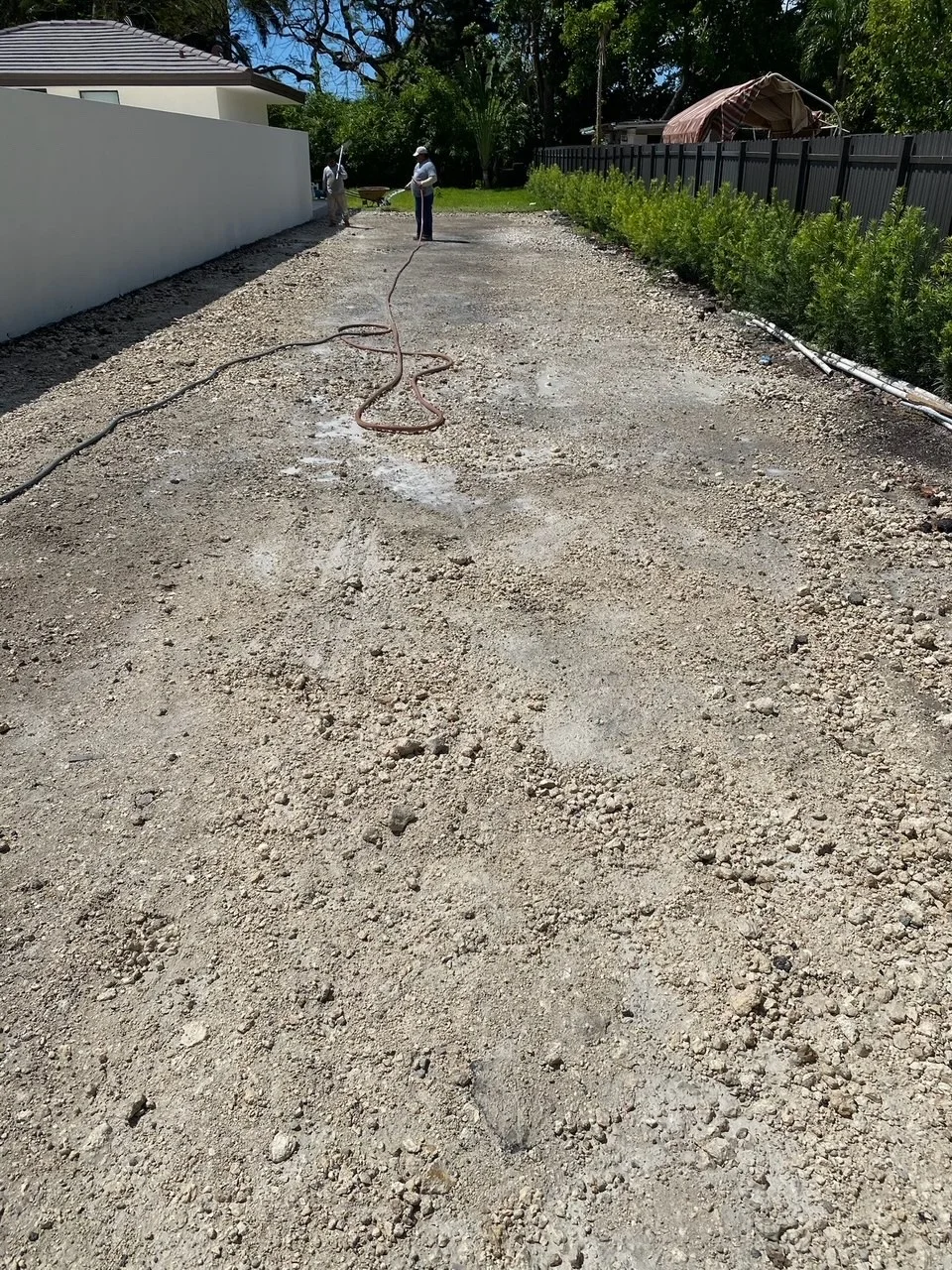
What actually goes wrong
Here is the honest version: a sunken paver is a symptom. The base under it lost material, usually to water, and the surface settled into the gap. Resetting the pavers without correcting the base just buys you a season.
On the coast we design for water that moves sideways. The water table sits high in a lot of places, which leaves rain little room to soak downward. It travels across instead, and that is the movement that strips sand from under a driveway’s edge.
A lifted section near a tree is usually the roots. The base under pavers holds moisture, so roots grow into it and push the surface up as they get bigger.
We would rather lose a bid than skip the base work, because the base work is the job. Everything above it is finish.
How we run this job
We come look at it
We start in person. Someone from the crew comes out, looks at the problem and follows the water across the property. You get our honest read on the spot, and if the fix is small, we say it is small.
You get the plan in writing
Scope, materials, schedule, and cost on paper before a shovel moves. The number you approve is the number, not an opening position.
We build the base first
Dig to depth, compact the aggregate in layers, screed the bedding. Nobody ever sees this part again, which is exactly why most failures start here.
Pavers go down and get cut in
Field laid to the pattern, edges cut on site, and a restraint set around the perimeter so the field cannot creep.
Joints get filled and the site gets cleaned
Joints filled and set, everything washed down, our own debris on our own truck. The site is yours again the same day we finish.

Working out what actually failed
A good repair is invisible. That means keeping the units that came up, blending replacements so they do not read as a patch, and matching the joint sand so the repaired area does not sit a shade different from the field around it.
Repair starts with diagnosis, not with lifting pavers. The surface tells you where it failed; it does not tell you why. Pull up a sunken section without answering the why and you have bought a season.
The usual why is water: a downspout discharging at an edge, an irrigation head hitting the same spot twice a day, or a neighboring grade sending runoff across a corner. Second most common is a root. Third is a base that was never compacted properly.
A sunken paver is a symptom. The base under it is the disease.
The cheapest material on a patio may be the one that holds it together. Joint sand transfers load between pavers, and that transfer is what makes a field of loose units act as a surface. When joints wash out, each paver is left carrying its own load. That is exactly when they begin to rock, and rocking pavers crack.
Joint sand is the last step on a patio, which is exactly why it gets rushed. Polymeric sand binds once it is wet and resists washout better than plain sand, so it is what most jobs use now. The catch is the cleanup. It goes in dry, the surface gets swept properly, and the water goes on the way the manufacturer specifies. Skipping ahead is how a new patio ends up hazy.
Compaction
Compacting the whole base in one go only firms up the top. We place aggregate in layers and compact each one, so the base is solid all the way down.
Fall
Away from the building, always, at about an eighth to a quarter inch per foot. That small slope decides where every storm ends up.
Restraint
A perimeter edge restraint is what stops the field creeping outward and the joints opening from the outside in.
Other repairs we handle
We bring this work to properties across the region. A few places that keep us busy:
What it asks of you afterwards
It does not take much. An edge lifted a little more than a quarter inch looks minor and still catches toes. That makes it the item to act on quickly once an install has settled in. If the pavers serve a commercial property, the stakes include liability, beyond keeping the surface in shape.
Most of the maintenance happens before the pavers go down. Get the base and joints right and the owner’s part is short: keep organic debris out of the joints, refill sand as needed, and address any settled patch early.
Sealing really is a preference, which is why you hear different opinions on it. Our view: it is worth it where the surface takes oil, food or heavy staining, and less worth it on a walkway that only sees foot traffic. A poorly chosen sealer can leave a glossy sheen or trap moisture underneath, so product choice matters as much as the decision itself.
Most of what we put down is concrete pavers. They come in more shapes and colors than any other option and lay up predictably. Years later, when you want to add on or patch, they are also the easiest to match. The pigment runs all the way through each unit, so sun softens the color over time and there is no surface coat to wear through.
Clay brick costs more than concrete pavers and offers fewer shapes. What you get for that is color that does not fade, because the color is the fired clay itself. If the surface needs to look the same two decades from now, brick earns its price.
Before you pick travertine, think about what will happen on it. Near an outdoor kitchen or anywhere oil and heavy stains land, it needs a sealer to keep looking right. On a plain pool deck it is a comfortable choice, because it stays cooler underfoot than concrete in direct sun. As a natural stone, every unit varies a little.
How this gets done badly
These shortcuts all pass a walk-through on day one. The problems arrive later, and that delay is why they stay common.
Using the wrong sand in the bedding
If pavers are wandering out of line, check the bedding. It should be angular concrete sand with sharp grains. Rounded mason or beach sand rolls under load and lets them move.
Sealing too early
A white haze trapped under sealer usually means somebody sealed too soon. New concrete pavers need time to cure and push out their efflorescence first. Seal in the first month and that haze can be locked in for good.
Laying over the old surface
It is quick, it is cheap, and it inherits every problem underneath. If the base was the reason the old surface failed, putting a new one on top of it just hides the failure for a season.
Skipping the geotextile
This one cannot be checked after the fact. Once the pavers are down, nobody can see whether there is fabric under the base. If there is not, fine soil gradually moves up into the aggregate and weakens it, and the settling that follows takes a full rebuild to fix.
Compaction in lifts is the difference between ten years and two.
Common questions
How long does the job take
A typical paver releveling job runs two to five working days once we start. Base work is the slow part; laying the field goes quickly. Weather moves things, and in summer we plan around the afternoon storms rather than pretending they will not happen.
Do I need to be home while you work
No. Access and a working hose bib are all we need. We will keep you posted as the job goes, and if we uncover something we did not expect, you get a call that day so you can decide with us.
Will the new pavers match what I already have
Often the best match is already on your property. When a new paver will not blend, we can pull units from a less visible area, use them on the visible patch, and put the new ones where nobody looks. Otherwise matches range from exact to close, because concrete pavers shift color a bit with sun and age.
What happens to the old surface
It leaves with us. We demo the existing surface, load it out, and send concrete and old pavers to a recycler when there is one nearby. Removal is part of the job we price, so it will not show up later as an extra.
How do you keep it from settling again
We find out why it sank before we touch it. Resetting pavers on the same weak base or over the same wet spot only buys you a little time. Usually the cure is better drainage and a properly rebuilt base, and sometimes it means dealing with a root or a downspout.
Do you cover Miami, FL
It is our home turf. We are based in Miami, FL and out on jobs around it most weeks, so getting to you is rarely the hard part. Call and we will give you a real answer on dates.
Have somebody come look at it
Send a couple of photos or just call. We will tell you what we think is going on, what it would take to fix, and whether it needs doing now or can wait.
Quality you can stand on