Paver Channel Drains, built on a base that holds
Channel drains set at the low line, at the grade the water actually wants.
What actually goes wrong
The failure is almost always below the pavers. Sand washes out of the joints, water gets down into the bedding, the bedding migrates, and the surface drops. Everything you can see is downstream of that.
On the coast we design for water that moves sideways. The water table sits high in a lot of places, which leaves rain little room to soak downward. It travels across instead, and that is the movement that strips sand from under a driveway’s edge.
Next on the list is any mature tree nearby. Its roots will find the moisture held in the paver base and grow into it, raising the pavers as they go.
So the real question to ask anybody bidding this work is not what pavers they use. It is how deep they excavate, how they compact, and where they think your water goes. The answers tell you everything about how long the job will last.
How we run this job
We come look at it
If the problem turns out smaller than you feared, you will hear that from us. We walk the property with you, look at where water is going, and tell you plainly what we see.
You get the plan in writing
Everything in writing up front: what we are doing, what it is made of, how long it takes, and what it costs. Nothing changes without you signing off on it.
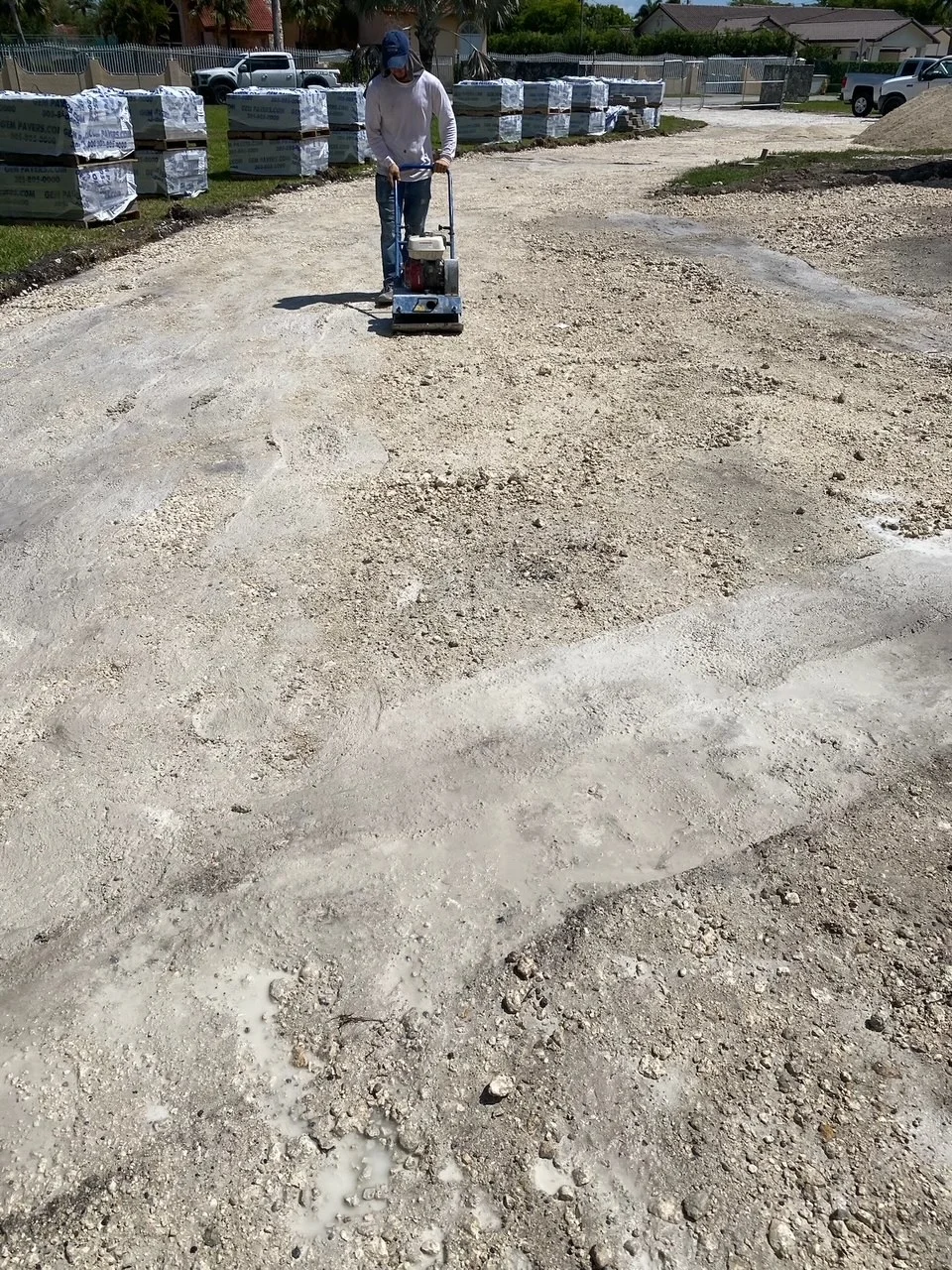
We build the base first
Dig to depth, compact the aggregate in layers, screed the bedding. Nobody ever sees this part again, which is exactly why most failures start here.
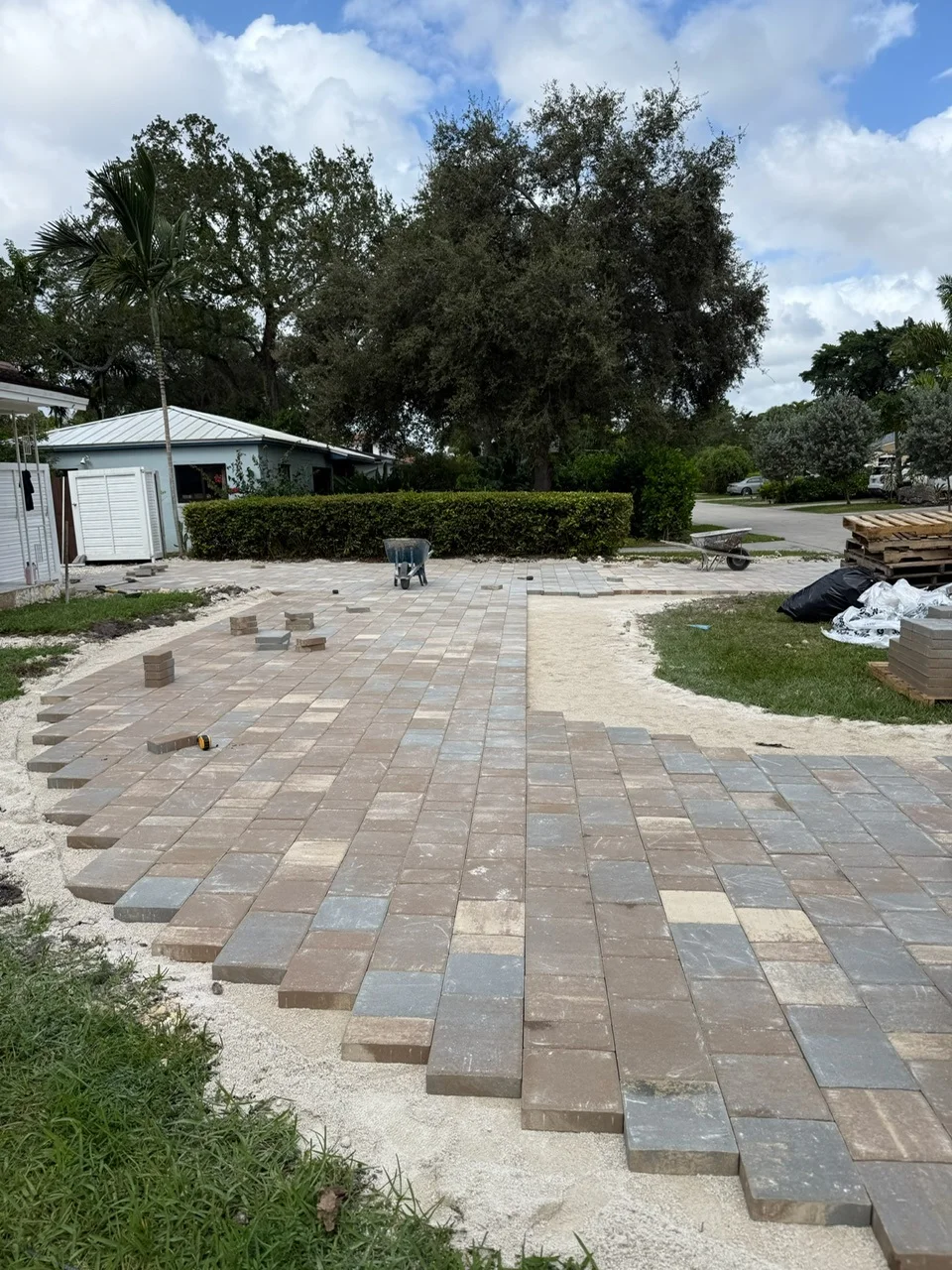
Pavers go down and get cut in
Laying the field is the fast part. The care is in the cuts at the edges and the restraint that locks the whole field in place.
Joints get filled and the site gets cleaned
Sand swept in and compacted, surface washed, debris hauled by us. You get the property back the way we found it, minus the problem.
Where the water goes when it rains here
Settling that shows up a year after an install usually has the same cause. The base was compacted once, at full depth, so only the top few inches got tight. The rest stayed loose and slowly packed down under traffic and rain. We build bases in lifts, a few inches at a time, compacting each layer before the next goes on, so the whole depth is firm.
Each layer has one job. The pavers take foot traffic and tires and spread that weight across a wider area. The sand bedding under them, sharp sand screeded dead flat, sets their height and keeps them level with each other. The compacted aggregate base below does the real structural work. The subgrade at the bottom is your native soil, and our job there is mostly to keep water from softening it. When a surface fails, it is almost always one of the hidden three.
The heaviest thing that ever crosses the surface sets the depth, even if it only comes once a week. A walkway for people can sit on a shallow base. A home driveway that sees a loaded pickup needs a deeper one. A commercial drive where delivery trucks pull in needs deeper still. If somebody hands you the same base depth for a garden path and a driveway, they did not measure anything.
A sunken paver is a symptom. The base under it is the disease.
Before we design anything, we find out where the water on the site comes from. The usual sources are a downspout discharging at the edge, an irrigation head spraying the same patch twice a day, and a neighboring grade sending runoff across a corner. Rain falling evenly on jointed pavers matters far less.
An eighth to a quarter inch per foot does not sound like much, and walking on it you would swear the surface is level. That small, steady drop away from the building is what carries water off. A flat surface holds puddles. A surface sloped the wrong way delivers runoff to the foundation, which is a far bigger problem.
Getting water off the pavers is half of the drainage job on a commercial property. The other half is deciding where it lands. On a tight lot with no fall to spare, we usually choose between a channel drain at the low edge, a permeable section that lets water through to a stone reservoir, and a regrade of the planting bed next door. Building that in now costs less than coming back for it.
Compaction
Each lift of aggregate gets compacted before the next one goes down. The shortcut, one dump and a quick pass, compacts the surface and leaves the rest loose.
Fall
Roughly an eighth to a quarter inch per foot away from the building. Invisible underfoot, decisive for where water ends up.
Restraint
A perimeter edge restraint is what stops the field creeping outward and the joints opening from the outside in.
More drainage work
This is work we do throughout the region. Here are a few of our most frequent areas:
What it asks of you afterwards
It does not take much. An edge lifted a little more than a quarter inch looks minor and still catches toes. That makes it the item to act on quickly once an install has settled in. If the pavers serve a commercial property, the stakes include liability, beyond keeping the surface in shape.
Owners are often surprised how little a properly built paver surface needs from them. The joints are where most of the attention goes: keep them full of sand and free of leaves that would otherwise rot in place. Beyond that, keep an eye out for any area that starts to sink.
The upside of sealing is mostly cosmetic and practical: richer color, easier cleanup, a bit more hold on the joint sand. The downside is commitment. A sealed surface needs another coat every few years, and once it starts wearing unevenly it can look patchy. We will give you our honest opinion on yours before you decide.
Clay brick is the long-game material. Fired clay keeps its color essentially forever, since the clay is the color. Expect a higher price and fewer shapes. In exchange, the surface should look about the same twenty years from now as it does the week we finish.
Most travertine requests come from pool owners, and the heat is why. It stays noticeably cooler than concrete when the sun is on it. Expect variation between units, as you would with any natural stone. Sealing is worth it if the surface will catch oil or heavy stains, and less necessary if it will not.
Where it fits, porcelain is a very low-fuss surface to own. Spills sit on top instead of soaking in, because the material absorbs almost nothing. The work is all on the install side: precise base preparation, a perfectly even bedding course and careful cutting with the right blade.
The failures we get called out to fix
These shortcuts all pass a walk-through on day one. The problems arrive later, and that delay is why they stay common.
Skipping the geotextile
A separation fabric between the subgrade and the base stops the two from mixing. Without it, fine soil migrates up into the aggregate, the base loses its structure, and you get settlement that no amount of surface work will fix.
Using the wrong sand in the bedding
Concrete sand goes in the bedding for a reason: its grains are sharp and angular, so they lock. Mason sand and beach sand are rounded and let pavers wander under load.
Sealing too early
Sealer works like a lid. Put it on a new concrete paver too early, in the first month, and whatever efflorescence has not come out yet gets trapped underneath as a permanent white haze. Let the pavers cure first.
Laying over the old surface
Paving over an old surface is a lot like painting over rust. It goes quickly and costs little, and the problem underneath keeps working. If the base caused the first failure, the new surface will show it again within a season or so.
The pavers are a wearing surface. The base is the building.
Common questions
How long does the job take
A typical paver channel drains job runs two to five working days once we start. Base work is the slow part; laying the field goes quickly. Weather moves things, and in summer we plan around the afternoon storms rather than pretending they will not happen.
Do I need to be home while you work
No. Access and a working hose bib are all we need. We will keep you posted as the job goes, and if we uncover something we did not expect, you get a call that day so you can decide with us.
Will the new pavers match what I already have
On a small repair in the middle of an older patio, the new units have to sit right next to weathered ones. Concrete pavers change color a little with sun and age, so we look for the closest match and tell you honestly how close it is. If it falls short, borrowing pavers from a less visible area is one option.
What happens to the old surface
Old surfaces come out completely before anything new is built. We haul the debris away and recycle the concrete and pavers wherever we have a recycler to take them. Nothing about removal gets billed as an add-on.
How do you keep it from settling again
Pulling up the low pavers is the easy part. Keeping them level means fixing what let them drop, which is usually water undermining the base or a base that was weak to begin with. We correct both before anything goes back down, and handle a root if one is involved.
Do you cover Miami, FL
Yes. Miami, FL is inside our regular working area and we are out that way most weeks. Call and we will tell you honestly when we could get to you.
Let us walk the property
Send a couple of photos or just call. We will tell you what we think is going on, what it would take to fix, and whether it needs doing now or can wait.
Quality you can stand on