Paver Outdoor Fireplace Installation that is still level in ten years
The hearth floor and surround, built for heat and for how people stand.
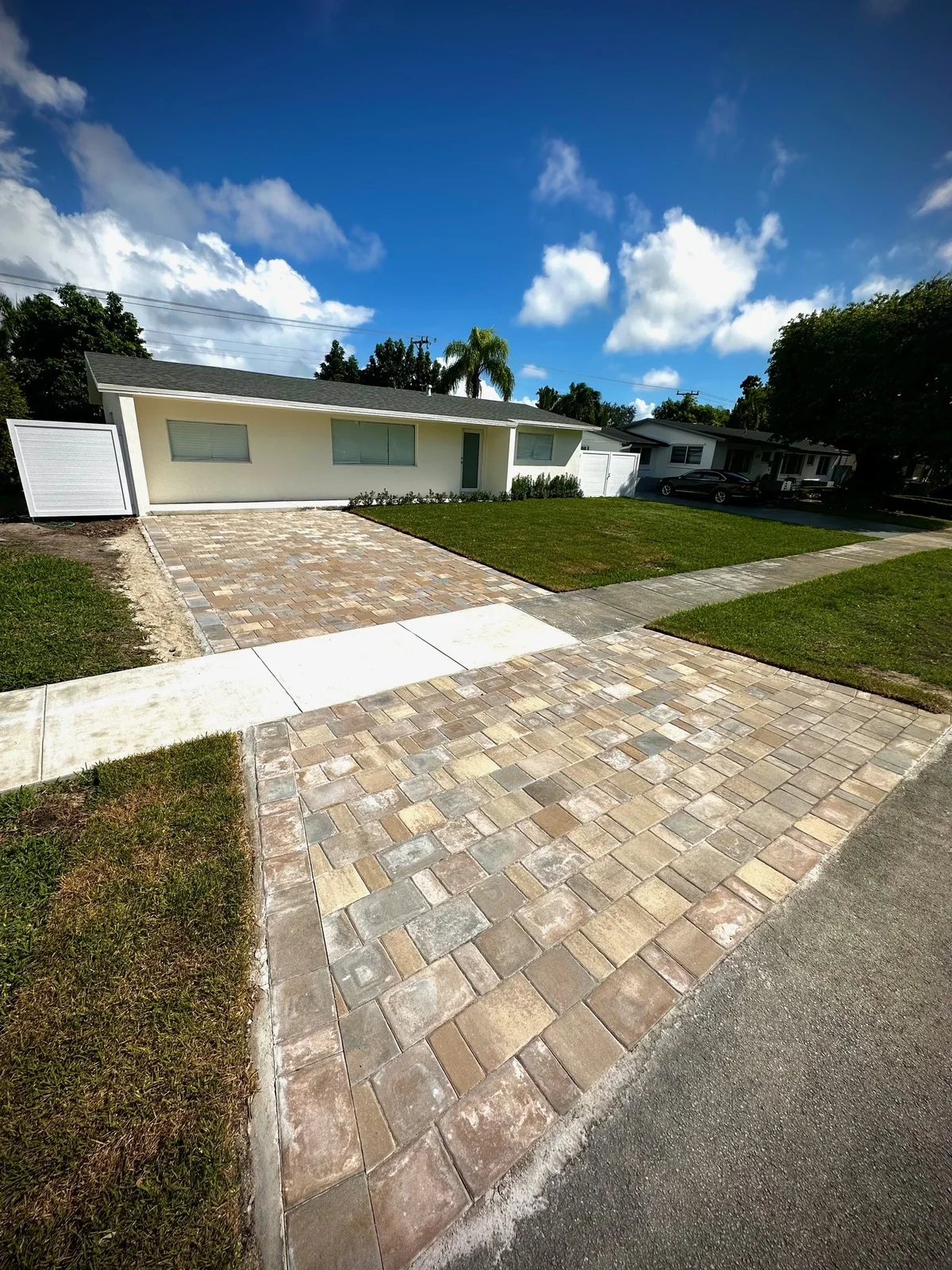
What actually goes wrong
Almost every paver problem we get called out to is a base problem wearing a surface disguise. The pavers themselves are fine. They are concrete or stone, and they will outlast most of us. What moves is what is underneath them.
On the coast we design for water that moves sideways. The water table sits high in a lot of places, which leaves rain little room to soak downward. It travels across instead, and that is the movement that strips sand from under a driveway’s edge.
Some lifted pavers have nothing to do with water running off. Ficus, black olive and many older shade trees run roots shallow and wide, and a damp walkway base is exactly what they go looking for.
That is why the schedule on our jobs is mostly spent on the part you will never see again. The surface takes a day or two. The ground it sits on takes the rest, and the ground is what you are actually paying for.
How we run this job
We come look at it
Somebody from the crew walks the property with you, looks at where water goes, and tells you what we actually see. If the fix is smaller than you were expecting, we will say so.
You get the plan in writing
Everything in writing up front: what we are doing, what it is made of, how long it takes, and what it costs. Nothing changes without you signing off on it.
We build the base first
A flat surface in ten years starts with the dig. We excavate as deep as the job needs, build up compacted aggregate in lifts, and screed the bedding course before any paver is set.
Pavers go down and get cut in
Field laid to the pattern, edges cut on site, and a restraint set around the perimeter so the field cannot creep.
Joints get filled and the site gets cleaned
Joints filled and set, everything washed down, our own debris on our own truck. The site is yours again the same day we finish.
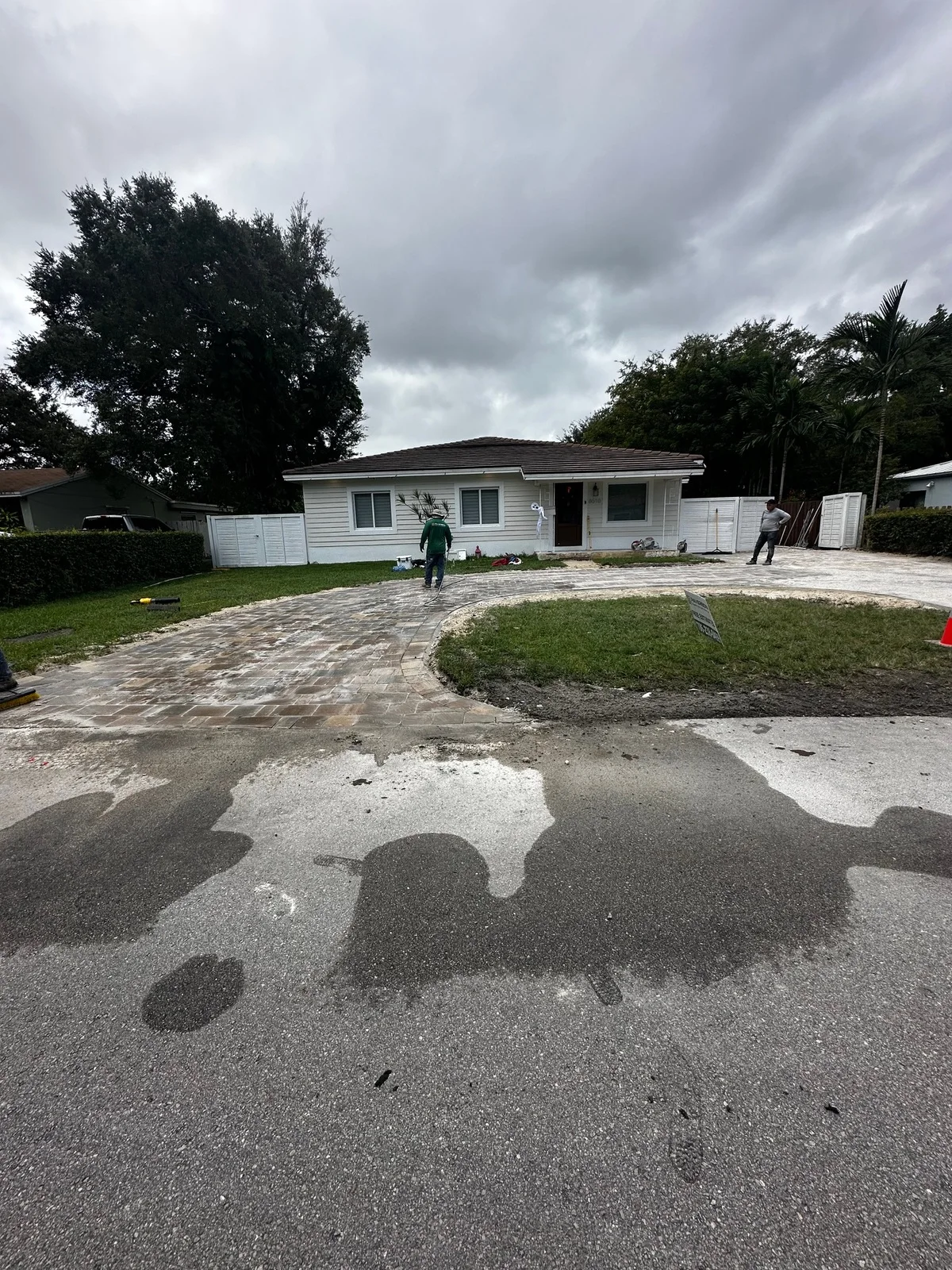
What a proper installation actually involves
A plate compactor only reaches so deep. That is why the base goes in as a series of lifts, each a few inches thick and compacted before the next one lands on top. Put the full depth down at once and the plate firms up the top and leaves the bottom loose. It feels solid when you walk it. Then over the first year or two, the loose layer underneath consolidates unevenly and the surface settles in patches.
Start at the bottom and work up. The subgrade is the soil your property already has, and nothing we do changes what it is made of. On top of it goes the base: crushed aggregate, compacted until it carries weight on its own. Then a thin course of sharp sand, screeded flat so every paver beds at the same height. Then the pavers. Three of those four layers get buried on the first day, and they are the three that decide how the job ages.
Base depth is the most important number on a paver quote, and you cannot check it once the job is done. It should change with the load. A path that only ever sees people needs less, a driveway taking a loaded pickup every day needs more, and a commercial drive for delivery trucks needs more again. When two quotes differ, ask each contractor what depth they priced and why. A good one has an answer tied to your traffic.
Water is what ends most paver surfaces, and it rarely arrives from the sky.
Joint sand looks like filler between the pretty parts, and it does more work than anything else you can see. Sand packed into the joints is how one paver hands part of its load to the ones around it, and that sharing is what turns loose units into a surface. Lose the sand and the sharing stops. Each paver bears its own load, and that is exactly when rocking and cracking begin.
The manufacturer’s instructions on a bag of polymeric sand are worth following to the letter. The product binds when wetted, which is what keeps it in the joints when plain sand would wash out. Install it dry and sweep the pavers properly before any water goes on, then water it the way the bag says. Patios with a cloudy residue over the pavers are almost always jobs where somebody cut those steps short.
Restraint
A perimeter edge restraint is what stops the field creeping outward and the joints opening from the outside in.
Joint sand
Structural, not cosmetic. It transfers load between units, which is the whole reason a field of loose pavers behaves like a surface.
Separation
Geotextile between subgrade and base stops fine soil migrating up and destroying the aggregate structure.
More installation work
We cover this across the region. A few of the areas we work most:
What it asks of you afterwards
It does not take much. An edge lifted a little more than a quarter inch looks minor and still catches toes. That makes it the item to act on quickly once an install has settled in. If the pavers serve a commercial property, the stakes include liability, beyond keeping the surface in shape.
Most of the maintenance happens before the pavers go down. Get the base and joints right and the owner’s part is short: keep organic debris out of the joints, refill sand as needed, and address any settled patch early.
Sealing is optional and it is a preference rather than a requirement. It deepens the color, makes stains easier to lift, and helps hold joint sand. It also needs redoing every few years and a bad sealer choice can leave a plastic-looking sheen or trap moisture. We will tell you honestly whether your surface benefits.
Porcelain is the newest of these in residential work. It is dense, absorbs almost nothing, and is close to stain-proof. It needs precise base work because it is unforgiving of an uneven bed, and cutting it takes the right blade and patience.
Pick a paver at random from our jobs and it is probably concrete. You get the widest pick of shapes and colors, and a unit that lays predictably. Because the color is mixed into the concrete, it fades slowly with sun and does not peel or wear away. Early on it does drift a little as the pavers finish curing.
Clay brick ages without changing color. The color is the fired clay, so sun has nothing to bleach out. It is more expensive and the shape options are narrower, and for a surface you want looking the same in twenty years, it is hard to beat.
The failures we get called out to fix
Every one of these looks fine on the last day of the job. That is why contractors keep getting away with them.
Sealing too early
Fresh concrete pavers push a white residue to the surface as they cure. That is efflorescence, and it needs to finish before any sealer goes on. Seal in the first month and the haze can end up permanently under the coat.
Laying over the old surface
Before paving over anything, ask why the old surface failed. If the answer is the base, a new surface on top of it is borrowing time. It goes down fast and cheap, and the same problem comes back through it.
Skipping the geotextile
The base only works if it stays clean crushed aggregate. Fabric under it keeps the soil below from mixing in. Skip it and the two layers blend a little more every rainy season, and once enough soil has moved up, the base cannot carry the load and the pavers settle.
Using the wrong sand in the bedding
Cheap, rounded sand in the bedding layer is how pavers end up drifting. Mason sand and beach sand roll under load. Bedding should be sharp, angular concrete sand.
A sunken paver is a symptom. The base under it is the disease.
Common questions
Will the new pavers match what I already have
On a small repair in the middle of an older patio, the new units have to sit right next to weathered ones. Concrete pavers change color a little with sun and age, so we look for the closest match and tell you honestly how close it is. If it falls short, borrowing pavers from a less visible area is one option.
What happens to the old surface
Breaking out the old surface is the first stage of the job. It gets loaded and hauled off, and we recycle the concrete and old pavers when a recycler is in reach. That work is written into the scope.
How do you keep it from settling again
A releveling that only lifts and resets the pavers will settle again, because whatever caused the dip is still there. Our fix starts underneath: rebuild the base in compacted layers, then sort out where the water is coming from, whether that is a downspout, a low grade or irrigation.
Do you work with HOAs and property managers
Your rules come first. We regularly work for associations and property managers, which means board timelines and submittals are routine for us. Share your approval process and we will schedule the work, in phases if needed, so residents keep access.
Do you cover Miami, FL
Absolutely. We are headquartered in Miami, FL and work there regularly. The quickest way to find out how soon we could start is a phone call to 786-717-9244.
Is there a warranty
Yes. Get any contractor’s warranty in writing and read what it excludes. Ours is written and covers our workmanship. It is also clear about its limits, like a root that arrives later or a drainage change. The pavers have separate manufacturer coverage, and we give you those papers.
Let us walk the property
Tell us about it by phone, or email us photos at info@paverson.com. We will explain what is wrong and what it takes to fix it properly. If the honest answer is that nothing needs doing for a year, you will hear that.
Quality you can stand on