Marina Paver Installation, from the subgrade up
Marina surfaces laid for salt, constant wet and heavy carts.
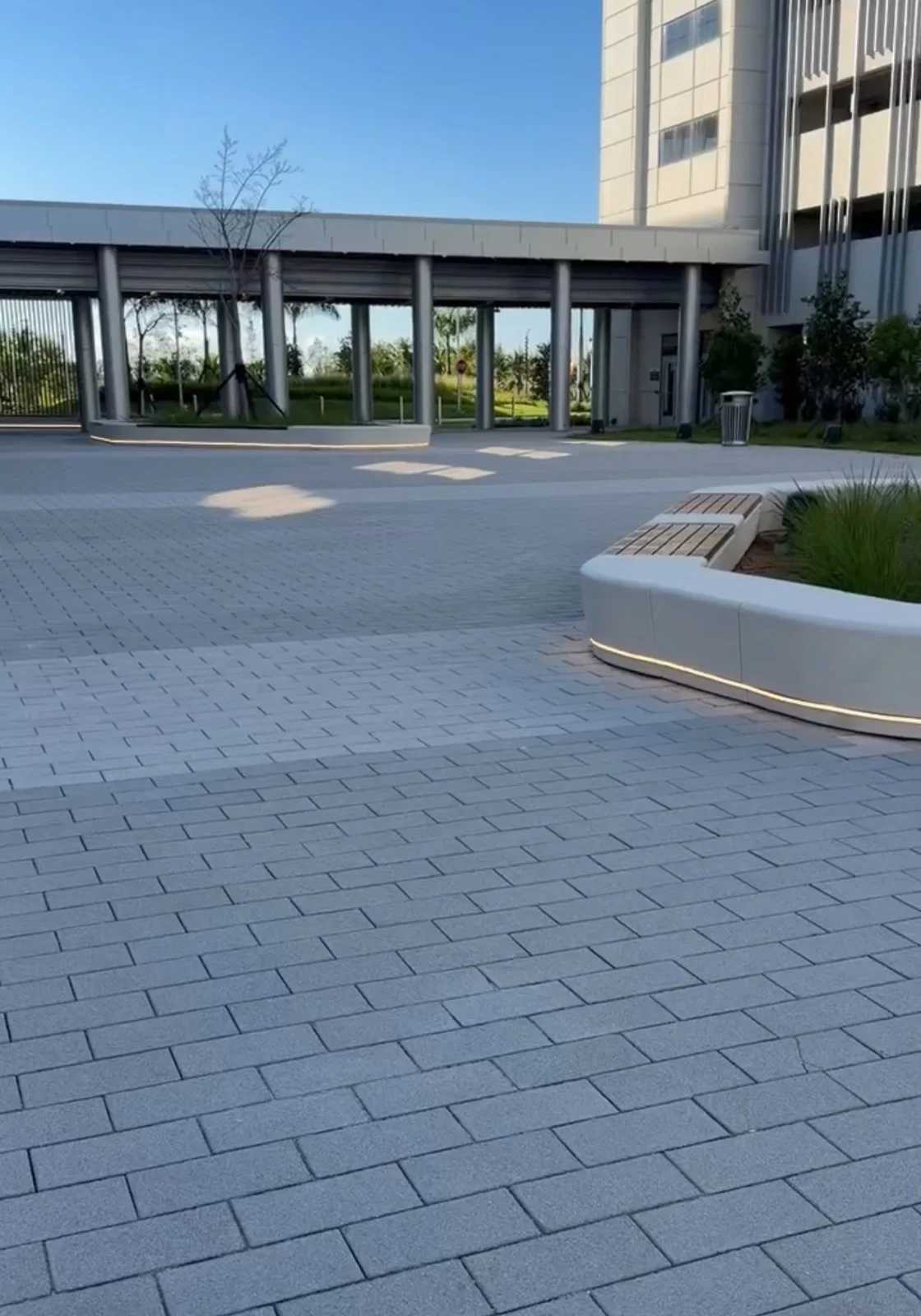
What actually goes wrong
Almost every paver problem we get called out to is a base problem wearing a surface disguise. The pavers themselves are fine. They are concrete or stone, and they will outlast most of us. What moves is what is underneath them.
Our soil does well with steady rain and badly with a sudden flood of it. Across much of the region it is sand over limestone, and an afternoon storm can deliver two inches in an hour. That is when the base either holds its shape or starts to wash.
If a big tree is close by, its roots are a likely cause. The damp aggregate under a paver surface draws them in, and as they grow they push the pavers up out of line.
That is why the schedule on our jobs is mostly spent on the part you will never see again. The surface takes a day or two. The ground it sits on takes the rest, and the ground is what you are actually paying for.
How we run this job
We come look at it
Nobody can tell you much from a photo. One of us comes and walks the property with you, looks at where water collects, and gives you an honest opinion, small job or big one.
You get the plan in writing
Everything in writing up front: what we are doing, what it is made of, how long it takes, and what it costs. Nothing changes without you signing off on it.
We build the base first
Excavation to the depth this job actually needs, aggregate compacted lift by lift, bedding screeded flat. The slow part, and the part that decides whether the surface is still flat in ten years.
Pavers go down and get cut in
Field laid to the pattern, edges cut on site, and a restraint set around the perimeter so the field cannot creep.
Joints get filled and the site gets cleaned
Sand swept in and compacted, surface washed, debris hauled by us. You get the property back the way we found it, minus the problem.
What changes on a commercial property
Commercial work is a sequencing problem as much as a construction one. The property has to keep operating, which means phasing, temporary routing, and being honest about which days a given area is genuinely unusable.
Load cases are different too. Delivery vehicles, dumpster trucks and fire apparatus all cross surfaces that look residential, and a base built for cars fails quickly under them. The dumpster pad is almost always the first thing to go.
Accessibility is not optional on commercial property. Slopes, transitions and detectable warnings are code, and a resurfacing job that quietly changes a slope can put a compliant property out of compliance.
A sunken paver is a symptom. The base under it is the disease.
When water stands on pavers, the slope is usually the reason. A paver surface should fall about an eighth to a quarter inch per foot away from the building, a pitch you cannot feel underfoot that still moves water off. Flatten it and puddles form. Tip it the wrong way and runoff ends up at the foundation.
Sometimes the best place for the water is straight down. A permeable paver section lets rain pass through the joints into a stone reservoir below, which helps on a tight lot where the surface has no fall to give. Other sites call for a channel drain on the low edge or a regrade of the planting bed beside the paving. Any of those costs less to build now than to add after the fact.
When a paver surface fails, look at the edges before you blame the rain. A downspout emptying right against the border, a sprinkler that wets the same corner every day, runoff from the lot next door: those are the usual suspects. Rain falling on a properly jointed field mostly runs off. Concentrated water from one source is what washes the base out.
Base depth
Set by what the surface carries, not by habit. A walkway and a truck-bearing drive are not the same excavation.
Compaction
Compacting the whole base in one go only firms up the top. We place aggregate in layers and compact each one, so the base is solid all the way down.
Fall
The surface drops about an eighth to a quarter inch every foot away from the building. It feels level and drains like it should.
More commercial work
We are on jobs like this across the region. A handful of the places we work most:
What it asks of you afterwards
Most small things on a paver surface can wait for a convenient day. A lifted edge cannot. Anything raised more than about a quarter inch will catch someone’s foot sooner or later, and where the property is commercial, that turns into a liability question on top of the repair.
A well-laid surface mostly looks after itself. What it does need is joints that stay full, so add sand when you see it dropping, and attention to any low spot before it spreads. Catching settling early keeps the repair small.
Plenty of good paver jobs are never sealed. Unsealed concrete pavers weather to a softer color and the joints still do their job if they are kept topped up. Sealing earns its keep where stains are likely, around a grill or under a parked car, and where you want a darker, richer color. Ask us and we will give you a straight read on your surface.
Pick a paver at random from our jobs and it is probably concrete. You get the widest pick of shapes and colors, and a unit that lays predictably. Because the color is mixed into the concrete, it fades slowly with sun and does not peel or wear away. Early on it does drift a little as the pavers finish curing.
Clay brick costs more than concrete pavers and offers fewer shapes. What you get for that is color that does not fade, because the color is the fired clay itself. If the surface needs to look the same two decades from now, brick earns its price.
Travertine is a natural stone, and it behaves like one. Color and texture shift from unit to unit, so a deck has a less uniform look than concrete pavers give you. It also stays cooler under bare feet in direct sun, which is why pool owners ask for it. Seal it if it is going to see oil or heavy stains.
Where these jobs go wrong
A finished job hides all of these. Because nobody can spot them at handover, they keep showing up on paver work.
Laying over the old surface
An overlay inherits everything beneath it. Settled spots and a soft base stay exactly where they were. If the base is what sank the old surface, the new layer just hides it for a season before the same failure comes back.
Skipping the geotextile
The base only works if it stays clean crushed aggregate. Fabric under it keeps the soil below from mixing in. Skip it and the two layers blend a little more every rainy season, and once enough soil has moved up, the base cannot carry the load and the pavers settle.
Using the wrong sand in the bedding
Bedding sand that is round acts like a layer of ball bearings. Pavers set on mason or beach sand drift under load. Sharp, angular concrete sand stays put.
Sealing too early
Leave new concrete pavers unsealed through their first month. They are still curing, and efflorescence is still working out of them. Seal over that and the white haze can be locked under the sealer permanently.
The edge restraint is the piece nobody thinks about and the reason the field holds.
Common questions
Do I need to be home while you work
Being home is optional. Access and water are the two things we need. You will hear from us during the job, and right away if we find something below the surface that changes the scope.
Will the new pavers match what I already have
On a small repair in the middle of an older patio, the new units have to sit right next to weathered ones. Concrete pavers change color a little with sun and age, so we look for the closest match and tell you honestly how close it is. If it falls short, borrowing pavers from a less visible area is one option.
What happens to the old surface
Breaking out the old surface is the first stage of the job. It gets loaded and hauled off, and we recycle the concrete and old pavers when a recycler is in reach. That work is written into the scope.
How do you keep it from settling again
Settled pavers almost always point to something underneath. We trace it, whether it is drainage, a soft base or a root moving in, and fix that first. Pavers go back down only once the reason for the dip is gone.
Do you work with HOAs and property managers
Yes. Property managers usually want clear communication and no surprises, and that is how we like to work too. Tell us what your approval process requires and we will work inside it.
Do you cover Miami, FL
Absolutely. We are headquartered in Miami, FL and work there regularly. The quickest way to find out how soon we could start is a phone call to 786-717-9244.
Let us walk the property
We would rather see it than guess. Someone from our team stands on the surface, walks the rest of the property, looks at the drainage, and writes up the findings for you.
Quality you can stand on