Paver Cleaning, built on a base that holds
Cleaning that lifts the grime without stripping the color out of the units.
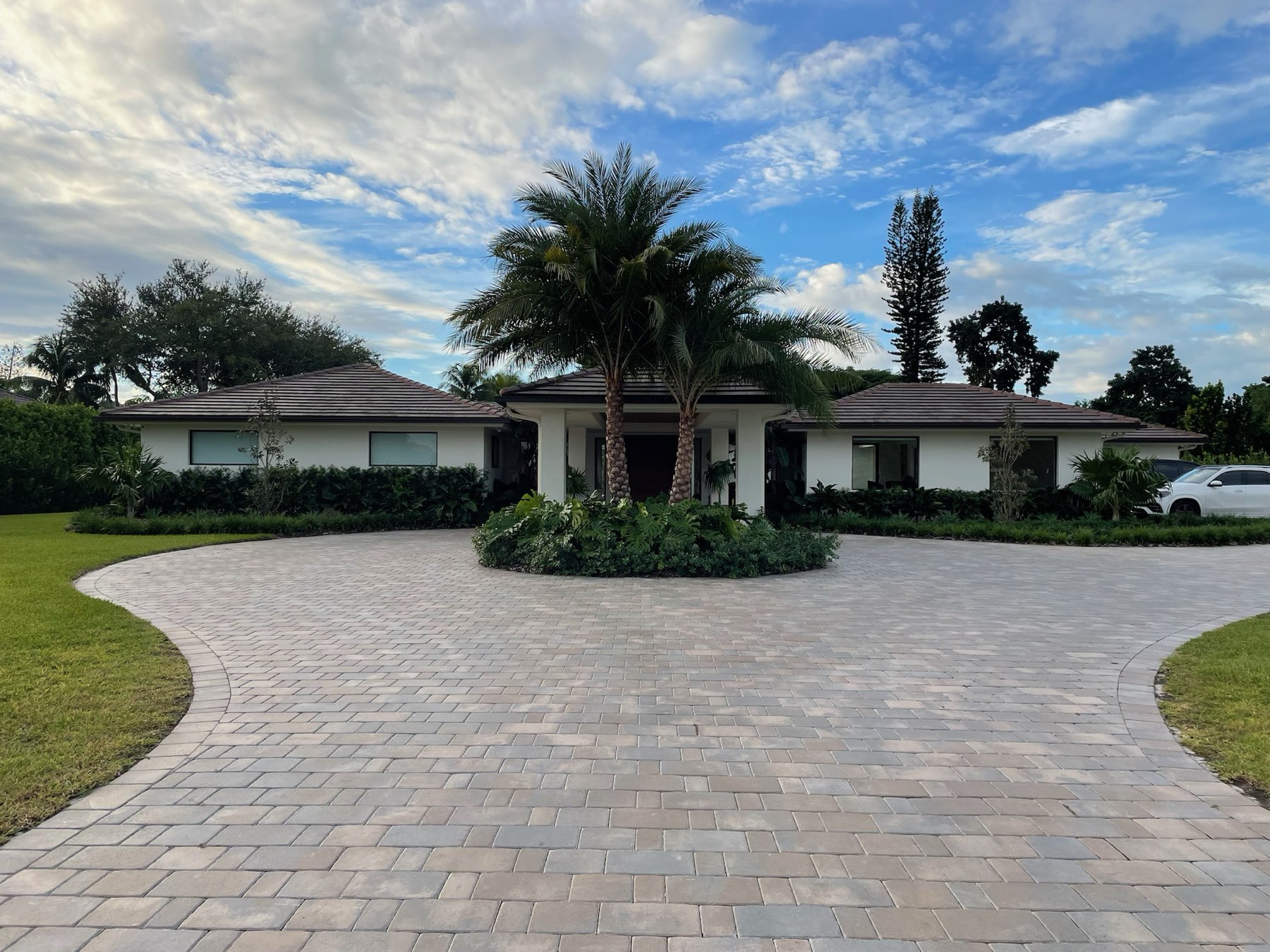
What actually goes wrong
Here is the honest version: a sunken paver is a symptom. The base under it lost material, usually to water, and the surface settled into the gap. Resetting the pavers without correcting the base just buys you a season.
Most of the sinking and shifting we see in South Florida comes back to two local conditions. The sandy ground moves when water passes through it, and the rain arrives in big bursts. Put those together and a base that would be fine up north gets a real test every summer.
If a big tree is close by, its roots are a likely cause. The damp aggregate under a paver surface draws them in, and as they grow they push the pavers up out of line.
None of this is visible in a finished photo, which is why the cheap version and the right version look identical on day one. They stop looking identical around year two.
How we run this job
We come look at it
Expect a visit from someone on the crew. We walk the property together, watch where water goes, and give you our honest take. If the fix is simpler than you were bracing for, we say so.
You get the plan in writing
Everything in writing up front: what we are doing, what it is made of, how long it takes, and what it costs. Nothing changes without you signing off on it.
We build the base first
Excavation to the depth this job actually needs, aggregate compacted lift by lift, bedding screeded flat. The slow part, and the part that decides whether the surface is still flat in ten years.
Pavers go down and get cut in
Laying the field is the fast part. The care is in the cuts at the edges and the restraint that locks the whole field in place.
Joints get filled and the site gets cleaned
Sand swept in and compacted, the surface washed down, and the property left the way we found it. We haul our own debris.
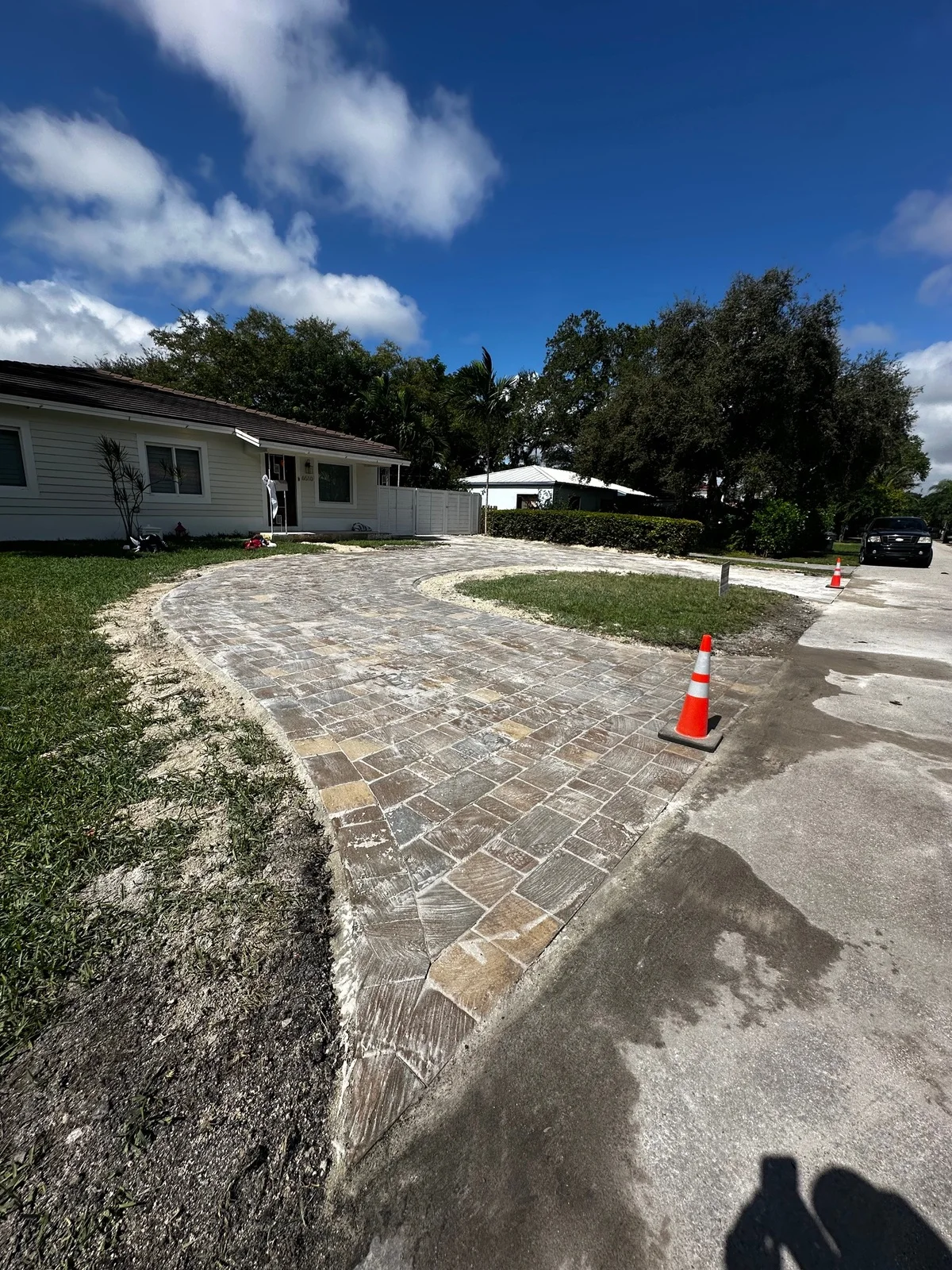
What cleaning and sealing can and cannot do
Restoration is chemistry more than construction. Cleaning, sealing and stain removal all depend on what the unit is made of, how old it is, and what is actually on the surface.
Pressure is the most common way people damage their own pavers. Too much pressure erodes the cement paste off a concrete unit and blows the joint sand out, which looks clean for a week and then fails faster than before. Cleaning is a chemistry job with pressure as an assist, not the other way around.
Sealing is optional and it is a preference. It deepens color, makes stains easier to lift, and helps hold joint sand. It also needs redoing on a cycle, and the wrong sealer or a surface sealed too early can trap moisture or lock a white haze in permanently.
The pavers are a wearing surface. The base is the building.
An eighth to a quarter inch per foot does not sound like much, and walking on it you would swear the surface is level. That small, steady drop away from the building is what carries water off. A flat surface holds puddles. A surface sloped the wrong way delivers runoff to the foundation, which is a far bigger problem.
Getting water off the pavers is half of the drainage job on a commercial property. The other half is deciding where it lands. On a tight lot with no fall to spare, we usually choose between a channel drain at the low edge, a permeable section that lets water through to a stone reservoir, and a regrade of the planting bed next door. Building that in now costs less than coming back for it.
A downspout that discharges right at the edge of a paver surface puts a whole roof’s worth of water into one small patch of base every storm. Irrigation heads that spray the same spot twice a day and runoff from a neighboring grade do similar damage. Compared with those, rain falling across a properly jointed surface is minor.
Fall
About an eighth to a quarter inch of fall per foot. Underfoot it reads as level. In a downpour it carries the water off and away from the house.
Restraint
A perimeter edge restraint is what stops the field creeping outward and the joints opening from the outside in.
Joint sand
Structural, not cosmetic. It transfers load between units, which is the whole reason a field of loose pavers behaves like a surface.
More restoration work
We are on jobs like this across the region. A handful of the places we work most:
What it asks of you afterwards
Owners are often surprised how little a properly built paver surface needs from them. The joints are where most of the attention goes: keep them full of sand and free of leaves that would otherwise rot in place. Beyond that, keep an eye out for any area that starts to sink.
Sealing really is a preference, which is why you hear different opinions on it. Our view: it is worth it where the surface takes oil, food or heavy staining, and less worth it on a walkway that only sees foot traffic. A poorly chosen sealer can leave a glossy sheen or trap moisture underneath, so product choice matters as much as the decision itself.
Most small things on a paver surface can wait for a convenient day. A lifted edge cannot. Anything raised more than about a quarter inch will catch someone’s foot sooner or later, and where the property is commercial, that turns into a liability question on top of the repair.
Before you pick travertine, think about what will happen on it. Near an outdoor kitchen or anywhere oil and heavy stains land, it needs a sealer to keep looking right. On a plain pool deck it is a comfortable choice, because it stays cooler underfoot than concrete in direct sun. As a natural stone, every unit varies a little.
Where it fits, porcelain is a very low-fuss surface to own. Spills sit on top instead of soaking in, because the material absorbs almost nothing. The work is all on the install side: precise base preparation, a perfectly even bedding course and careful cutting with the right blade.
Concrete pavers win on choice: they come in more shapes and colors than any other material we install. They also lay up consistently, which makes for a predictable job. The color runs through the whole unit, so it fades slowly and gently in the sun. Expect it to shift a bit in the first year or two as it cures out.
The failures we get called out to fix
These shortcuts all pass a walk-through on day one. The problems arrive later, and that delay is why they stay common.
Laying over the old surface
Paving over an old surface is a lot like painting over rust. It goes quickly and costs little, and the problem underneath keeps working. If the base caused the first failure, the new surface will show it again within a season or so.
Skipping the geotextile
We put a geotextile down on the subgrade before any base goes in. Its whole purpose is separation. Soil stays below, aggregate stays above, and the base keeps the structure it was compacted into. Leave it out and the mixing happens slowly and does not reverse.
Using the wrong sand in the bedding
Cheap, rounded sand in the bedding layer is how pavers end up drifting. Mason sand and beach sand roll under load. Bedding should be sharp, angular concrete sand.
Sealing too early
Fresh concrete pavers push a white residue to the surface as they cure. That is efflorescence, and it needs to finish before any sealer goes on. Seal in the first month and the haze can end up permanently under the coat.
The edge restraint is the piece nobody thinks about and the reason the field holds.
Common questions
How long does the job take
A typical paver cleaning job runs two to five working days once we start. Base work is the slow part; laying the field goes quickly. Weather moves things, and in summer we plan around the afternoon storms rather than pretending they will not happen.
Do I need to be home while you work
No need. Leave us access and water, and go about your day. Plenty of customers head out in the morning and come back to a finished section. Anything we did not expect gets a phone call that day.
Will the new pavers match what I already have
Concrete pavers drift a little in color as the sun and the years work on them, so a fresh unit next to one that has been down a while can stand out. Sometimes we match exactly and sometimes closely. If we cannot get close enough, you see the options before we order.
What happens to the old surface
Removal and disposal are included. We break out whatever is there now and take it off the property. Where we can get it to a recycler, the old concrete and pavers go there.
How do you keep it from settling again
We find out why it sank before we touch it. Resetting pavers on the same weak base or over the same wet spot only buys you a little time. Usually the cure is better drainage and a properly rebuilt base, and sometimes it means dealing with a root or a downspout.
Do you cover Miami, FL
Miami, FL is squarely in our regular area. We work there most weeks. If you send a few photos of the job, we can usually tell you a lot before anyone even comes out.
Tell us what you are looking at
We would rather see it than guess. Someone from our team stands on the surface, walks the rest of the property, looks at the drainage, and writes up the findings for you.
Quality you can stand on