A back patio laid out for the way you use the yard
On a big Pinecrest lot the patio can go almost anywhere, which makes placement the first real decision. We work out where you will sit, how the material gets back there, and where the rain goes before anybody picks a paver.
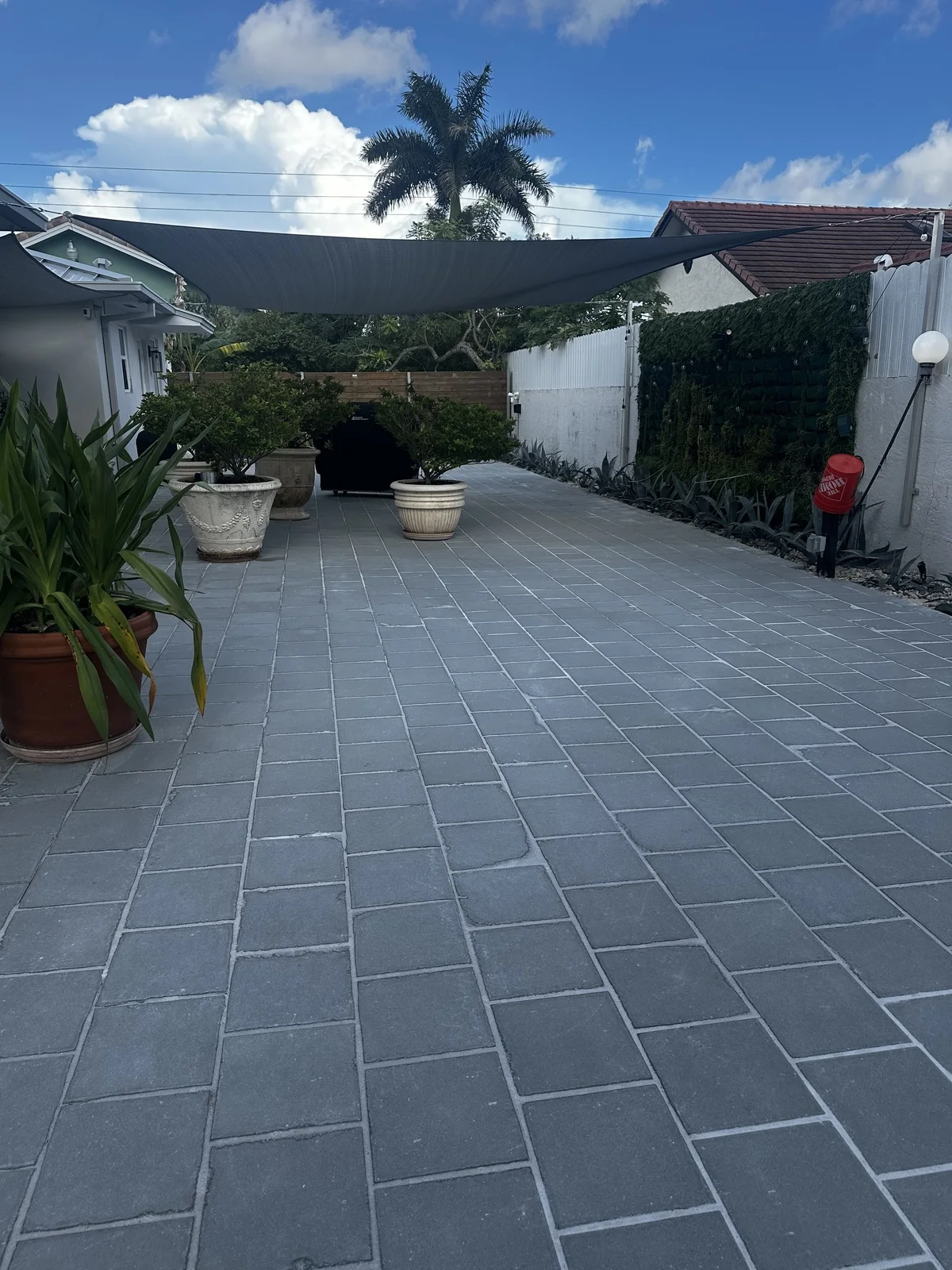
Size it around the furniture you own
Most patio regrets come down to size. Build it too small and the table crowds the grill, so somebody is always standing in the way of the cook. Build it too big and a wide open slab bakes all afternoon with nobody on it. Plenty of room on a large lot makes the second mistake very easy.
So start with the pieces. The dining set with its chairs pushed back. The grill, plus a clear lane past it. The two lounge chairs everyone argues over. Set those out on the grass, walk around them for a minute, and the edge of the patio more or less draws itself.
Our background is general contracting, so we ask about the rest of the property as well. Where a pool might go one day, where a path from the drive would land, what the sprinklers are doing. A patio planned with those in view does not have to be cut up later.
Then think about distance from the house. A patio against the back wall is easy to reach with a tray of food. One set out toward the back of the yard, under the trees, feels like a place you walk to. Both are good answers. They lead to different drainage, different access, and a very different amount of shade.
Put the chairs on the grass first. The outline comes from there.
Getting pallets to the far end of the yard
A patio well back from the street means every paver, every load of aggregate and the compactor all have to cross your property to reach it. How far that trip is, and how wide the way through, shapes the first days of the job.
We choose the route together
Side gate, the edge of the drive, or the widest gap between house and fence. We look for the path that stays clear of irrigation heads and soft ground.
Everything makes the trip to the back
Pavers, aggregate and bedding sand all travel from the front of the property to the patio site. The distance and the width of the route set the pace of those early days, and we tell you what that looks like up front.
Base and bedding built out back
The layered, compacted base under every job we do, sized for what a patio carries. Chairs and people ask less of it than a loaded pickup does.
Field, joints and a wash down
The pavers go down to pattern with cuts made on site, joint sand goes in and gets set, and the patio is washed off before our debris leaves with us.
None of this changes how the base under a far patio is built. It changes the logistics, and on a lot with mature landscaping we talk those through with you before anything is delivered.
Leaves, shade and what settles into the joints
Mature trees are a large part of why a patio at the back of the yard feels good in the afternoon. They also drop leaves, flowers and seed pods on it all year long. That litter lands in the joints, stays damp, and starts rotting down into soil right between your pavers.
Organic matter breaking down in a joint gives weeds a place to root and holds water against the bedding sand. Leave it long enough and the joint loosens, and the pavers around it begin to shift on their own.
Under a canopy, polymeric joint sand earns its place. It binds once it is wetted and stands up to washout better than plain sand. The catch is installation: it has to be swept completely off the paver faces before any water touches it, or you are left with a hazy film.
The shade itself is worth using on purpose. Seating tucked under the canopy stays comfortable through the hottest hours, while an open end of the patio can catch the sun for whoever wants it. Where the branches fall on the ground is part of the layout conversation, same as the table.
After that, keeping the patio right means clearing litter before it sits and topping up any joint that opens. The roots are the other thing worth keeping an eye on.
Litter
Clear it before it composts. Wet leaves sitting in a joint turn into soil and a seedbed.
Sand
Polymeric joint sand holds up far better under dripping branches than plain sand.
Roots
Shallow roots from big shade trees chase the moisture a base holds. Placement near a trunk gets planned.
Meeting the house at the right height
A patio starts at the back door, and the height of that threshold sets the height of everything behind it. From there the surface drops away from the house at a slope of between an eighth and a quarter inch for every foot. You will not feel it under a chair, and it is enough to send rain off toward the yard.
Get that backwards and every storm pushes water toward the slab and the base of your walls. On a patio attached to the house, it is the mistake with the costliest consequences, and it cannot be seen on the day the crew packs up.
Where the patio meets the house slab, the tie-in has to sit a proper step below the door so water on the pavers cannot run back underneath it. Before the layout is final we check the existing slab, the door sill, and any downspouts emptying onto that side.
If the patio sits out in the yard instead, the question moves to its far edge. An afternoon storm here can put down two inches in an hour, and a flat back lot needs somewhere to send that much water. A channel drain, a permeable band over stone, or a regraded bed alongside are all much easier to build in at the start.
Downspouts get their own look. A roof that drains toward the patio side funnels a whole storm into a handful of spots, so we extend or reroute those so the water clears the pavers and never lands straight on the first course.
Choosing what goes under your chairs
These are the four we get asked about. How the patio gets used usually settles it.
Concrete pavers suit a patio that works hard: chairs dragged back from the table, a grill rolled in and out, kids cutting across on bikes. There are enough shapes to line up with a path or pool deck added later, and a chipped unit is easy to swap without anyone spotting the repair.
Clay brick fits a patio that is meant to look like it has always been there under the old trees. Its color lives in the fired clay, so years of leaf drop and dappled shade do not wear it into a patchwork.
Travertine is the one for bare feet. It stays cooler than concrete in direct sun, which counts on whatever part of the patio sits outside the canopy. Near the grill, or anywhere it will see grease and heavy staining, it wants a sealer.
Porcelain soaks up almost nothing, so spilled drinks and wet leaves come off with a rinse. The trade is the bed underneath: it has to be dead even, because a chair leg on porcelain finds any rock in the surface right away.
Patio questions from larger yards
Will the trucks tear up my lawn
A patio at the back of a big lot means material has to cross the yard to get there. On the first walk we pick the route together and point out what it passes over, so you know what to expect before anything is delivered and there are no surprises once the crew arrives.
How far from the house can the patio go
As far as you like. Distance changes the work involved: a longer carry for every pallet, a different drainage question, and possibly a walkway to connect it back to the house. We lay those pieces out together so the patio does not end up stranded out in the grass.
How close to a big tree can the patio go
Close enough to sit in the shade, with the layout kept back from the heavy roots near the trunk. We look at how far the canopy spreads and where the roots are likely running, then set the edge so the base is not built over them. Where that line lands goes into the written plan.
What do I do about leaves in the joints
Blow or sweep them off before they sit wet. Leaves left in the joints break down into soil, hold water, and give weeds somewhere to grow. Polymeric joint sand makes a real difference under a canopy, and we recommend it whenever branches hang over the space.
Will new pavers match what is already on the property
Sometimes exactly and sometimes closely. Older lines get discontinued, and concrete pavers shift in tone with years of sun. When a true match is not out there, we show you options against the existing surface before ordering, including a border that makes the change look intended.
Can the patio sit level with the back door
It needs to sit a little lower, so rain gathering on the pavers has no route back under the door, and then slope off toward the yard. How big that drop is depends on your existing slab and door sill, and we measure both on the first walk before anything gets drawn up.
Your corner of Miami-Dade
Driveways and pool decks too
Back to Pinecrest · Finished patios and drives · Get pricing
Show us the back of the property
Send one picture from the back door looking out and one from the far end looking back at the house. That is enough to talk through placement, access and drainage before we come out to stand in it with you.
Quality you can stand on